Get all your news in one place.
100's of premium titles.
One app.
Start reading
The Times of India
The Times of India
World
TOI World Desk

Oldest Message In A Bottle: Bidder maps deep North Sea currents; lost sample sets Guinness record

Before the invention of satellites and floating sensor buoys, scientists had only two tools to comprehend the true movement of ocean water: patience and a willingness to let the sea do the work. Although fishermen were already aware that currents moved objects in somewhat predictable patterns, no one had sufficient evidence to precisely map those movements. Using nothing more complex than glass bottles and a small monetary prize, a British marine biologist concluded at the beginning of the twentieth century that the easiest way to answer the question was to give the task to the fishing fleets themselves.

Get breaking news anytime, anywhere. Download the TOI app now!

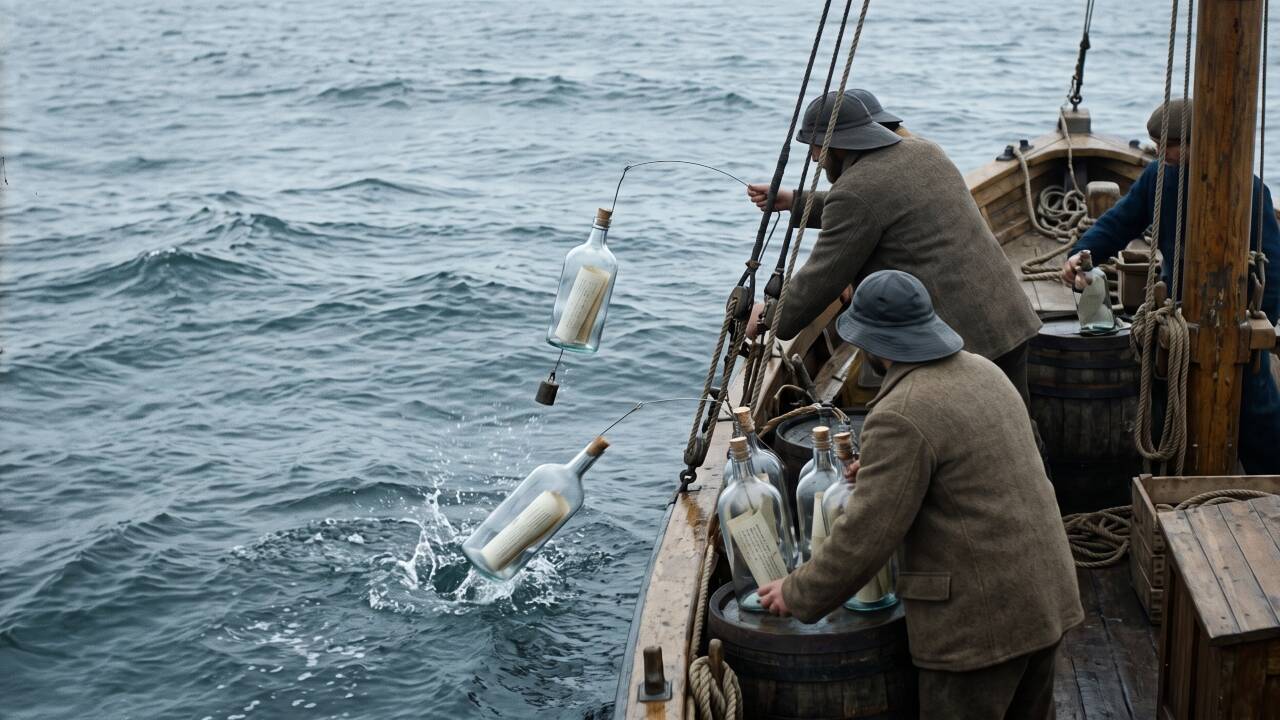
George Parker Bidder, a Marine Biological Association researcher with a lifelong interest in the mechanics of the seabed and the water flowing above it, was that biologist. He launched 1,020 weighted bottles into the North Sea from a research vessel between 1904 and 1906. Each bottle had a printed postcard that asked the person who found it to record the date and place before returning it to Plymouth. Knowing why Bidder weighed his bottles instead of just allowing them to float on the surface helps to clarify why the experiment was valuable from a scientific standpoint.

Creating bottles that followed the seabed

To replicate deep water movement rather than the more erratic drift patterns near the surface, Bidder's containers, which he named bottom trailers, were designed to dip near the seabed while being maintained slightly above it by a short length of rigid wire. This distinction was significant since the bottles were most likely to be caught by trawlers running their nets along the bottom, providing Bidder with an army of citizen scientists dispersed throughout the North Sea fishing towns. Archival records describe how Bidder designed and refined the bottom-trailer bottles so they could remain near the seabed and survive extended periods in the North Sea. Over the next few years, the results that came back provided Bidder with exactly the kind of trend he had anticipated finding.

When the bottles returned

Fishermen who found a bottle and sent back the filled-out postcard received a little prize, and the inducement worked well enough that the bidder recorded a return rate of some fifty-five per cent for the entire set distributed. By comparing the original dropping points of each bottle with where they turned up, he was able to plot a clear and consistent east-to-west flow in the deep water current through the southern North Sea. This helped later researchers understand how pollutants, larvae and nutrients move along the seabed rather than just floating near the surface. Decades later, Bidder became president of the Marine Biological Association, which made what happened next seem almost like providence rather than chance. While most of the thousand or so bottles were finally accounted for, a handful seemed to have disappeared into the water forever, at least until one popped up in a spot no one was expecting.

The bottle that outlived them all

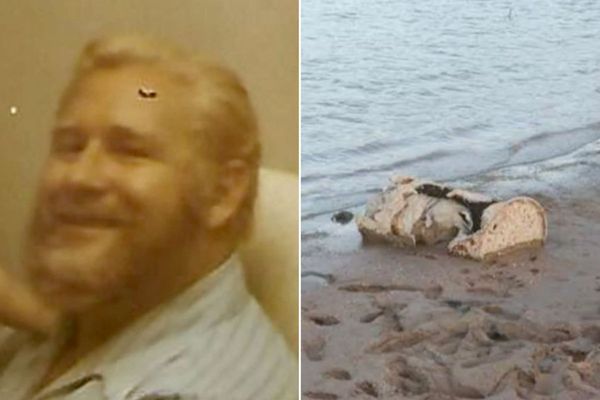
Marianne Winkler, a retired postal worker from Germany, was walking on a beach on Germany’s Amrum Island in 2015 when she saw an ancient glass bottle with a card inside telling her to crack it open. At last she and her husband dug up a postcard, printed in English, German and Dutch, addressed to a Mr Bidder of an association she had never heard of, and despatched it back just as ordered.

Association staff were surprised to receive a response to an experiment that had finished more than a century earlier. When it was determined that the bottle’s release date was 30 November 1906, Guinness World Records verified the oldest message in a bottle ever found, after the bottle spent 108 years and 138 days at sea before washing ashore.

The association sent Winkler an old English shilling in the mail, fulfilling the promise on the card, paying a debt that, technically, had been owed since before either of Bidder's own grandchildren were born. The bottle, along with the nearly four hundred others from Bidder’s original set that were never recovered, remains one of the more fascinating examples of how a piece of straightforward scientific fieldwork may silently keep working long after everyone engaged in constructing it has passed away.

Sign up to read this article
Read news from 100's of titles, curated specifically for you.
Already a member? Sign in here
Related Stories
Top stories on inkl right now
One subscription that gives you access to news from hundreds of sites
Already a member? Sign in here
Our Picks
Fourteen days free
Download the app
One app. One membership.
100+ trusted global sources.