Oil prices have climbed again amid mounting supply fears after the US struck Iran’s vital Kharg Island oil hub and Donald Trump demanded allies help reopen the strait of Hormuz.
Brent crude, the international benchmark, rose 1.8% to $104.98 per barrel during early trading on Monday. Another weekend of violence across the Middle East compounded concerns over the conflict, and its ramifications for global energy markets.
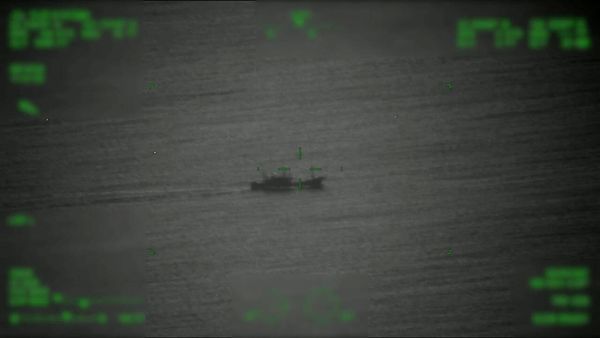
The US president claimed on Saturday that US strikes had “totally demolished” most of Kharg Island, telling NBC News that its military may hit site “a few more times just for fun”.
Kharg, a five-mile-long coral island in the Persian Gulf about 16 miles from the mainland, is a key processing hub for Iran, through which 90% of the country’s oil exports typically flow.
Trump claimed on social media that he had avoided striking oil and energy infrastructure on the island “for reasons of decency”, and that only military targets had been hit.
But the decision to strike Kharg, which had been largely left untouched by the US-Israeli operation during its first two weeks, did not soothe the apprehensions rattling through global markets.
The strait of Hormuz, one of the most important waterways in the world, through which about a fifth of international oil supplies usually travel, has been all but closed since the start of the crisis.
Trump claimed this weekend “many countries” will send ships to help reopen the strait. He did not identify which countries would purportedly do so, but publicly urged specific US allies – France, Japan, South Korea and the UK – and China to join a “team effort” to protect ships passing through the strait from Iranian strikes.
The response was decidedly muted. South Korea’s foreign ministry said it was “exploring various measures from multiple angles” to help secure energy transport routes. UK ministers are drawing up plans to send minesweeping drones to the strait, amid concerns that complying with Trump’s demand to send ships could escalate the crisis.
Oil prices topped $100 per barrel last week for the first time since Russia’s invasion of Ukraine four years ago, as the US-Israel triggered a market rally which increased fuel costs around the world – and propelled shares in major oil companies to all-time highs.
Frustration has been growing in recent days as fuel costs continued to rise around the world. The average US fuel price hit $3.70 per gallon on Sunday, according to AAA, up 62 cents on where it stood a month ago.
“I don’t give a shit about Iran. I don’t want to pay higher gas,” Kevin Dass, an underemployed father of two, told the Guardian in Detroit last week, after paying $3.49 per gallon to fill up his vehicle.
Trump, for his part, attempted to play down the risk of fuel prices remaining high for a sustained period. “I think they’ll go lower than they were before,” he told NBC.
“There’s so much oil, gas – there’s so much out there,” Trump added. “But you know, it’s being clogged up a little bit. It’ll be unclogged very soon.”
Countries across Asia have been scrambling to confront the energy crunch, from fuel subsidies in Thailand to rationing in Bangladesh.
Wholesale gas prices rose in Europe on Monday morning as the conflict continued to disrupt liquefied natural gas exports from the region. The benchmark Dutch front-month contract was up by €1.82 at €51.94 a megawatt hour.
Stock markets across Europe were mixed, with the FTSE 100 marginally up while markets in France, Germany, Spain and Italy fell less than 1%.