Closing post
Time to wrap up….
Canada’s central bank has warned that the conflict in the Middle East has increased volatility in global energy prices and financial markets, and “heightened the risks to the global economy”.
The warning came as Iran threatened to attack energy infrastructure across the Gulf region in retaliation for Israeli strikes on its largest gasfield, marking the first targeted attacks on its fossil fuel production since the war began.
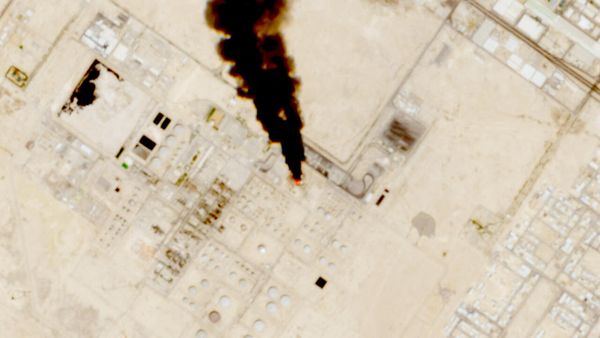
Iran’s Revolutionary Guards have threatened counterstrikes on several energy facilities across Saudi Arabia, the UAE and Qatar “in the coming hours” after state media reports that missiles had targeted its gas facilities at the giant South Pars field, the largest gas reserves in the world.
The strikes on Iran’s South Pars gasfield, which it shares with Qatar, were widely reported in Israeli media to have been carried out by Israel with the consent of the US.
The attack against the heart of Iran’s gas infrastructure marks a key escalation in US and Israeli military operations. The two countries have until now largely spared Iran’s oil and gas sector and helped to keep a lid on the global oil price surge.
The oil price climbed towards $110 a barrel on Wednesday afternoon as the mounting threat to the Gulf’s oil and gas infrastructure fuelled concerns over more disruption to global supplies, amid the continuing blockade of the strait of Hormuz.
This latest escalation of tensions hit stocks in Europe, where London’s main share index fell almost 1%, and on Wall Street where the DJIA is down 0.9% now.
Investors were also rattled by data showing that US goods and services producers hiked their prices faster than expected in February. That could show inflationary pressures were bubbling up even before this month’s spike in fuel prices.
A government led by the Green party would not set targets for GDP growth but would instead focus on people’s mental health, social cohesion and community welfare, Zack Polanski has said in a major speech to set out his plans for the economy.
In other news:
FTSE 100 closes down almost 1%
After a choppy day’s trading, London’s stock market has just closed in the red.
The FTSE 100 share index lost 98 points, or 0.94%, to close at 10,305 points, as anxiety over events in the Middle East hit stocks. Precious metals producers were among the fallers, reflecting the drop in the gold price today.
The FTSE 250 index of medium-sized firms has lost 0.44%.
UK petrol and diesel prices have continued to climb today.
The average price of a litre of unleaded is up 0.33p to 142.62p. That’s a gain of almost 10p since the crisis began, RAC data shows.
Diesel has jumped by over 20p a litre since the 28 February. It’s up 0.60p at 162.66p.
• This post was amended on 20 March 2026. An earlier version said the price of unleaded and diesel had increased by 33p and 60p respectively within the past 24 hours; this should have said 0.33p and 0.60p.
Updated
The ‘panic’ in markets has reached Wall Street, where stocks are dropping (but not plunging).
The Dow Jones industrial average is down 458 points, or 1%. at 46,534 points in morning trading. Most of the 30 stocks on the index are down, led by paint company Sherwin-Williams (-2.6%) and manufacturing group 3M (-2.5%).
Oil company Chevron is bucking the trend, up 1%.
Updated
Markets 'back in panic mode'
Kathleen Brooks, research director at XTB, reports that “markets are back in panic mode” today.
The Brent crude oil price is surging and is higher by another 5% today, the gold price is down 2.8% and is below $5,000 per ounce, bonds are getting sold off and yields are surging and the dollar is rallying. This is a volatile backdrop to the Fed meeting [today], who also must factor in a strong reading for last month’s PPI report.
The surprisingly large jump in US producer prices earlier today is one factor – casting doubt on whether America’s central bankers can cut interest rates this year.
The second factor is the Middle East crisis, she writes:
On the oil front, the oil price is surging and is back above $108 a barrel, as the conflict escalates further. Iran has warned Gulf nations that their energy assets and infrastructure are now legitimate targets after attacks on its giant South Pars gas field by Israeli forces.
The risk is that an oil shipping crisis is morphing into an oil supply crisis. Unsurprisingly, this has spooked a market that was wiling to grasp hopeful signs that tankers were slowly getting through the Strait of Hormuz, and that countries like Saudi Arabia and Iraq could get oil into the market through alternative routes.
Gold isn’t living up to its reputation as a safe haven asset against geopolitical tensions and inflation fears.
It’s dropped to a one-month low today, down 2.6% at $4,872 an ounce.
Iran published a list of Gulf energy sites it says may be targeted after its South Pars gas field was attacked today:
Iran’s semi-official media has published a list of retaliatory energy targets:
— Javier Blas (@JavierBlas) March 18, 2026
Ras Laffan refinery – Qatar
Samref oil refinery – Saudi Arabia
Al Hosn gasfield – UAE
Jubail petchem plant – Saudi Arabia
Mesaieed petchem plant – Qatar
US waives Jones Act for 60 days to push down shipping costs
The US government is suspending a protectionist ban on foreign-flagged vessels transporting cargo between US ports, in an attempt to cool energy prices.
The White House has issued a 60-day waiver on the Jones Act, which requires goods sent between US ports to be carried on ships built, owned and operated by the US.
The move “will allow vital resources like oil, natural gas, fertilizer, and coal to flow freely to U.S. ports for sixty days,” White House press secretary Karoline Leavitt said in a statement reported by CNBC.
In detail: Energy prices rise after attack on Iranian gas infrastructure
Oil climbed towards $110 a barrel today, and gas prices have also risen, after Iran claimed that a US-Israeli air strike had targeted its gas infrastructure, marking the first strike on Iran’s fossil fuel production since the war began, my colleague Jillian Ambrose reports.
Iran state media reported that gas facilities at the giant South Pars fields, which it operates alongside Qatar, were attacked on Wednesday, leading to the shut down of several petrochemical assets “in order to control and prevent the speed of fire”.
In response Iran’s Revolutionary Guards threatened several energy facilities across Saudi Arabia, the UAE, and Qatar in retaliation for the attack on its energy sites, fuelling market concerns over oil and gas supplies from the region.
The international oil benchmark climbed by as much as 5% to a high of $108.60 a barrel, while Europe’s gas benchmark jumped by over 7.5% to over €55.50 per megawatt hour.
Qatar condemned the attack on the field. Qatari government spokesman Majid al-Ansra said:
“Targeting energy infrastructure constitutes a threat to global energy security, as well as to the peoples of the region and its environment.”
The Israeli targeting of facilities linked to Iran’s South Pars field, an extension of Qatar’s North Field, is a dangerous & irresponsible step amid the current military escalation in the region.
— د. ماجد محمد الأنصاري Dr. Majed Al Ansari (@majedalansari) March 18, 2026
Targeting energy infrastructure constitutes a threat to global energy security, as…
The global oil price pushed past $116 a barrel early last week, for the first time since May 2022, as traders began to count the cost of the war on global supplies of oil and gas.
Fossil fuel tankers have struggled to leave the Gulf since the start of the month when the IRGC wrested control of the strait of Hormuz, through which a fifth of the world’s seaborne oil trade flowed before the war began.
In addition to the chokehold on deliveries, Gulf producers have been forced to shut their own oil and gas fields after rerouting as much oil as possible via pipelines to bypass the strait and filling storage facilities.
Updated
Markets are being shaken out of the complacent mode we have seen the last three sessions, reports Neil Wilson, Saxo UK Investor Strategist.
The hotter-than-expected US producer price inflation report (see earlier) is one factor. Wilson says the jump in the PPI is “very much a tariff story and worry is that this signals further structural inflation risks alongside the current bout of energy-based pressures.”
The attack on Iran’s South Pars gas field is also a sign of “potential escalation in the Middle East as Iran and Israel are definitely seen targeting upstream production facilities for oil and nat gas” he adds.
Bank of Canada: Middle East war has heightened the risks to the global economy
Canada’s central bank has warned that domestic near-term economic growth will be weaker than anticipated in January, following the war in the Middle East.
The Bank of Canada has left interest rates on hold today, and warned that the conflict has increased volatility in global energy prices and financial markets, and “heightened the risks to the global economy”.
The BoC’s monetary policy committee says:
Since the outbreak of the conflict in the Middle East, global oil and natural gas prices have risen sharply, and this will boost global inflation in the near-term. In addition to energy supply disruptions, transportation bottlenecks stemming from the effective closure of the Strait of Hormuz could impact the supply of other commodities, such as fertilizer.
Financial conditions have tightened from accommodative levels. Global bond yields have risen, equity market prices have declined, and credit spreads have widened. The Canada-US dollar exchange rate has remained relatively stable.
The BoC also warns that the recent sharp increase in global energy prices has led to increases in gasoline prices, and this will push up total inflation in the coming months.
It concludes:
Against this overall backdrop, Governing Council decided to maintain the policy rate at 2.25%. With recent data pointing to weaker economic activity and uncertainty elevated, risks to growth look tilted to the downside. At the same time, inflation risks have gone up due to higher energy prices.
Updated
European stock markets are now mostly in the red after Iranian state media reported that US and Israeli strikes have hit Iran’s offshore South Pars natural gas field in the southern Bushehr province (see earlier post).
With Brent crude now up 4.8% at $108.42, equities are moving in the other direction.
Britain’s FTSE 100 index is now down 70 points, or 0.67%, at 10,333 points.
Germany’s DAX index is down 0.4%, as is the pan-European Stoxx 600 index.
Oil prices rise after Iran reports energy attacks
So much for oil falling!
Crude prices are now pushing higher, following a report that Iranian energy assets on the Persian Gulf coast have been hit by US and Israeli airstrikes.
According to Bloomberg, several assets — including the South Pars gas field and an oil plant and an unspecified petrochemicals facility near the city of Asaluyeh — were attacked, Iranian state TV reported.
Brent crude is now up 4% at around $108.10 a barrel.
Annual US PPI inflation hits highest in a year
Ouch. US wholesale inflation has jumped unexpectedly, startling the markets.
The Producer Price Index for final demand – a measure of wholesale inflation in the US economy – jumped by 0.7% in February, new data from the US Bureau of Labor Statistics shows. That’s the highest reading since last July.
Economists had forecast a drop to 0.3%, from 0.5% in January, so this suggests inflationary pressures are hotter than expected.
On an annual basis, the PPI index rose by 3.4% for the 12 months to February, the largest rise in a year, dashing hopes it would be unchanged at 2.9%.
🚨 US PPI jumped 0.7% MoM (vs 0.3% MoM expected) and 3.4% YoY (vs 2.9% YoY expected) in February, up from 2.9% YoY in January and the highest in a year.#PPI #inflation pic.twitter.com/8TjFA8JmB4
— MTS Insights (@MTSInsights) March 18, 2026
It’s a sign that it may be harder for US central bankers to cut interest rates soon, if inflation was building up even before the Iranian war pushed up fuel costs.
US mortgage demand tumbles after Iran war drove up interest rates
The Iranian conflict has hurt America’s housing market, new data shows.
US mortgage rates last week jumped to the highest level since the end of last year, data from the Mortgage Bankers Association shows, dampening demand for new loans.
Total mortgage applications fell by 10.9%, week-on-week, with applications to refinance a home loan down 19%.
The average interest rate for 30-year fixed-rate mortgages increased to 6.30% from 6.19%, reflecting recent rises in wholesale borrowing costs since the war began.
MBA economist Joel Kan says:
“Mortgage rates continued to move higher, driven by increasing Treasury yields as the conflict in the Middle East kept oil prices elevated, along with the risk of a broader inflationary shock. Mortgage rates increased across the board.”
Metals prices are dipping today, another sign that market anxiety over the impact of the Iranian war is easing.
Aluminium prices have dropped to a one-week low, with the benchmark three-month aluminium contract on the London Metal Exchange down 1.2% to $3,359.50 a metric ton this morning.
That follows reports that Emirates Global Aluminium will route its aluminium exports and raw materials through Oman’s port of Sohar in the next few days, giving an alternatice route to the strait of Hormuz.
There’s little drama in the currency markets today, where the pound is down just 0.02% against the US dollar at $1.335.
Traders are confident the Bank of England will leave interest rates on hold tomorrow.
Grant Slade, economist at Morningstar, says:
“We expect the Bank of England to hold Bank Rate steady at 3.75% at tomorrow’s MPC meeting. Headline inflation is set to rise meaningfully in mid-2026 as it responds to surging energy prices amid the Middle East conflict.
Still, the shock to energy prices should prove a transitory phenomenon and we expect inflation will likely recede back into the ‘neighbourhood’ of 2% by year-end.”
Wall Street is set to open higher, as market anxiety over the Middle East crisis ebbs a little.
The Dow Jones industrial average is on track to gain around 0.5%, or 231 points, at 47,579 points.
The S&P 500 share index is up around 0.53% in the futures market.
Oil is inching a little higher, with Brent crude now unchanged this session at $103.45 a barrel.
US crude is still down, -1.6% today at $94.70 a barrel.
Joshua Mahony, chief market analyst at Scope Markets, say:
Oil prices have largely been treading water, with Brent rotating around the $100 mark. The trajectory of crude remains the key determinant of market sentiment, with the relative stability we have seen this week helping to lift stocks.
The latest comments from the Iranian Foreign Minister Abbas Araghchi indicated that the country was unlikely to change course on their nuclear policy, highlighting the desire for Israel and the US to go further in ensuring the programme is set back sufficiently to justify this conflict. While Iran have declared that the Straits of Hormuz are only closed to enemies, that appears to include most of their neighbours given their hosting of US bases. Thus, while Iranian exports continue to flow, the tightness in global energy markets does look likely to provide major risks for markets as we go forward.
Zack Polanski: UK must “exit the bond market doom loop”
Green party leader Zack Polanski is outlining his economic vision in a speech this morning, pledging to “end rip off Britain” and create a country “we can all afford to live in.”
He’s proposing some progressive, interventionist policies to fix the economy, including:
Rent controls.
Water renationalisation “to put a stop to sewage scandals and high bills”
A faster drive towards renewable energy
A wealth tax: 1% tax on wealth over £10m and 2% over £1bn would Polanski says would raise around £15bn per year
Polanski also criticises the privatisation push of the Thatchr government, and its impact on wealth inequality, saying:
The wealth of those who own those precious assets – the ones sold out from under us under Thatcher, and then sold back to us for profit. Their wealth – it’s skyrocketed.
He also calls for the UK to “exit the bond market doom loop” – the situation where the government faces speculation of higher taxes or spending cuts to keep within the fiscal rules and placate bond investors.
Polanski says:
Our fiscal framework is hypersensitive to market movements. And this creates policy uncertainty that then fuels the very market jitters it is there to supposedly prevent. And you don’t have to just take my word for it. Even the IFS, the supposed custodians of fiscal responsibility, are saying the framework is “dysfunctional.”
It’s an interesting comparison with Rachel Reeves’s Mais lecture yesterday, where the chancellor presented closer EU ties, a close embrace of AI, and support for regional growth as the key to creating a better, stronger economy.
The Greens are more wary of AI, with Polanski saying:
AI - in many ways has potential to be a force for good - but is already causing people to lose their jobs, consuming huge amounts of energy and water. Planned datacentres will produce little employment, and blight communities - plus further jeopardise our climate targets.
Our Politics Liveblog has full coverage of the speech:
Updated
In Thailand, news anchors ditched their jackets on air as the government called on the public to reduce their use of air conditioning to save energy. In the Philippines, many government workers are now operating on a four-day week. In Vietnam, officials have urged employers to allow staff to work from home.
Across south-east Asia, governments are scrambling to find ways to conserve energy and shield the public from soaring costs as war in the Middle East causes what the International Energy Agency has described as the largest supply disruption in the history of the global oil market.
More here: Fuel rations and no air con: south-east Asian nations race to conserve energy | Oil | The Guardian
UK mortgage rates rise again as sub-4% deals vanish
UK mortgage rates have climbed again today, as lender pull their cheaper deals from the market.
Data provider Moneyfacts reports that the average 2-year fixed residential mortgage rate today is 5.30%, up from 5.28% on Tuesday.
The average 5-year fixed residential mortgage rate today is 5.35%, up from 5.32% yesterday.
Rates have climbed to their highest in over a year; Moneyfacts says:
Average 2-year fix has risen from 4.83% at the start of March to 5.30% today. It’s highest since February 2025.
Average 5-year fix has risen from 4.95% at the start of March to 5.35% today. It’s highest since August 2024.
They also point out that there are now just two sub-4% fixed rate deals on offer to British borrowers, down from almost 500 at the start of last week.
Adam French, head of consumer finance at Moneyfacts, says:
“The rapid disappearance of sub-4% mortgage deals shows just how quickly market sentiment has shifted. Nine days ago (9 March), well-positioned borrowers could choose from hundreds of fixed rate deals priced below 4%, but that has now dwindled to just two.
“The financial effects of ‘Trumpflation’ are already hitting home as the conflict in Iran is driving inflation concerns. That has forced markets to rethink the outlook for rate cuts, pushing borrowing costs higher and prompting lenders to pull and reprice deals at speed. For borrowers, it means the window for ultra-competitive sub-4% rates has been slammed shut, at least for now.”
Bloomberg: Iran keeping moving its own oil through Hormuz
Iran has been moving its crude through the Strait of Hormuz at rates “broadly comparable to transit before the war began”, according to Bloomberg this morning.
They report:
Iranian crude exports through the corridor accounts for nearly three-quarters of the 27.2 million barrels that have left the Persian Gulf since March 1, data from intelligence firm Kpler Ltd. show. That amounts to about 1.2 million barrels a day of crude for Tehran, compared to a pre-war daily level of 1.5 million barrels.
By contrast, nearly three weeks into the war, cargoes from others in the region added up to just 400,000 barrels a day, versus an average 14 million barrels per day in peace time.
Beer prices could be pushed up by Iran war
UK beer prices could rise as the Iran war sends oil and energy costs soaring, an insolvency expert is warning today.
Insolvency practitioner Molly Monk of Parker Walsh has pointed out that the Middle East conflict is pushing up energy and fuel costs for pubs and brewers across the UK.
If that continues, pubs and other hospitality venues will have to choose between absorbing some of the costs, increasing prices or buying less stock.
Monk says:
“Beer businesses are particularly vulnerable when oil and gas prices rise because the impact is felt at several different points in the chain.
“Breweries face higher production and distribution costs, while pubs and bars are then hit again through refrigeration, lighting, heating and other day-to-day running costs.”
European stock markets are mostly higher this morning, with Germany’s DAX up 0.47% and France’s CAC 40 gaining 0.64%.
The news that Iraq has agreed a deal with Turkey to resume oil exports through the port of Ceyhan has lifted investor sentiment, reports Susannah Streeter, chief investment strategist at Wealth Club:
“The FTSE 100 has made another tentative step in early trade to recover losses sparked by the outbreak of war with Iran. Stocks on Wall Street are also set to resume a rally as investor sentiment recovers.
Iraq has clinched a deal with Turkey to resume exports through the port of Ceyhan, instead of using the dangerous Strait of Hormuz. This is leading to hopes that a severe, prolonged oil shock will not materialise, as more crude supplies are able to filter out of the region through other routes, while Iran continues to allow tankers heading for China, India and Pakistan to use the Strait. Hopes have also risen slightly for more diplomatic moves to come, which could force a faster end to the fighting.
UK borrowing costs fall to lowest in a week
Government bonds are rallying this morning too, pushing down borrowing costs.
The UK is benefitting, with gilt prices rising which is pushing down the yield (or interest rate) on the bonds, reversing the rise seen early in the Middle East conflict.
Two-year bond yields are down 4 basis points (0.04 percentage points) at 4.01%, the lowest in a week. That’s the third daily fall in a row, as the weakening oil price eases inflation worries.
Ten-year bond yields are down at a one-week low of 4.656%, a drop of 4.4 basis points.
FTSE 100 opens higher
Stocks have opened higher in London, where the FTSE 100 index is up 24 points or 0.23% at 10,427 points.
Technical products and services firm Diploma (+17%) are soaring, after lifting its financial guidance for this year due to resilient aerospace demand and continued growth in its North American seals business.
Copper producer Antofagasta (+2.6%), and engineering firm Weir Group (+2.4%) are following, while airlines are benefitting from the drop in oil prices today.
Switzerland cuts 2026 growth forecast due to Middle East war
Switzerland has lowered its forecast for growth this year, due to the Middle East conflict.
The Federal Government Expert Group on Business Cycles (the official body which assesses the Swiss economy) has trimmed its forecast for growth in 2026 to 1.0%, down from 1.1% predicted last December.
It declared (pdf) that “the war in the Middle East is driving up energy prices and further increasing uncertainty”, adding:
The war in the Middle East has led to a sharp rise in international energy prices since the end of February. This is dampening the international economic outlook and is expected to result in higher inflation rates, including in European and Asian trading partner countries.
here is a great deal of uncertainty regarding the further development of the conflict in the Middle East and its economic impact. Against this backdrop, the Expert Group is raising its technical assumption for average oil prices in the current and coming year.
Updated
Iraq at risk of downgrade as Hormuz shutdown hurts oil output
Last night, Iraq was put on risk of a credit rating downgrade by S&P, due to the drop in its oil output this month.
S&P put Iraq on CreditWatch with negative implications, which could lead to a downgrade.
S&P said:
Iraq’s oil production has fallen to around 1.2 million barrels a day (bpd), from 4.2 million bpd, due to the effective closure of the Strait of Hormuz since the regional conflict started on Feb. 28, 2026.
A prolonged disruption to Iraq’s oil production will pressure the country’s fiscal and external position over 2026, even with sizable international reserves, which currently cover about 10 months of current account receipts.
We have therefore placed our ‘B-’ long-term foreign and local currency sovereign ratings on Iraq on CreditWatch with negative implications.
The Iraqi state news agency is reporting that Kirkuk has resumed pumping oil via Turkey’s Ceyhan port at a rate of 250,000 barrels.
That would only be a fraction of the country’s normal output. Before the Iranian war began, Iraq was producing 4.5 million barrels of crude oil per day. But it was forced to slash output once tankers couldn’t travel safely through the strait of Hormuz.
Introduction: Oil falls after Iraq signs deal to resume exports via Turkey
Good morning, and welcome to our rolling coverage of business, the financial markets and the world economy.
The conflict in the Middle East continues to grip the markets, as ship traffic through the strait of Hormuz continues to be slowed by the crisis.
But this morning, oil has dropped after Iraq reportedly struck a deal with Turkey to resume oil exports through their territory, having agreed with Kurdistan to pump oil through a pipeline in its region.
According to Reuters, crude exports from Iraq’s Kirkuk fields by pipeline to Turkey’s Ceyhan port have resumed, giving an alternative route rather than braving the strait.
But, the rerouting of some Iraqi oil through Turkey will only partially relieve supply concerns, Bloomberg reports, adding that Iraq’s oil production has fallen to about 1.4 million barrels a day — about a third of levels before the closure of Hormuz.
Brent crude is down 1.55% this morning at $101.80 a barrel, while US crude is almost 3% lower at $93.42 a barrel.
Ipek Ozkardeskaya, senior analyst at Swissquote, says:
This morning, oil is sharply down on news that Iraq signed a deal to resume oil exports via Turkey, bypassing the Strait of Hormuz, while Saudi Arabia is also rerouting exports toward the Red Sea. The region is reorganizing, preparing for the possibility of a prolonged conflict.
Restoring oil exports fully will take time, and we may soon see physical-market shortages — likely keeping oil prices under upward pressure. Yet, as flows adapt to alternative routes, the initial surge in oil prices seen at the start of the war could ease.
Stock markets are responding to this too – Japan’s Nikkei has gained 2.8% this morning, while South Korea’s KOSPI has jumped by 5.7%.
Investors are also hoping that central bankers will ‘look through’ the approaching spike in inflation, rather than reacting by raising interest rates. We’ll hear from America’s top central banker, Jerome Powell, tonight, when the Federal Reserve is widely expected to leave US interest rates on hold.
Jim Reid of Deutsche Bank reports:
There is also a bit more calm in markets at the moment and a small hint that there is a decoupling from the price of oil as the last 24 hours have seen more positive risk markets and lower [bond] yields.
The agenda
10am GMT: Eurozone inflation report for February
12.30pm GMT: US producer prices inflation (PPI) report for February
1.45pm GMT: Bank of Canada interest rate decision
6pm GMT: US Federal Reserve interest rate decision
6.30pm GMT: Federal Reserve press conference
Updated