You've probably heard that octopuses are smart, right? They can open jars, solve puzzles, and even identify individual human faces. But a new study suggests their brains are wired in ways much stranger and more impressive than anyone expected.
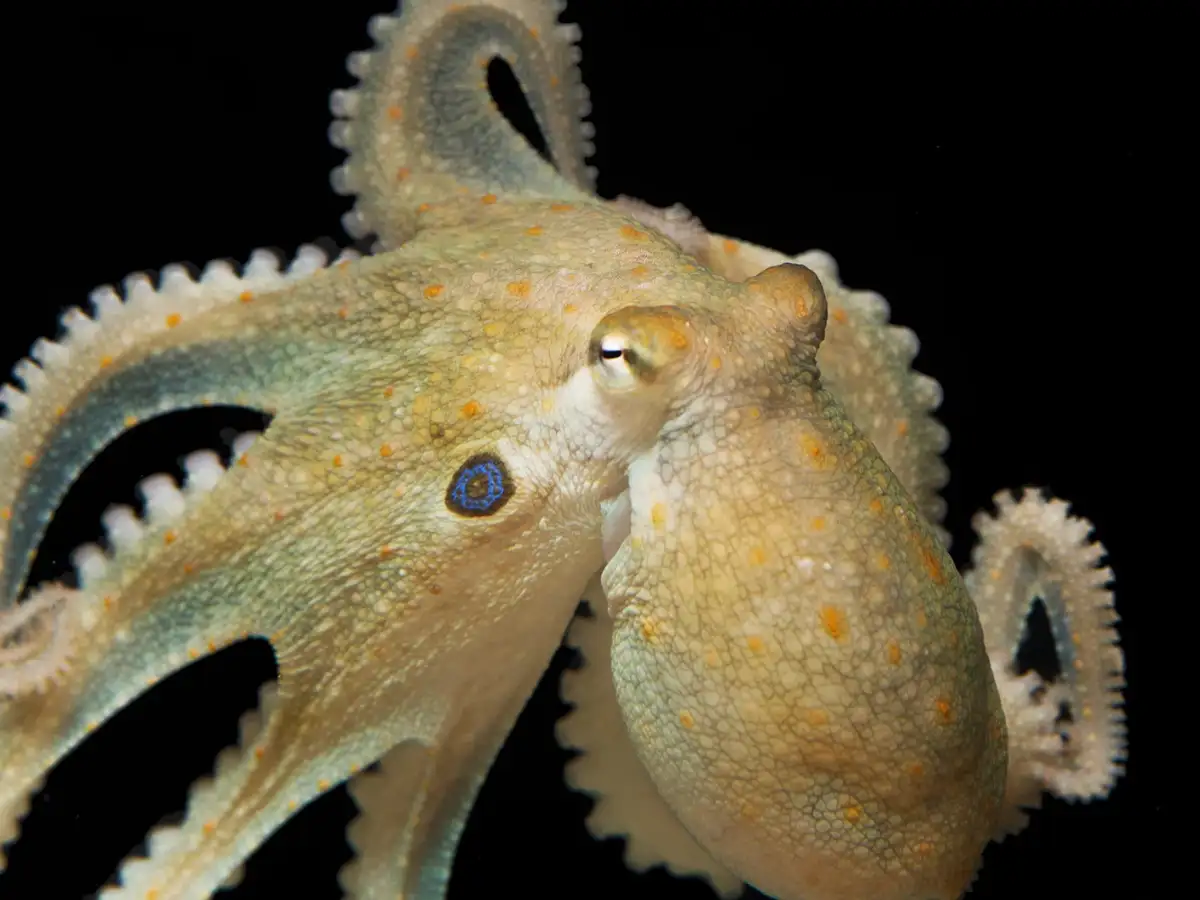
According to a study, ‘Octopus bimaculoides can learn to utilize a mirror to localize a reward outside the line of sight,’ published in Current Biology by researchers at Dartmouth College, three California two-spot octopuses (Octopus bimaculoides) learned to use a mirror to find a hidden food reward they could not see directly.

This is the first demonstration of mirror-mediated navigation in an invertebrate (including insects, worms, crustaceans, and others). Until now, this ability was thought to be restricted to vertebrates such as primates, elephants, dogs, and some birds.
In short, octopuses have just entered a cognitive realm that scientists didn't think invertebrates could enter.
What the researchers actually did
It was a clever setup. According to the Current Biology study, scientists put each octopus into a small starting chamber at the back of a tank. A mirror ran the length of the tank in front of them. A virtual crab, projected as a moving white silhouette, appeared on a screen on either the left or right side of the back wall behind them. The octopus could not see the crab from inside the chamber. The only way to tell where it was? Look in the mirror.
All three octopuses learned to do just that. In the base dataset, the octopuses selected the correct side, where the crab was actually projected, in roughly 73 percent of the trials, according to the Current Biology study. That is well above chance, and the results held up across multiple statistical tests, including Fisher's combined probability test and binomial simulation.