
CES 2025 is behind us, and we're eager to see if Nvidia's premiere RTX 5090 can live up to the hype. Come January 23 at 6:00 PM PST, the RTX 5090 Founders Edition review embargo will finally be lifted as we dissect Nvidia's performance claims. Reviews for custom AIB (Add-In Board) models will follow a day later at the same time (though not initially from us).
The RTX 5090 is based on Nvidia's Blackwell architecture, employing the GB202 die, and fabricated using TSMC's 4NP (5nm-class) process technology. With a die size of 750 mm2, this is Nvidia's largest consumer GPU since the Turing TU102 (RTX 20-series). All that glitters is not gold, however, as despite the near reticle-limit-sized chip, the transistor density sees no improvement over the last generation at ~123 million transistors per mm2 (92 billion transistors across a 744mm2 area). That's no surprise, as there's no change in process node — the RTX 50-series will use TSMC 4N, just like the RTX 40-series.
Powering the RTX 5090 are 21,760 CUDA cores (170 SMs), a 33% increase over the RTX 4090. Not only that, but Nvidia has also equipped the RTX 5090 with 32GB of GDDR7 memory across a wide 512-bit interface for 1.79 TB/s of bandwidth, a 78% improvement over the 4090. The TGP (Total Graphics Power) also sees a 27% uptick versus Lovelace, at 575W. Despite a $1,999 MSRP, RTX 5090 prices at launch are rumored to be inflated due to supply constraints.
RTX 5090 FE (Founders Edition) reviews will go live tomorrow at 6:00 PM PST (Pacific Standard Time). As of writing, only 19 hours remain before reviews drop (be sure to adjust for your timezone). We have already unboxed the RTX 5090 FE, where Nvidia boasts a 50% size reduction in packaging, now made of paper fibers (cardboard).
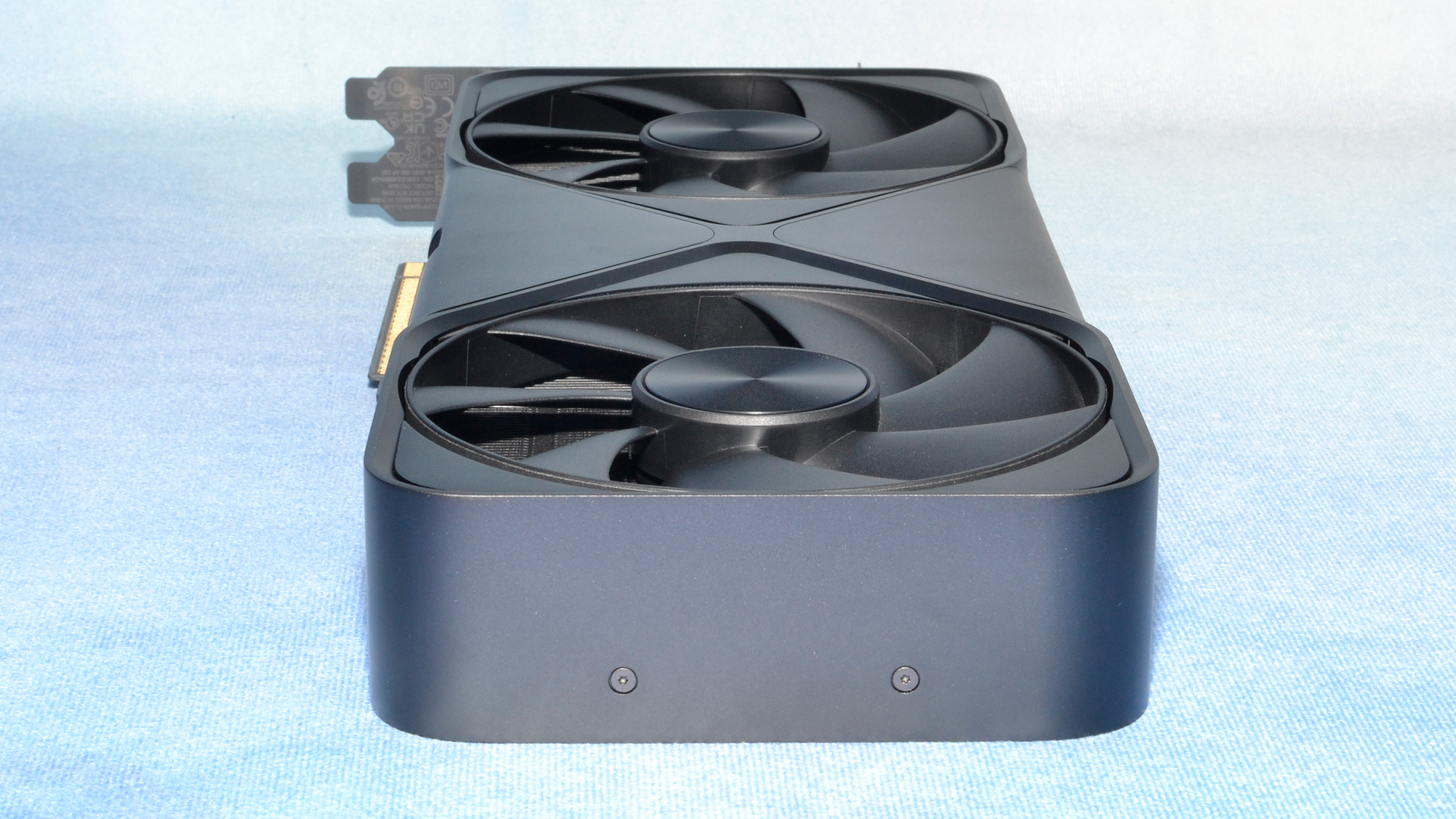
The standout feature is Nvidia's dual-slot, double flow through design for the RTX 5090 FE. It's pretty impressive how the company has managed to cram 575W of power dissipation into such a small form factor, especially when custom models are going up to four slots wide. This required creative thermal engineering as the RTX 5090 FE features a multi-PCB structure, enabling better airflow and cooling. There's also liquid metal for the thermal interface material.
No third-party benchmarks are allowed yet, but leaks suggest a 30-40% uplift in synthetics. We'll see how well that translates to gaming performance, with and without Multi Frame Generation. Regarding pricing, the RTX 5090 FE will set you back $1,999, assuming you can find it at MSRP.
In addition to aesthetics and design, the thermal performance and boost clocks set FE and custom variants apart. CES showcased numerous custom AIB designs with innovative technologies, such as Zotac's new safety light feature and yellow-tipped power connectors from MSI.
Asus is adding a new sub-brand to its ROG series, Astral, and will debut with four RTX 5090 variants at reference boost clocks. Gigabyte will launch the RTX 5090 across its Aorus Elite, Aorus Master, Aorus Master Ice, Xtreme Waterforce, Gaming and Windforce lineups. At MSI's end of the ring, we find its renowned Gaming and Ventus alongside high-end Vanguard, Suprim, and Special Edition offerings. Thus far, Zotac is the only AIB to offer a higher boost clock than reference, with the RTX 5090 AMP Extreme Infinity reaching 2,467 MHz.















