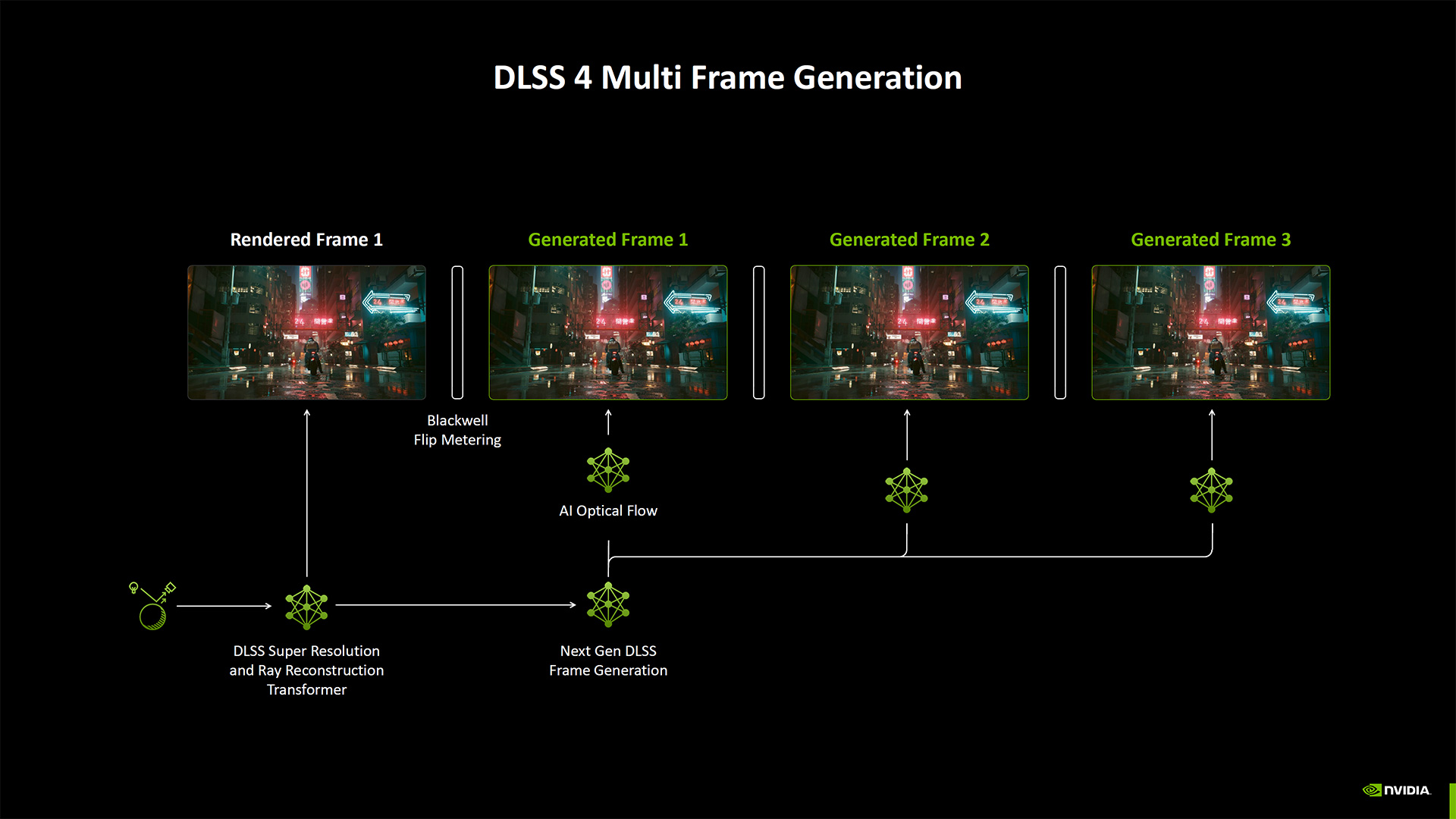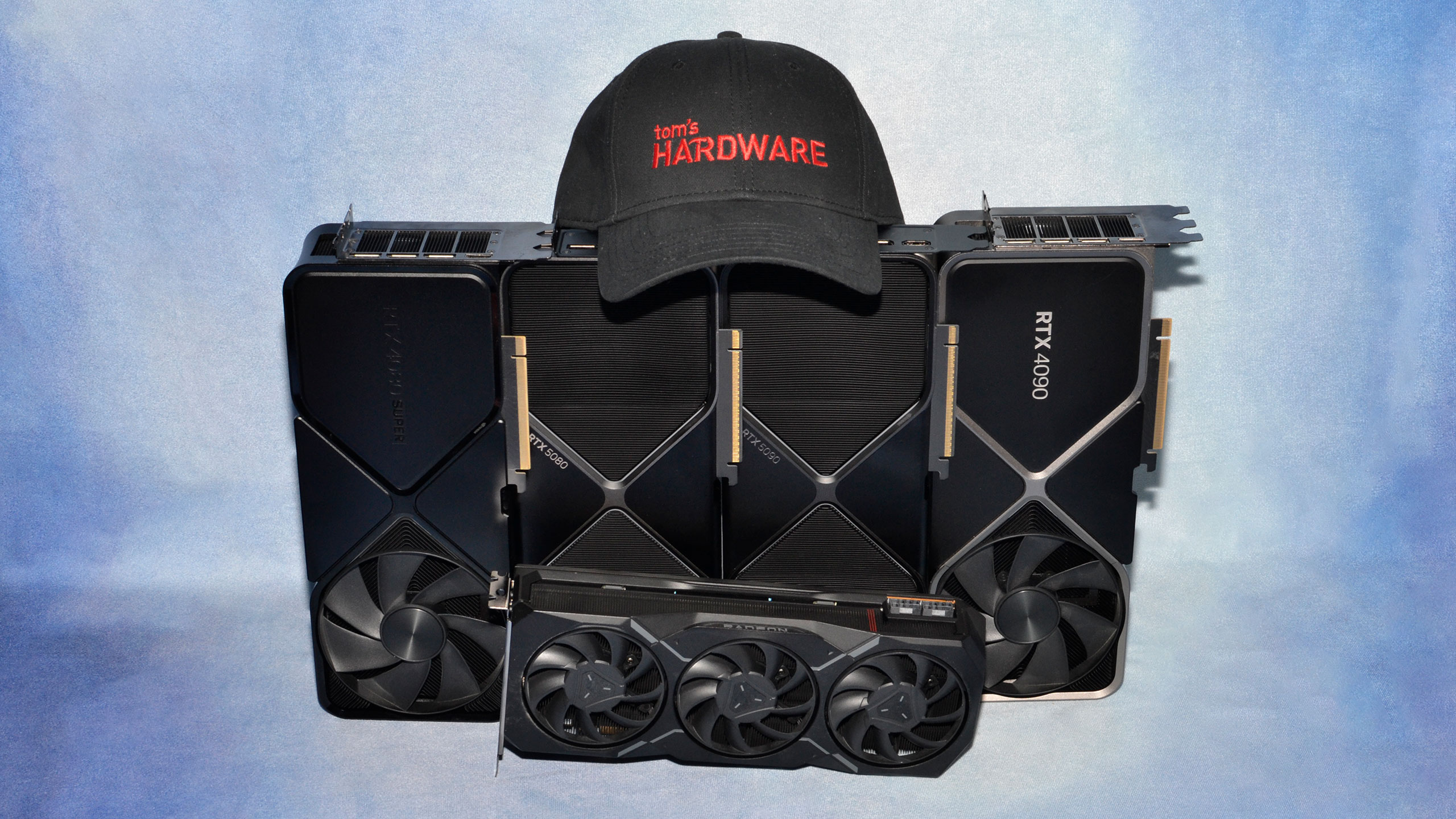
Nvidia's new GeForce RTX 5090 and GeForce RTX 5080 have arrived, and coupled with a new testbed and a revised test suite, not to mention new drivers and a host of other changes, our initial benchmarks had to gloss over a few areas. One of the biggest selling points for the Blackwell RTX 50-series GPUs — according to Nvidia, at least — is DLSS4 with Multi Frame Generation (MFG), an AI-based technology that offers further "performance" improvements over DLSS3 and framegen. But there are other changes as well.
As we discussed prior to the Blackwell hardware paper launch, DLSS4 and neural rendering technologies make direct comparisons between the new RTX 50-series GPUs and their 40-series predecessors a bit more complex. And by "complex" we mean you can't just take any of the published numbers at face value. MFG in particular requires a far more nuanced approach.
As pointed out in our RTX 5090 testing in Cyberpunk 2077, there's far more going on than a simple "bigger number is better" approach can convey. The easiest way to show this is to think about what some theoretical performance numbers might mean.
Take a game running at 50 FPS baseline, without frame generation. That's a decent result but not totally smooth. Now turn on a perfectly executed framegen algorithm and say it gets 100 FPS. That's twice as many "frames" delivered to your monitor each second, but user input sampling happens at the same 50 FPS as before. It looks smoother but it doesn't actually feel much different. Double that again with MFG4X mode and it's 200 FPS, still with the same 50 input samples per second.