
For the first time in five years, Nvidia, the largest GPU manufacturer in the world, didn't announce any new GPUs at CES. The company instead brought the next-gen Vera Rubin AI supercomputer to the party. Gaming wasn't entirely sidelined, though, as DLSS 4.5 and MFG 6X both made their debut, major upgrades to AI-powered rendering that seems even more crucial given the comments that have followed its announcement.
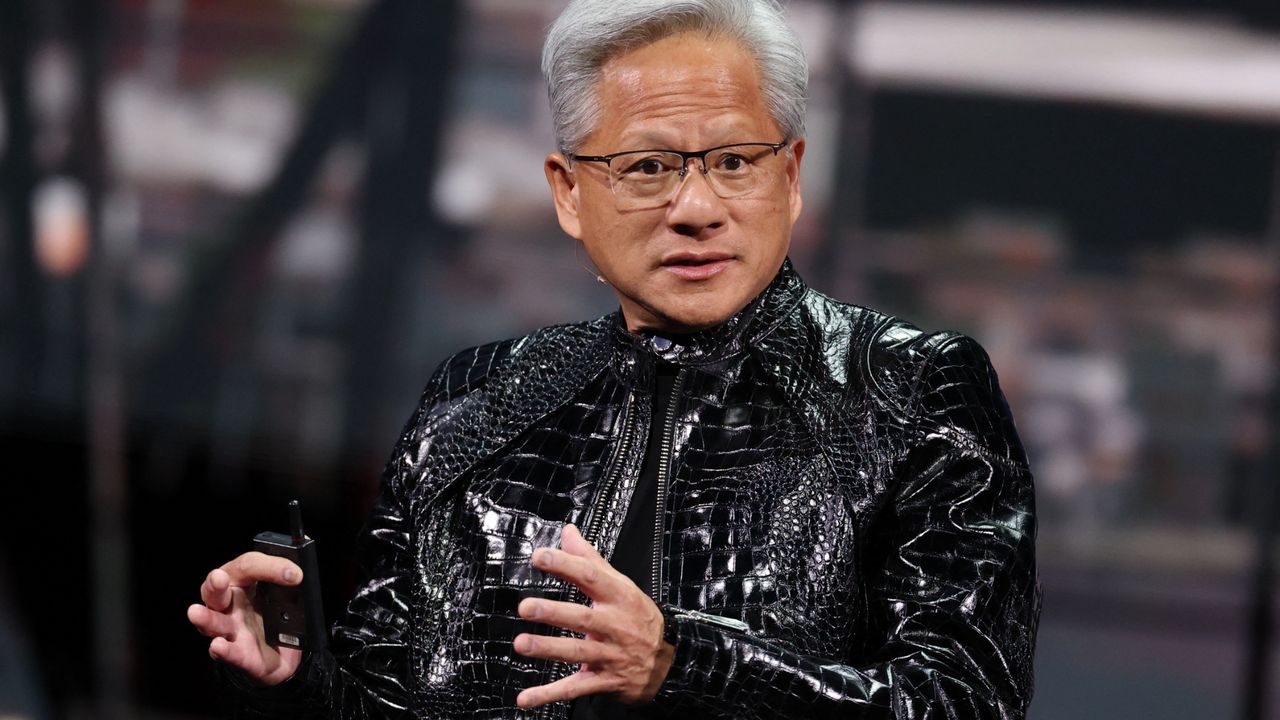
At a Q&A session with Nvidia CEO Jensen Huang, attended by Tom's Hardware in Las Vegas, the executive offered his thoughts about the future of AI as it pertains to gaming toPC World's Adam Patrick Murray, who asked Huang: "Is the RTX 5090 the fastest GPU that gamers will ever see in traditional rasterization, and what does AI gaming look like in the future?" Jensen responded by saying:
“I think that the answer is hard to predict. Maybe another way of saying it is that the future is neural rendering. It is basically DLSS. That’s the way graphics ought to be. I think you’re going to see more and more advances of DLSS... I would expect that the ability for us to generate imagery of almost any style — from photo realism, extreme photo realism, basically a photograph interacting with you at 500 frames a second, all the way to cartoon shading if you want — that entire range is going to be quite sensible to expect."
Huang further speculated that the future of rendering likely involves more AI operations on fewer, extremely high quality pixels, and shared that "we're working on things in the lab that are just utterly shocking and incredible."

With the way games are optimized (or not) these days, upscaling and even frame-gen are expected parts of the performance equation at this point. Developers often count DLSS as part of the default system requirements now, so Jensen's enthusiasm for the tech is timely and, of course, characteristic.
Going as far as to say that the "future is neural rendering" is a strong indication that the raster race might be over, and that it's "basically DLSS" that will push us past the finishing line now. As companies experiment with more and more neural techniques for operations like texture compression and decompression, neural radiance fields, frame generation, and even an entire neural rendering replacement for the traditional graphics pipeline, it's clear that matrix math acceleration and purpose-built AI models will play ever larger roles in real-time rendering going forward.
The CEO extended his passion for AI by talking about how in-game characters will also be overtaken by AI, built from scratch with neural networks at the center of them, turning NPCs lifelike. It's not just photorealism, but also emotional realism, perhaps taking a load off the CPU that would otherwise compute logic for random characters. Nvidia's ACE platform has already been working toward this for a while now and is currently present across the landscape.
"You should also expect that future video games are essentially AI characters within them. Every character will have their own AI, and every character will be animated robotically using AI. The realism of these games is going to really, really climb in the next several years, and it’s going to be quite extraordinary."

Beyond the photorealism, this aspect of AI can actually help cut development times since no studio will tirelessly animate and breathe life into every single NPC. We'd walk away with a more polished outcome, but it will still lack that human touch, the sheer creativity that many put up as the argument against generative AI today.
It's important to note that Jensen himself never said that the RTX 5090 represents the peak of traditional raster, but he didn't push back on that comment. The 5090 is a ludicrously powerful GPU, and it will still be a while before that kind of performance trickles down to the masses.
But it seems like the traditional shader compute ceiling may no longer grow as much or as fast, and AI-reliant features like DLSS are likely to beocme the new frontier of innovation. We're already seeing this happen, and it might become our permanent reality if the AI boom doesn't cool off soon.
For now, though, there's no escaping AI when it comes to computer hardware, both in a literal and metaphysical sense. The very thing that caused the current component crisis is being touted as its antidote. Jensen ended his answer to this question by saying, "I think this is a great time to be in video games.”

Follow Tom's Hardware on Google News, or add us as a preferred source, to get our latest news, analysis, & reviews in your feeds.