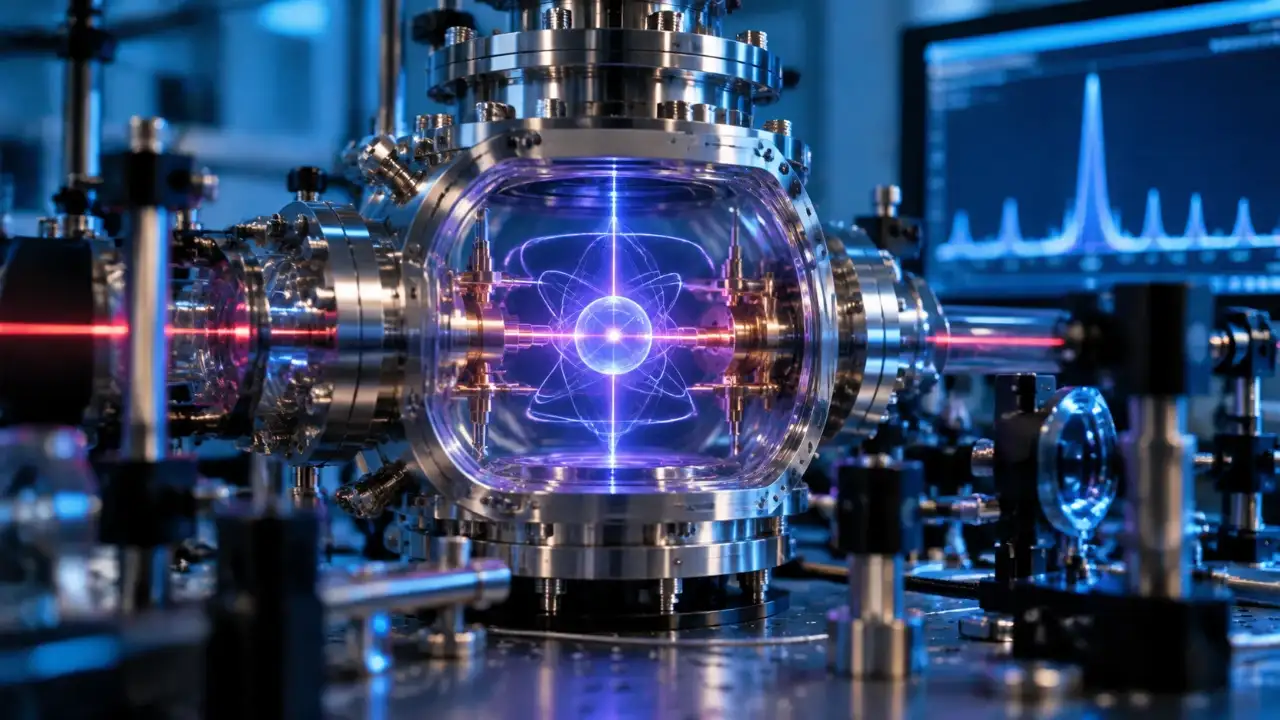
Measuring time at an exceptionally precise level has become increasingly significant as modern technology and scientific research requires ever more accurate references. Atomic clocks already support systems like satellite navigation, communications infrastructure and transport networks, while scientists are continuing to develop technologies that can measure time with even finer precision.
A team from the National University of Singapore (NUS) has reported a significant advancement using lutetium, a rare-earth element. Scientists at the university’s Centre for Quantum Technologies (CQT) developed the laboratory-based optical atomic clock, with the research published in Nature on September 23.