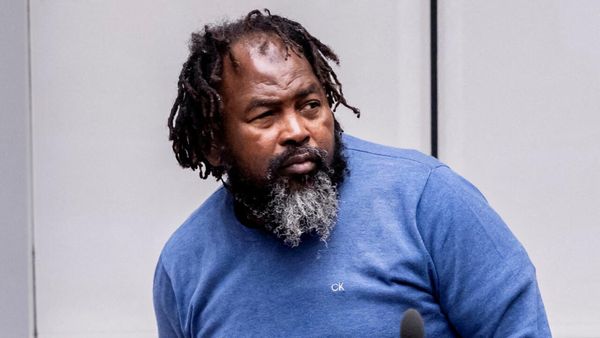
Greg Webb lost his house in the 2019-20 Black Summer bushfires. It is not something he wants to go through ever again.
That is why he and other Lake Conjola residents on the NSW south coast have helped develop free designs and a guide to building disaster-resilient homes.
The bushfire-ravaged community worked with the Bushfire Building Council of Australia, the Shoalhaven Council, major Australian insurer, NRMA, as well as expert engineers and architects to develop the Fortis House guidelines.
The architectural drawings and handbooks are aimed at helping builders, designers, and home owners renovate or rebuild to protect their properties from fire, floods, heatwaves, and storms.
Mr Webb was consulted to help develop the Fortis House guidelines after months of research into the materials required.
"The whole concept is to build houses that have a far better chance of not burning down or being flooded," Mr Webb said.
"Nature is a tough animal at times, and she will slap us on the back of the hand for things we've done.
Easing pressure
Bushfire Building Council of Australia chief executive Kate Cotter said the Fortis House had a focus on sustainability and its specifications could be adapted to any house.
She said the resource was designed primarily to help ease the pressure and complexity of rebuilding in the wake of a disaster.
"It is really overwhelming.
"So, the idea was to make sure the houses would meet or exceed all of the regulations so that you knew taking this design would get you through the process."
'Building back better'
Ms Cotter said she hoped it would eventually have implications on insurance.
"People can prove they've gone above and beyond, and we hope to see that reflected in insurance pricing across the industry," she said.
A prefabricated home has also been developed as part of the project.
Ms Cotter said residents wanted a faster solution, so they teamed with modular builders to design a house that could be built offsite.
"People just can't be out of homes for years on end. It's expensive and they are dislocated from their communities, having to find alternative accommodation elsewhere.
"So, speed was really important to this project."