Not vaccinating enough children against measles could cost England more than £290m and result in hundreds of deaths, researchers warn.
Measles is one of the most contagious diseases known to affect humans, but following a dramatic fall in vaccination rates, the UK is no longer considered to have "eliminated" the disease in the eyes of global health officials.
About 3 per cent of parents in the UK are reported to have refused to vaccinate their children. Scientists used this figure to simulate what could happen if these vaccination rates continue, and over the course of 20 years, they predicted two major measles outbreaks causing 392,805 additional cases and 480 deaths.
The researchers at Imperial College London’s Jameel Institute also predicted the economic burden of these measles outbreaks and found the disease could cost £292m over two decades.
But just 26 per cent of this figure was attributed to healthcare costs while 74 per cent was due to productivity losses, such as parents taking time off work to care for their sick children, according to the study published in the journal Vaccine.
Professor Katharina Hauck at Imperial College London told The Independent: “Measles is hideous because the risk of infection is so high. It's something that I think it's very difficult to grasp, but one patient can infect between 16 and 20 other patients.
“It’s absolutely insane how infectious that disease is, and that means that everyone who can be vaccinated needs to be vaccinated in order to keep measles under control.”
From 2021 to 2023, the UK had previously held the status of having eliminated measles. But the World Health Organisation (WHO) confirmed that measles transmission was "re-established" in the UK in 2024 after vaccination rates plateaued and cases surged – with 3,681 recorded across the country this year.
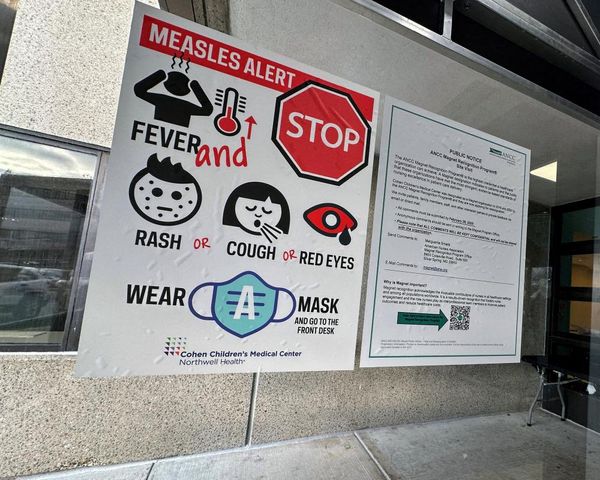
A rash, fever, runny nose, cough and conjunctivitis are common symptoms of measles, but it can trigger serious complications such as ear infections, encephalitis (swelling of the brain), blindness, breathing problems or pneumonia.
The MMR vaccine, which protects against measles, mumps and rubella, is now being replaced by the MMRV vaccine which also protects children against varicella, more commonly known as chickenpox.
The WHO recommends at least 95 per cent of children should receive vaccine doses for each illness to achieve herd immunity. But uptake of the MMR vaccine in some areas of England is at record lows.
“We have certain populations in east London where we have less than 60 per cent of children which have received the MMR vaccine,” Prof Hauck explained.
“That's significantly below this 95 per cent threshold that's required for herd immunity, where basically we see infections going down.”

However, there are people who can’t get vaccinated due to pre-existing health conditions, and others get the vaccine but it is not effective for them. A separate group of people, which makes up about 3 per cent of the population, refuse to get vaccinated.
The latest figures for England from the UK Health Security Agency (UKHSA) show that in 2024-2025, some 91.9 per cent of five-year-olds had received one dose of the MMR vaccine, unchanged from 2023-2024 and the lowest level since 2010-2011.
And just 83.7 per cent of five-year-olds had received both MMR doses, down year-on-year from 83.9 per cent and the lowest level since 2009-2010.
Regaining herd immunity could be quick as far as biology is concerned, as the vaccine kicks in after about 14 days. But that is if everyone agreed to vaccinate their children, which can take years.
In countries such as the US, a vaccine against measles is needed to start school. For example, in Brooklyn, New York, parents can be fined up to $1,000 for not vaccinating their children against measles. But in the UK the MMR vaccine is not mandatory and parents face no fine, Prof Hauck explained.
Parents in the US can apply for an exemption on religious or philosophical grounds, but this means parents need to make an “active choice” to not vaccinate their children.
However, studies have suggested educating parents on the risks of the disease and the safety of vaccines is one of the best ways to boost immunisation numbers.
This was seen in the analysis of more than one million people from Imperial College London’s REACT study. Researchers found that almost two-thirds (65 per cent) of people who were initially hesitant about getting a Covid-19 vaccine went on to get vaccinated at least once.
A nationwide catch-up campaign for MMR in 2023-2024 targeted families of children who were partially vaccinated, and they delivered more than 180,000 additional doses.
The Royal College of Paediatrics and Child Health found that while some families are hesitant to vaccinate due to fears about the jabs, many face issues that could be resolved with more support. Some people have difficulty booking appointments, especially ones that fit around work and childcare. Parents also reported inconvenient clinic locations and the high cost of public transport to get to appointments.
“I think many parents, if you make it easier for them and if you educate them, can be persuaded with good campaigns,” Prof Hauck added.
The Department of Health and Social Care has announced a new £2 million scheme that will see health visitors reach families facing barriers to vaccines. The pilot, which was launched in January, covers five regions of England – London, the Midlands, the North East and Yorkshire, the North West and the South West – and is designed to boost uptake and protect children from preventable diseases.
Measles is back at Disneyland for the first time in more than a decade
Only five Palestinian patients let out of Gaza after Israel reopens Rafah crossing
What is norovirus? The symptoms to watch out for and when to seek help
Top preventable cancer causes in UK revealed - and how to cut your risk
Coroner warning to pregnant woman over drug used to treat migraines after baby death
Cancer drugs among nearly 400 medicines at risk of shortage in UK