
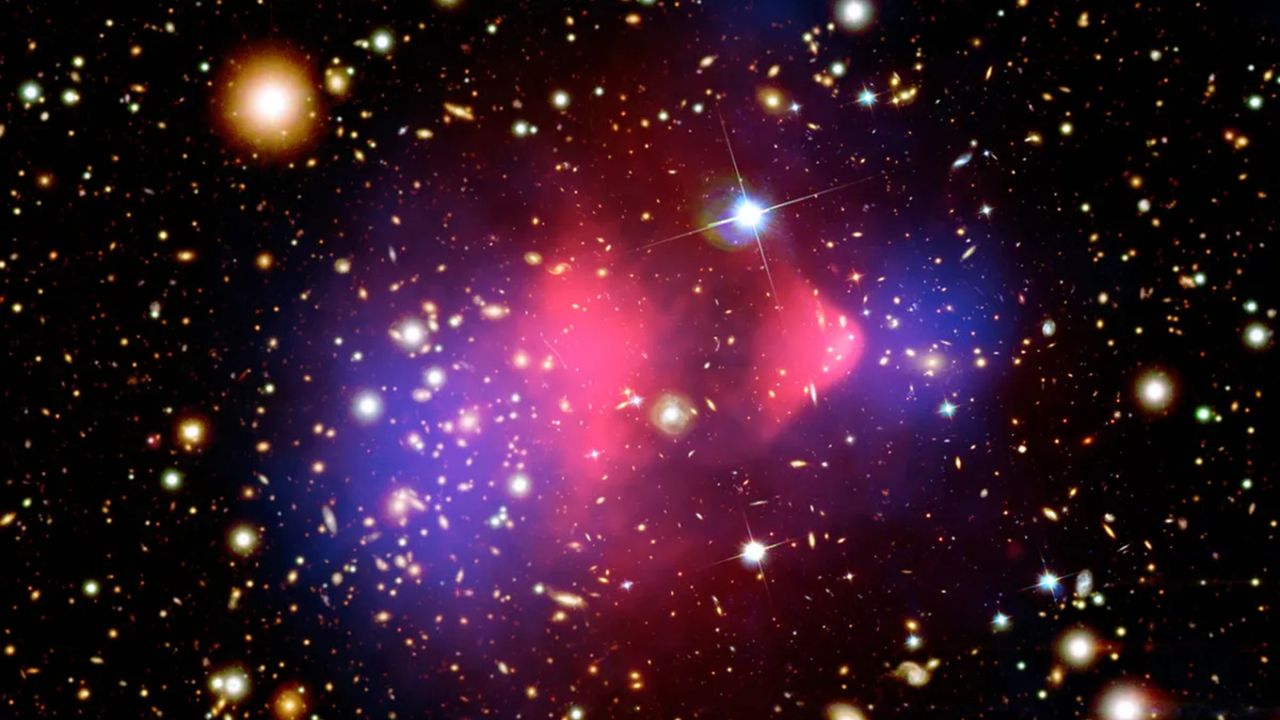
Dark matter, one of the universe's best kept secrets, may have been quietly painting the cosmos in faint, detectable hues of red and blue all along, a new study suggests.
Dark matter makes up more than 80% of the matter in the universe, yet it doesn't emit, absorb, or reflect light, making it impossible to observe directly. Now, a new theoretical study by scientists at the University of York in the U.K. suggests light passing through dark-matter-rich regions of space could pick up a faint tint — slightly red or blue, depending on the kind of dark matter it encounters.