Get all your news in one place.
100's of premium titles.
One app.
Start reading
AAP
AAP
Environment
Nick Wilson

'Not all good news' amid whale conservation anniversary

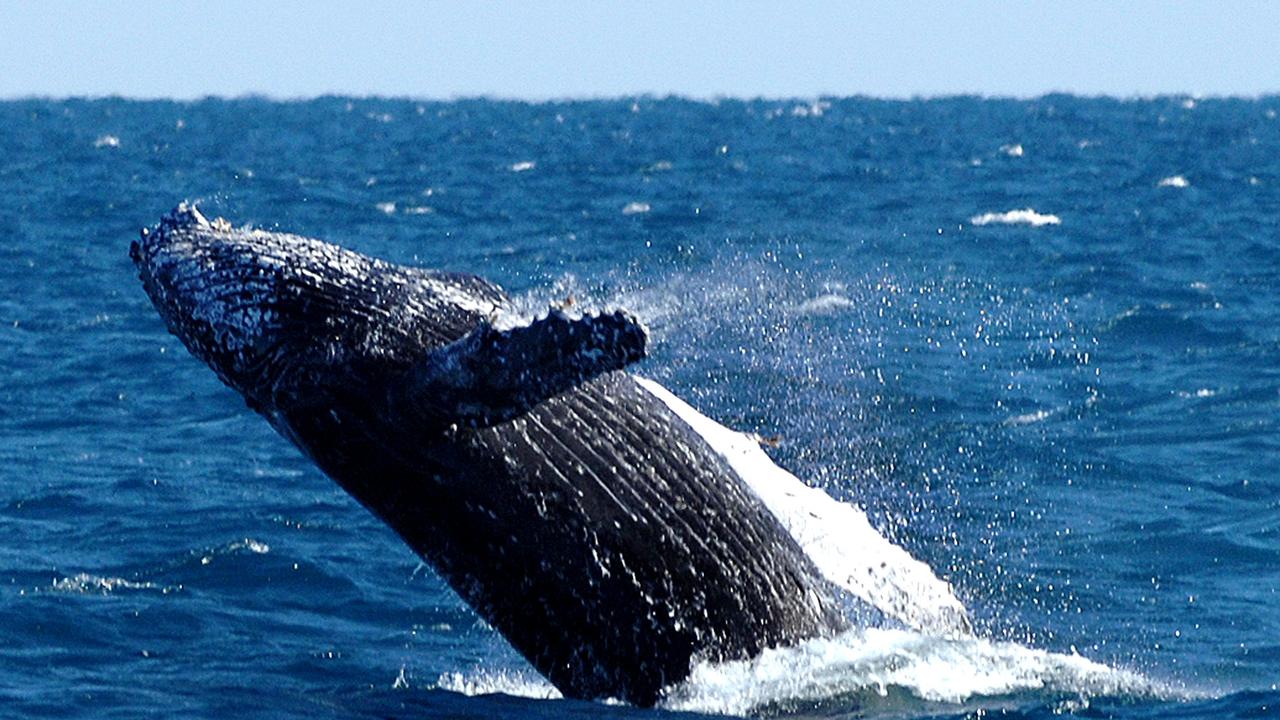
Some 50,000 humpback whales have been making their annual voyage to feeding grounds in Antarctica. (Dave Hunt/AAP PHOTOS)

Forty years on from an international moratorium on commercial whaling, the global community is meeting to consider new, unforeseen threats.

The International Whaling Commission's 70th meeting began on Monday at Hobart, with delegates from some 63 member nations in attendance.

The commission was founded in 1946, at a time when whale populations had been decimated by decades of unregulated industrial whaling.

While populations have in many cases rebounded - particularly since a 1986 moratorium on commercial whaling - whales remain under threat globally.

whales
Murray Watt is warning whales face many threats including entanglement and ship strikes. (Mick Tsikas/AAP PHOTOS)

"It's not all good news," Environment Minister Murray Watt told delegates.

"Whales still face many other, compounding threats such as bycatch, entanglement, ship strikes, ocean noise, climate change and habitat destruction."

Among the main issues to be debated at the week-long meeting is a quarter-century old push for a whale sanctuary in the southern Atlantic ocean.

The proposal, which was first raised by Brazil in 1998, would extend an existing protected area in the Southern Ocean, protecting whales from West Africa to South America.

But pro-whaling nations have refused to back the plan, with some walking out of previous meetings to scupper votes.

The commission will vote on a proposal to change voting rules on Monday, in a bid to reduce the ability of pro-whaling nations to block certain decisions.

Among the nations opposed to the sanctuary is Norway, whose head delegate used the opening session on Monday to challenge the commission's standing.

"Since the adoption of the moratorium in 1982, the work of the IWC has been an example of how an international organisation shall not run its business," Petter Meier said.

He claimed the commission had since focused on conservation over sustainable use, arguing marine mammals should be considered an essential food commodity.

Norway is one of three nations that still engages in commercial whaling, along with Japan and Iceland, which is considering a moratorium.

Australia was a whaling nation until 1978, when its last whaling station on the Western Australian coast closed and, with it, almost 200 years of hunting.

As the IWC meeting got underway, a testament to the success of modern whaling regulation was unfolding about 70 kilometres to its southeast.

Some 50,000 humpback whales were making their annual voyage from the breeding grounds of the Great Barrier Reef to feeding grounds in Antarctica.

krill
The Bob Brown Foundation is pushing for a band on Antarctic krill fishing. (Ethan James/AAP PHOTOS)

In the 1960s, the eastern Australian humpback whale population numbered as few as about 150.

"It's an extraordinary thing to celebrate," said Dr Nick Gales, the chair of the commission.

Another key issue to be canvassed during the meetings is Antarctic krill fishing, with protesters from groups including the Bob Brown Foundation outside the venue on Monday calling on the federal government to ban it.

The meetings will run until Friday.

Sign up to read this article
Read news from 100's of titles, curated specifically for you.
Already a member? Sign in here
Related Stories
Top stories on inkl right now
One subscription that gives you access to news from hundreds of sites
Already a member? Sign in here
Our Picks
Fourteen days free
Download the app
One app. One membership.
100+ trusted global sources.