
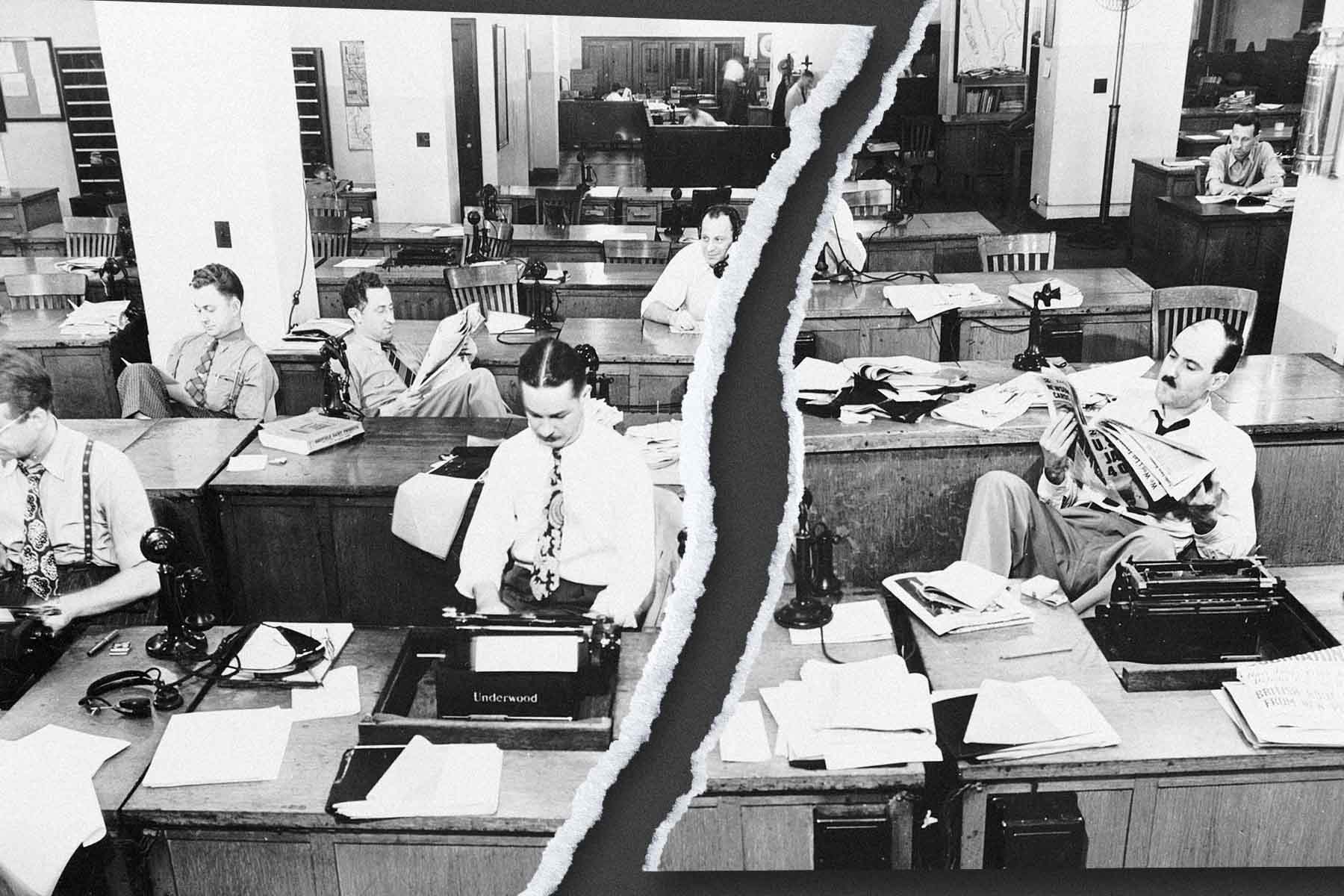
Early in the film All the President’s Men, rookie Washington Post reporter Bob Woodward, played by Robert Redford, hunches over his typewriter, hurriedly filing the first story on what will become the Watergate scandal, the clacking of his typewriter harmonizing with the cacophony of ringing phones and hushed, urgent conversations all around him. Moments later, he catches his fellow reporter Carl Bernstein, played by Dustin Hoffman, rewriting the story. “I don’t think you’re saying what you mean,” says Bernstein, lecturing Woodward about his fuzzy lede. “Yours is better,” Woodward concedes, then dumps a pile of meticulous notes on Bernstein’s desk with an admonishment: “If you’re going to do it, do it right. Here are my notes. If you’re going to hype it, hype it with the facts.”
The bruising of male egos, the thrumming urgency, the obsessive commitment to getting the story right—the 1976 movie symbolizes the golden age of journalism and the potent, vital energy of the newsroom. It’s scenes like this that Maureen Dowd, who got her start in journalism in Washington during the Watergate years, evokes with tender nostalgia in a recent New York Times column. She pays tribute to the rowdy newsroom of her youth, where tantruming reporters would smash “their typewriters or computer terminals on the floor.” Those days are over, she laments, noting that, today, the only reason her Slack-reliant colleagues come to the office is the free bagels. Dowd’s colleague Jim Rutenberg wondered wryly if a contemporary movie about journalism might instead feature “individuals at their apartments, surrounded by sad houseplants, using Slack?”