Get all your news in one place.
100's of premium titles.
One app.
Start reading
The Times of India
The Times of India
World

Northern Norway’s coastal towns face storms, erosion and energy stress: And scientists say climate plans must cut emissions and protect livelihoods at once

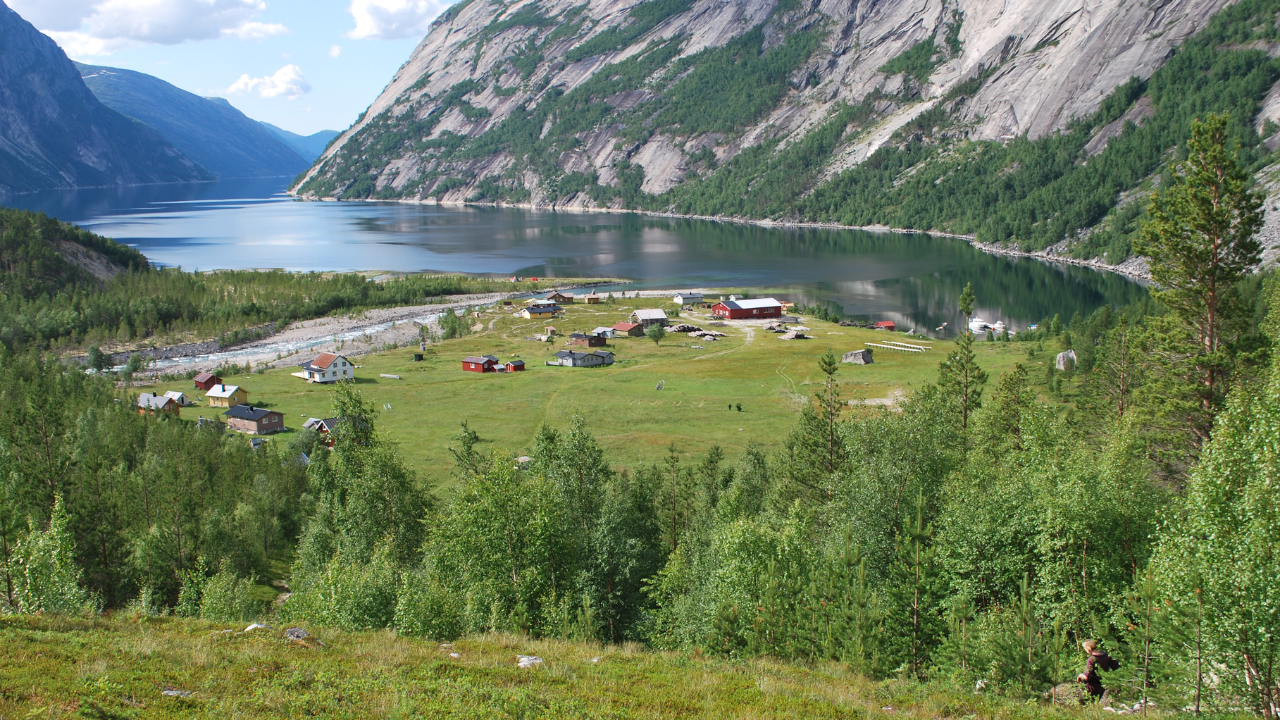
Communities scattered along Northern Norway’s rugged coastline are already experiencing the effects of a changing Arctic. Rising temperatures, stronger storms, coastal erosion and shifting marine ecosystems are placing growing pressure on roads, ports, energy systems and fisheries that support daily life. Researchers now argue that adapting to these changes will require more than building stronger infrastructure. Climate strategies, they say, must also protect local livelihoods while reducing greenhouse gas emissions.

Get breaking news anytime, anywhere. Download the TOI app now!

A new study examining coastal settlements across Northern Norway, published on Zenodo , argues that climate adaptation and low-carbon development should no longer be treated as separate policy goals. Instead, researchers propose that communities must prepare for climate impacts while simultaneously maintaining reliable transport, renewable energy supplies, fisheries, housing, and public services. The study highlights that Arctic settlements face unique challenges because they are spread across islands, fjords and remote coastal landscapes where severe weather, changing sea conditions and limited infrastructure can quickly disrupt everyday life. Rather than relying solely on engineering solutions, the authors advocate community-led planning that combines scientific climate data with local knowledge accumulated through generations of living and working along the coast.

Climate adaptation must work alongside emission cuts

Researchers argue that many climate policies continue to separate adaptation from mitigation, even though coastal communities often need both at the same time. Investments in renewable energy, resilient transport networks and climate-proof infrastructure can help reduce emissions while also making communities better prepared for increasingly frequent extreme weather events.

The approach aligns with findings from the Intergovernmental Panel on Climate Change (IPCC) , which concludes that integrated adaptation and mitigation strategies generally deliver greater long-term benefits than pursuing either objective in isolation. The IPCC warns that climate impacts are becoming increasingly interconnected, affecting infrastructure, ecosystems, food production and local economies simultaneously, particularly in high-latitude regions experiencing faster-than-average warming.

Why local communities are central to Arctic climate resilience

Researchers emphasize that successful climate adaptation in Northern Norway depends as much on local knowledge as on engineering solutions. Residents who rely on fishing, coastal transport and seasonal travel often notice subtle environmental changes long before they appear in scientific datasets, from shifting sea conditions and changing snowfall patterns to increased coastal erosion. The study argues that combining these lived observations with climate science allows municipalities to make better decisions about infrastructure, renewable energy, housing and emergency planning. Rather than applying identical policies across the Arctic, the authors suggest that community-led planning can produce more practical, resilient solutions that protect both livelihoods and the unique cultural identity of northern coastal settlements.

Local knowledge is becoming as important as climate models

The study also emphasizes that residents often detect environmental changes long before they appear in official datasets. Fishermen, coastal workers and local communities regularly observe shifts in weather patterns, sea ice, fish distribution and shoreline erosion that can complement scientific monitoring.

This reflects a growing consensus within Arctic research that combining Indigenous and local knowledge with scientific observations produces more effective climate adaptation strategies. The Arctic Council’s Arctic Monitoring and Assessment Programme (AMAP) has similarly concluded that successful adaptation across the Arctic depends on integrating community experience into planning because local observations often provide early warning of environmental changes affecting infrastructure, ecosystems and livelihoods.

As climate risks continue to grow across Northern Norway, the researchers argue that resilient communities will depend not only on stronger roads, ports and energy systems, but also on governance that gives residents a central role in shaping how their towns adapt to an increasingly unpredictable future.

Sign up to read this article
Read news from 100's of titles, curated specifically for you.
Already a member? Sign in here
Related Stories
Top stories on inkl right now
One subscription that gives you access to news from hundreds of sites
Already a member? Sign in here
Our Picks
Fourteen days free
Download the app
One app. One membership.
100+ trusted global sources.