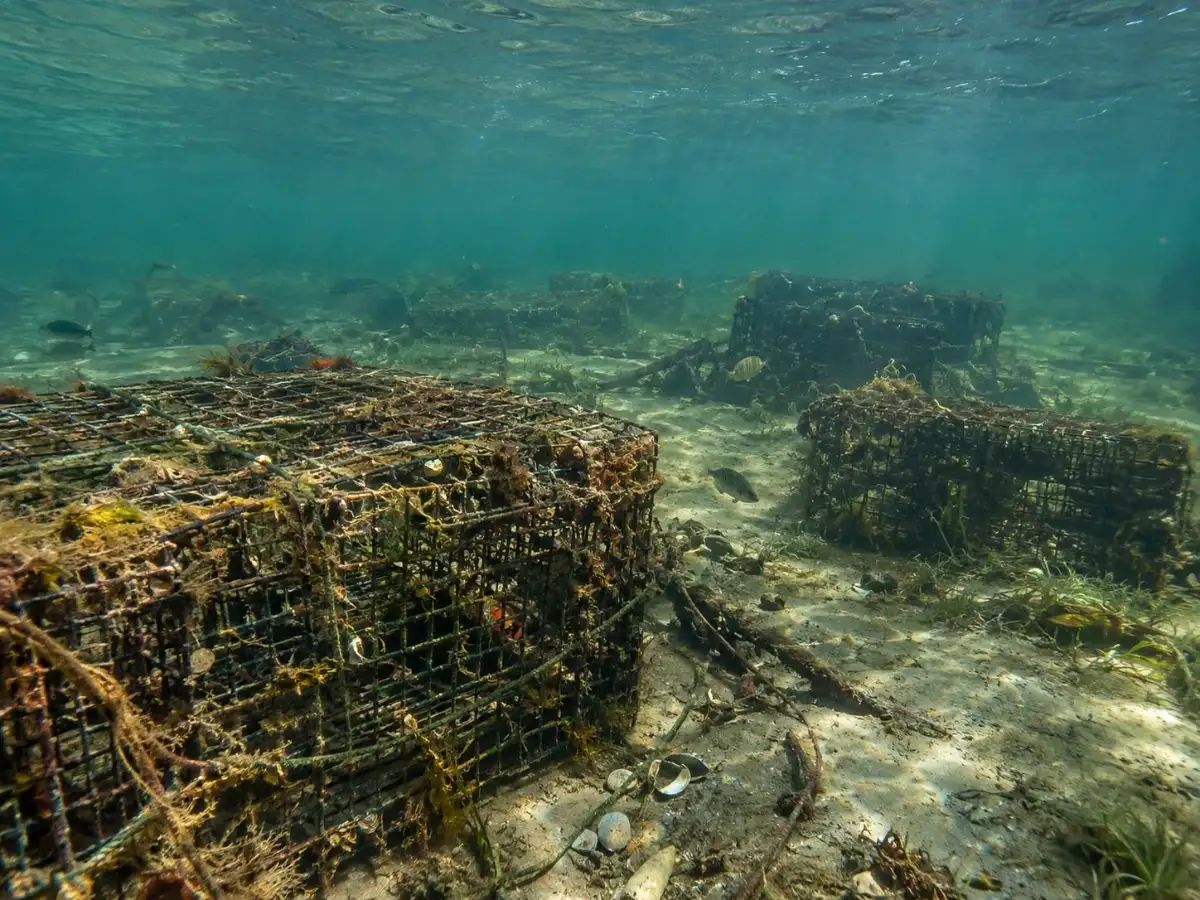
Picture the seafloor along a coastline: rusting wire cages with bait still dangling, waiting to snag anything that passes by, that no one has checked for years. The crabber who set them down may have lost track of them in a storm or after a passing boat's propeller had sliced through the line, but the trap never knew. Ghost fishing is one of those ocean issues that few outside the fishing industry even know about, but it's one that marine biologists take seriously, because a lost trap doesn't stop working just because no one is checking it. According to the NOAA Marine Debris Program, a pilot project along the North Carolina coast decided to take a page from nature's playbook by using abandoned traps as building blocks for a new reef.
Marine life lost