Get all your news in one place.
100’s of premium titles.
One app.
Start reading
The Times of India
The Times of India
Business
TIMESOFINDIA.COM

Non-subsidised LPG cylinder to cost Rs 50 more: How prices have moved over the years

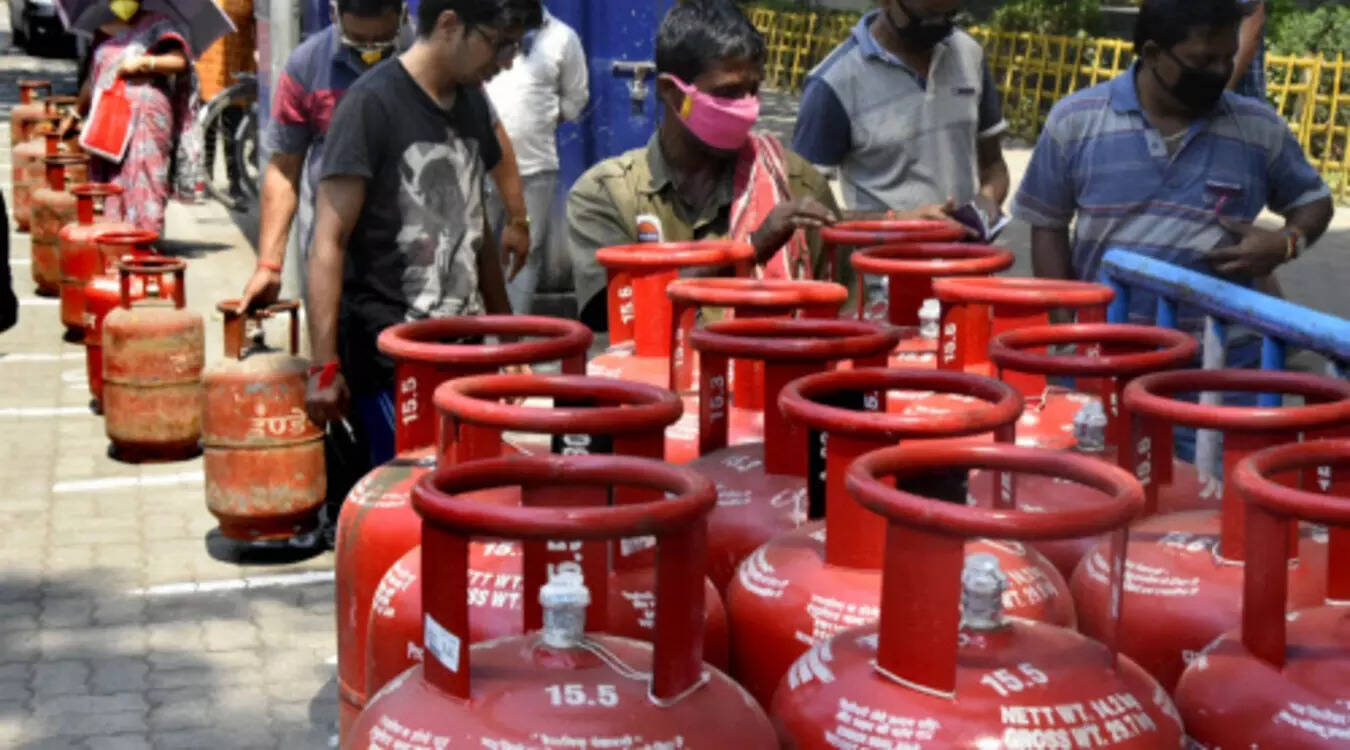
NEW DELHI: The price of non--subsidised LPG cylinder or cooking gas was hiked by Rs 50 on Tuesday, after a haitus of 167 days.

A 14.2 kg cylinder in Delhi now costs Rs 949.50, while it costs Rs 976 in Kolkata. This is an increase of almost 16 per cent since March 1, 2021 when a 14.2 kg liquified petroleum gas (LPG) cylinder costed Rs 819 in the national capital.

In terms of per kg, the cost for consumers has jumped from Rs 57.67 on March 1 last year to Rs 66.86 now.

With today's hike, cooking gas prices have gone up by Rs 140.5 per 14.2 kg. It had remained unchanged since October 2021, after rising sharply by almost Rs 100 for 4 months.

A 5 KG LPG cylinder will now cost Rs 349, while the 10 kg composite bottle will come for Rs 669.

The 19-kg commercial cylinder now costs Rs 2,003.50.

What is subsidised and non-subsidised LPG

LPG is available at market price across the country. But, the government gives a small subsidy to select categories of customers.

In view of the subsidized price determined by the government, the subsidized LPG consumers are insulated from the volatility of LPG prices in the international market.

However, subsequent rise in prices over the past couple of years has eliminated the effect of subsidity in metros and other major cities.

Non-subsidised cooking gas is the one that consumers buy after exhausting their quota of 12 cylinders at subsidised or below market price.

However, the government pays no subsidy on LPG in most cities and the price of the refill that consumers, including the poor women who got free connection under the much-talked Ujjwala scheme, undertake is the same as non-subsidised or market price LPG.

Therefore, in Delhi, there is no subsidy paid to customers and all LPG users pay the market price.

Since May 2020, no subsidy has been provided to consumers except some to those in far-flung areas to make up for higher inland freight.

How LPG prices are determined

India, the world's third-largest oil consumer, depends on imports to meet 85 per cent of its needs. The imported oil is converted into products like petrol, diesel and LPG.

Crude oil, being the main raw material, influences the fluctuations in international price of LPG. This is the reason that speculations of a hike in prices in India were rife when Brent Crude oil prices surged to record highs earlier this month.

The price of a cooking cylinder that you use in your homes on an everyday basis is determined in terms of import parity price (IPP).

This IPP is determined on basis of gas prices in the international market, since a major portion of domestic consumption is met via imports.

Saudi Aramco, being the world's largest oil producer, becomes the base on which LPG prices are then computed. Aramco's LPG prices comprises free on board (FOB) price, ocean freight, custom duties, port charges and insurance cost.

Initially this price is computed in dollars and is then converted to ruper terms as per the latest exchange rate.

India adds certain charges to this cost like inland freight, oil companies' margins, bottling cost, marketing expense, dealer commission and GST, to arrive at the final price.

This is the retail selling price of non-subsidised cooking gas.

It is revised every month on the basis of price of benchmark fuel in the previous month.

Price since 2014

The rate of non-subsidised LPG had peaked to Rs 1,241 in January 2014. At that time, the Centre gave as much as Rs 600 subsidy per cylinder.

However, prices were brought down to 580-610 range by 2015, a year after the Prime Minister Narendra Modi-led BJP government came into power.

Prices were further brought down to Rs 466.5 for a 14.2 kg cylinder in Delhi by September 2016. However, the cost has remained above the Rs 500-mark since.

Ujjwala Scheme

In May 2016, ministry of petroleum and natural gas (MOPNG), introduced the ‘Pradhan Mantri Ujjwala Yojana’ (PMUY) as a flagship scheme with an objective to make clean cooking fuel such as LPG available to the rural and deprived households which were otherwise using traditional cooking fuels such as firewood, coal, cow-dung cakes.

Usage of traditional cooking fuels had detrimental impacts on the health of rural women as well as on the environment.

As per the scheme, the Centre bears the cost of installation of an LPG connection while, the beneficiary has to buy her own cooking stove and pay for subsequent refills.

In wake of the Covid-19 pandemic since March 2020, the government granted 3 free LPG cylinder refills as a relief measure.

However, state-run fuel retailers raised the refill price for 19 kg commercial LPG cylinder by Rs 105 to Rs 2,012 earlier this month.

The price of non-subsidised 5-kg refills, called 'Chhotua', or the little one, was also raised to Rs 569 each.

This is the highest price for a commercial cylinder, used by eateries, caterers and hotels, since December.

As per a release by ministry of petroleum, Ujjwala 2.0 was started on August 10, 2021 on pan India basis to provide additional 1 crore LPG connections along with free first refill and stove. As on March 1, 2022, OMCs have released 1 crore LPG connections under it.

Further, the government has approved to release of additional 60 lakh LPG connections under Ujjwala 2.0 on existing modalities.

Sign up to read this article
Read news from 100’s of titles, curated specifically for you.
Already a member? Sign in here
Related Stories
Top stories on inkl right now
One subscription that gives you access to news from hundreds of sites
Already a member? Sign in here
Our Picks
Fourteen days free
Download the app
One app. One membership.
100+ trusted global sources.