Nokia began its remarkable corporate journey in 1865, not as a technology company, but as a small wood-pulp and paper operation in Finland. Founded by mining engineer Fredrik Idestam, the business initially manufactured paper before gradually expanding into other industries. Over the following decades, Nokia became associated with rubber products, including boots and tires, and later with telephone and power cables. These seemingly unrelated businesses eventually created the foundation for a company that would become one of the most recognizable names in mobile communications. Nokia's own historical records describe its long evolution as a story of repeated transformation, while contemporary accounts have highlighted how dramatically the Finnish company changed direction over the course of its history.
Nokia's move toward telecommunications developed gradually rather than happening overnight. The company entered telecommunications equipment through Finnish Cable Works, whose electronics activities included radio-transmission equipment. Nokia subsequently developed expertise in radio technology and mobile communications, eventually producing phones for vehicles before making its breakthrough into handheld devices.

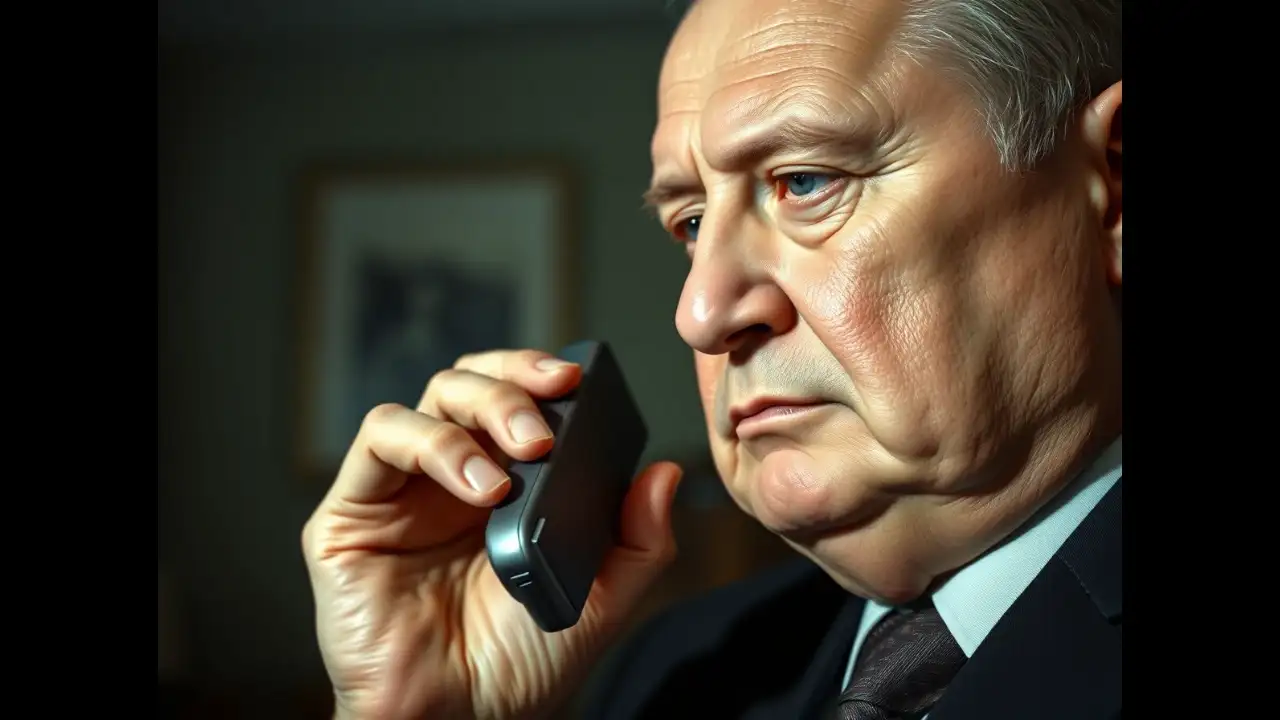
In 1987, the company introduced the Mobira Cityman, its first handheld mobile phone. The device weighed roughly 800 grams and was expensive by the standards of the time, but it became an iconic product of the emerging mobile era. Its visibility increased further after Soviet leader Mikhail Gorbachev was photographed using a Cityman in Helsinki, giving the handset the informal nickname “Gorba.”
The late 1980s and early 1990s brought another important change as cellular communications shifted toward digital standards. In 1991, the world's first GSM call was made using Nokia equipment on a Finnish network, an event that helped demonstrate the possibilities of the new digital mobile standard. Nokia introduced the Nokia 1011 in 1992, its first digital handheld GSM phone, while the company increasingly concentrated its resources on telecommunications and mobile phones.
During this period, Nokia began divesting businesses outside its emerging core. Its rubber, cable and other operations were gradually separated as management pursued a more focused strategy. The transformation meant that the company founded around paper and later expanded across numerous industrial sectors was increasingly becoming a specialist in communications technology.
Nokia's momentum accelerated during the 1990s as mobile phones moved from specialized equipment toward mass-market consumer products. The company's 2100 series, introduced in 1994, dramatically exceeded its original sales expectations: Nokia had targeted approximately 400,000 units but ultimately sold about 20 million. The Nokia Tune also became one of the most recognizable sounds associated with mobile technology.
By 1998, Nokia had become the world's leading mobile-phone company, according to its own corporate history and contemporary reporting. Its rapid expansion reflected both growing consumer demand for cellular communication and Nokia's ability to produce phones for different markets and price points. The company's success continued into the early 2000s, when its turnover had risen substantially and its phones increasingly incorporated features such as cameras and early internet capabilities.
At the height of its mobile-phone era, Nokia became much more than a Finnish manufacturer. Its products were sold across global markets, and the company developed an enormous portfolio of handsets ranging from basic phones to increasingly sophisticated smartphones. Nokia's 2000s success was built partly on its extensive distribution, recognizable design and ability to produce durable devices at multiple price levels. Yet the mobile industry was changing rapidly.
Smartphones were increasingly defined not only by hardware but also by software, applications, touch interfaces and broader technology ecosystems. The launch of Apple's iPhone in 2007 and the expansion of Google's Android platform intensified this shift. The Guardian reported that Nokia acknowledged it had been slow to respond to the changing smartphone landscape as competition increasingly centered on these new platforms.