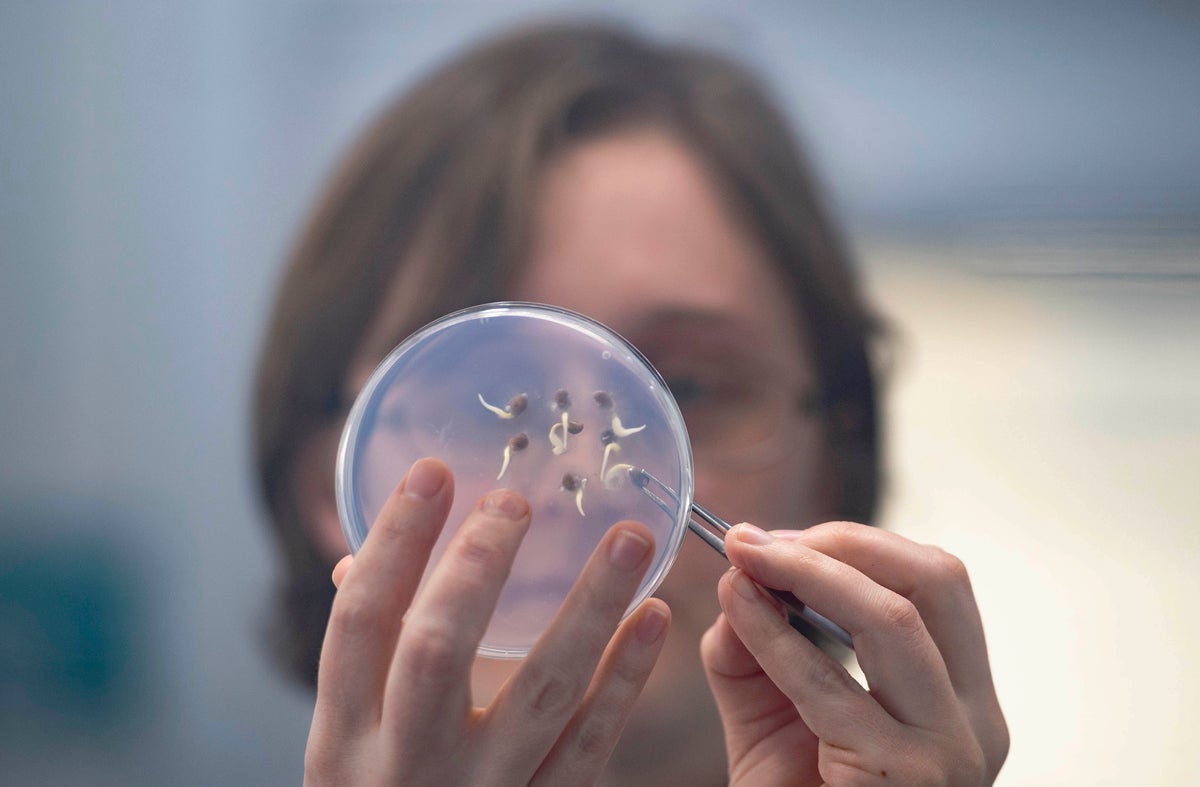
“Our hope is that one day, we do not need to exist,” Dr John Dickie says, his breath forming clouds of condensation in the frigid temperatures of a bomb- and flood-proof underground vault lined with rows of carefully catalogued jars and vials containing billions of seeds.
This is the Millenium Seed Bank (MSB) at the Royal Kew Gardens in Wakehurst, southern England, home to the world’s largest seed conservation project, a “Noah’s Ark” for plants that is “an insurance policy, a hedge against these species becoming ... extinct so that they can be re-established” in the future, Dickie, senior research leader in seed and laboratory-based collections, tells EPA.