
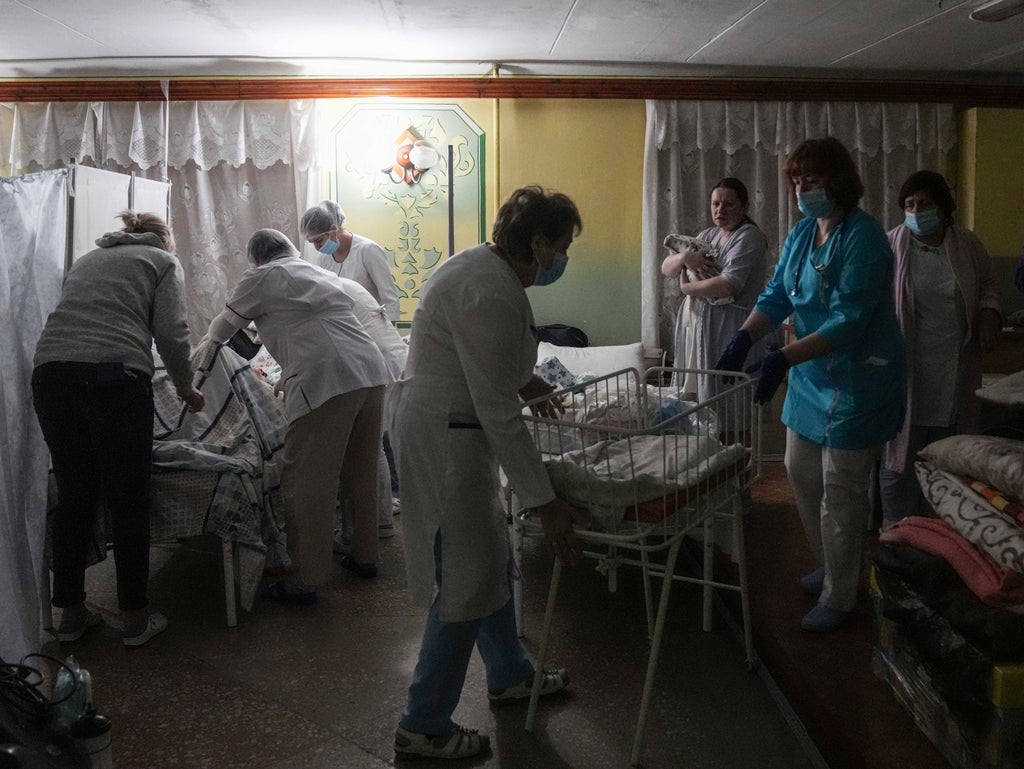
It’s not just communication with the outside world that’s been cut off in Mariupol – it’s also water, heating and lighting. Residents of the coastal city in eastern Ukraine - which until last week was relatively well off due to its status as a global shipping hub - are now reduced to collecting rainwater from gutters.
With no boilers, they start fires in their yards to try to warm up; the only news of the war they can glean is from the direction of the shelling nearby. When daylight fades, all they can do is try to sleep, despite the terror and the hunger. Without power, they cannot charge their phones to learn what is going on, or tell anyone they are alive. Their cars have run out of fuel. Rare deliveries of bread and water attract queues, but the humanitarian aid agencies bringing the supplies dare not stop in one place; they would be shelled.













