Iranians across the world are stepping into their new year — Nowruz — not with the usual exuberance, but with a lot of restraint. This year, the festival, which marks the Persian new year 1405 and falls on Friday, is being observed as much in remembrance as in renewal.
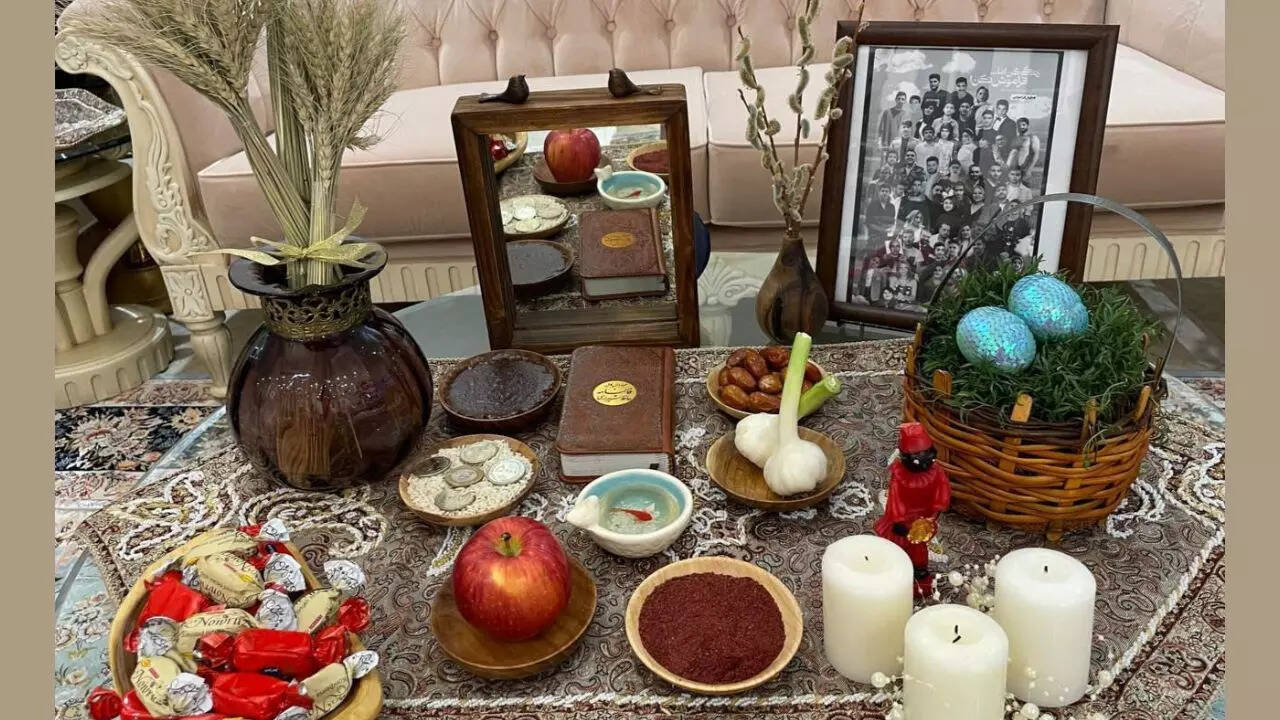
In homes, the traditional Haft-Seen table — usually a carefully arranged symbol of life, rebirth and prosperity — is taking on an added layer of meaning. Alongside the customary seven symbolic elements placed on the table, which represent renewal, beauty, health and prosperity, many are placing photographs of those killed in the recent mass protests and in the ongoing war, turning the ritual into an act of tribute.
“Nowruz celebration this time is definitely not like earlier times,” said Roya, an Iranian who has been living in India for nearly four years, and asked to be identified by her first name. “We will mark it in a solemn and subdued manner, as a show of Iranian resilience. We will pray for the departed souls and for a better future for Iran, which has witnessed such challenges earlier too, in its centuries-old history.”
For Roya, distance has made the moment heavier. “My heart is always in Iran during Nowruz,” she said, recalling how the festival traditionally revolves around family gatherings. Last year, an accident left her bedridden weeks before a planned visit home, forcing her to celebrate over a video call. This year, even that fragile connection has frayed. “Because of the prolonged communication blackout, I am only able to receive calls from my family after much effort, and that too for a few seconds. I am worried about their safety, but we will still observe the festival — Iranians have been resilient for thousands of years.”
Others recount similar disruptions filtering through from back home. Reza, another Iranian living in India, said he managed a brief conversation with his father in Tehran, who said that the city was preparing for Nowruz under severe constraints. “One major setback is the absence of the vibrant Nowruz street markets that usually come up on sidewalks,” he said. “People are buying essentials from local shops that are functional and accept cards, as most ATMs are not working.”
The subdued mood is not confined to Iranians alone. Across parts of West Asia, where conflict continues to redraw the rhythms of daily life, other festivals, too, are being recast. In Lebanon, where Eid-ul-Fitr will be observed alongside other countries in the region, the familiar markers of celebration have dimmed amid the ongoing war between Israel and Iran-backed Hezbollah.
Habib Al-Badawi, professor at the state-run Lebanese University in Beirut, told TOI in an email response, “The usual fervour for Eid has been overshadowed by sorrow.The grief for Lebanese people has been compounded by the timing of the war during the holy month of Ramadan.”
Yet, he added, there will be a quiet resolve, and hope for the future.“This Eid will certainly be different — marked by grief, especially if the Israeli land invasion begins — but also by a determination to uphold traditions and support one another,” he said. “Now, it is less about celebration and more about reaffirming our collective humanity and unity.”