
Sensor: 24MP full-frame sensor
Processor: Expeed 7
Stabilisation: 5-axis IBIS; up to 8 stops
AF system: Hybrid Phase Detection/Contrast AF with AF assist
Viewfinder: 1.27-cm/0.5-in OLED EVF, 3.69 million dots
Display: 3.2-inch Vari-Angle TFT touch-sensitive LCD; 2.1 million dots
ISO range: ISO 100-64000 (expandable to 204,800)
Max video resolution: 4K @ 30p (60p in DX-Crop mode)
Ports: USB-C, Micro (type D) HDMI, 3.5mm mic and headphone ports, 1x SD/SDHC/SDXC UHS-II, 1x microSD/SDHC/SDXC UHS-1
Wireless/bluetooth: Wi-Fi & Bluetooth
Max shooting speed: 14fps mechanical; 30fps electronic
Max shutter speed: 1/8000th sec. mechanical; 1/800th sec. electronic
Battery life (CIPA): 430 shots
Size/weight: 5.7 x.4.1 x 2 inches; 22.9 ounces
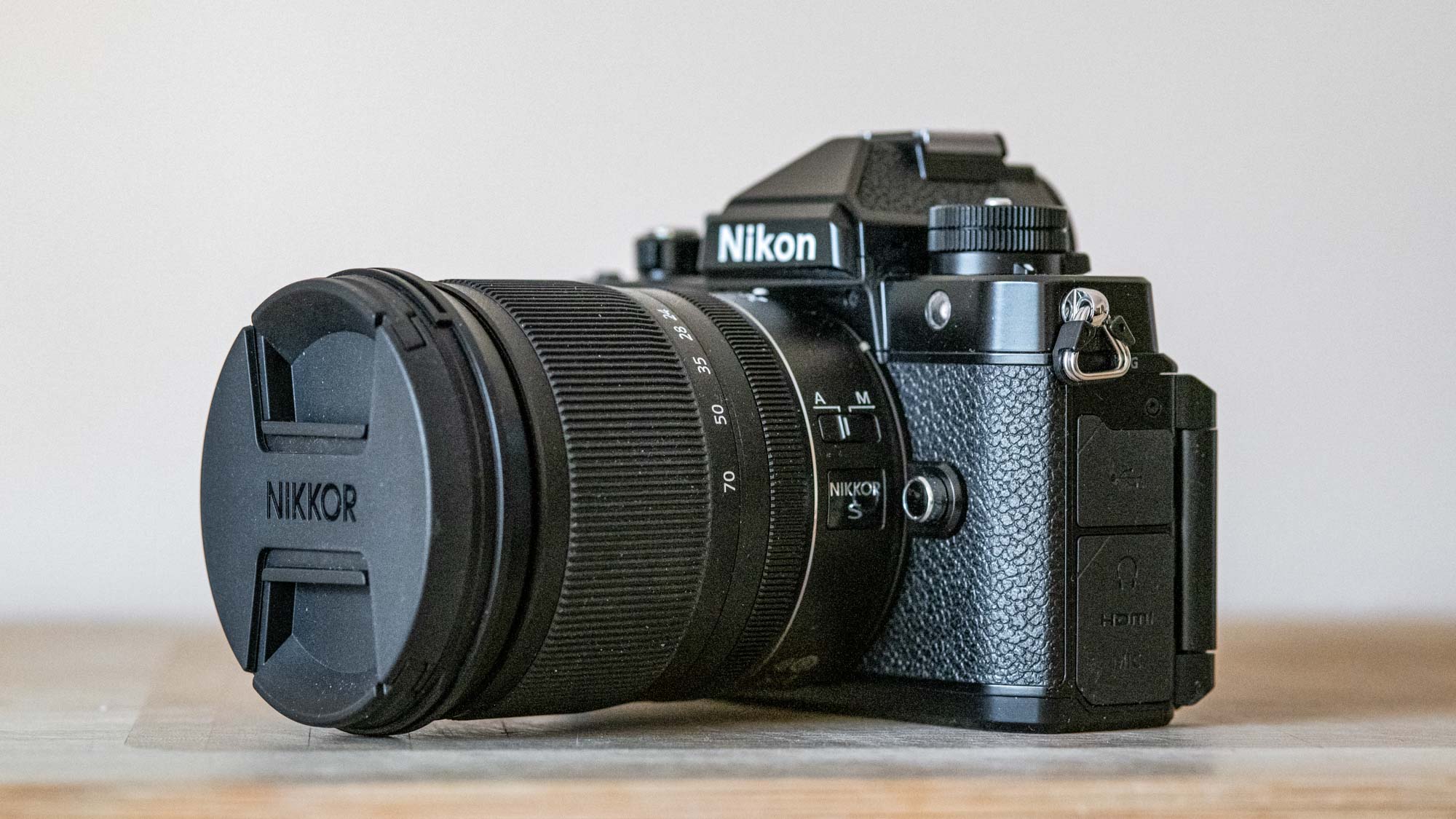
The Nikon Z f's look and feel is reminiscent of Nikon’s renowned 35mm film camera, the FM2, with a trio of dials atop its attractive body. But the Z f isn’t the first digital camera to mimic that design. In 2013, Nikon released the full-frame Df — a great concept which received an underwhelming reception. Nikon tried and missed the mark again in 2021 with the DX (APS-C) Nikon Z fc before upping its game with the Nikon Z f. Meanwhile, rival Fujifilm has proved there is a market appetite for retro, seeing success with models like the Fujifilm X-T30 II and Fujifilm X-T5, which sport similar three-dial retro designs albeit available only with a cropped sensor at their core.














