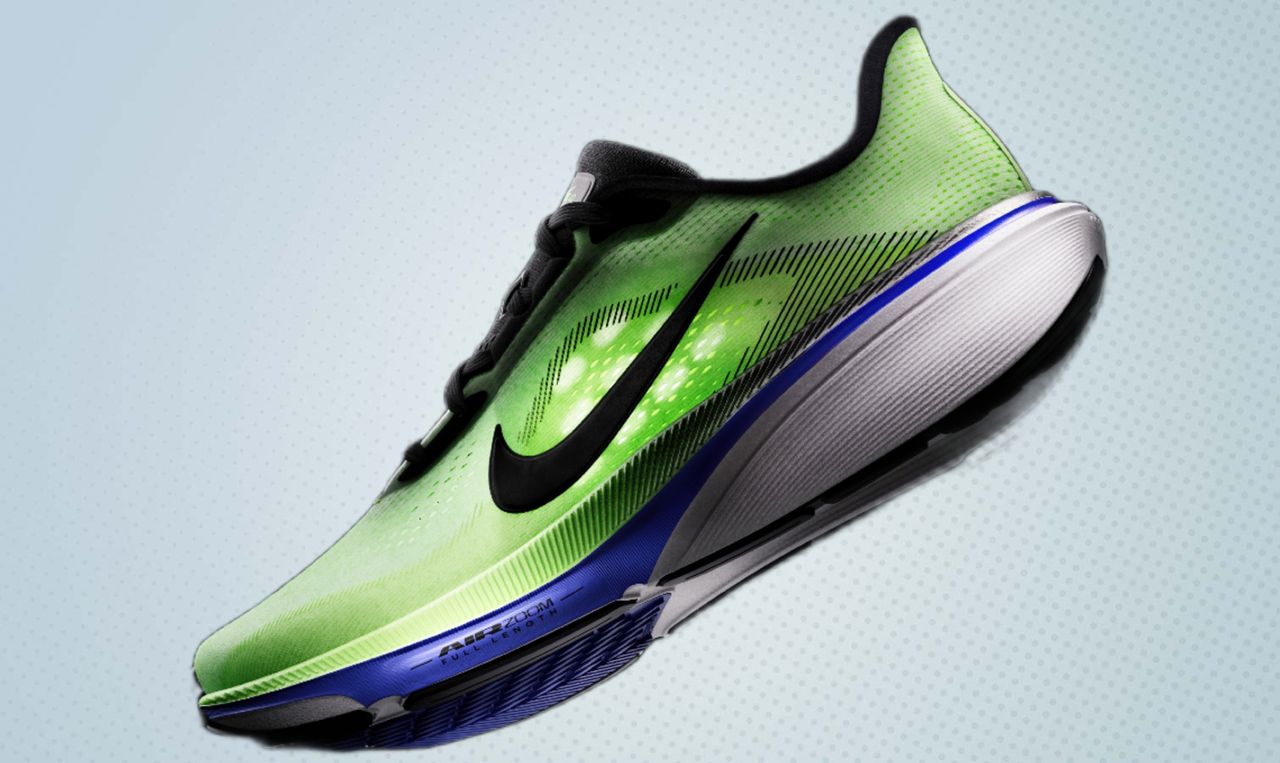
The Nike Pegasus running shoe has been around for over 40 years, and throughout that time it’s been one of the most popular sneakers available, providing a comfortable and dependable ride for daily training.
In recent years, however, it’s felt a little out of step with some of the best running shoes I’ve tested. The Pegasus has become, for lack of a better word, a little boring.

It’s still comfortable and still suits a wide range of runners well, being particularly good for newcomers to the sport, but lacks the energy return and fun factor you can get from other daily trainers in its price category.
The Nike Pegasus 42 aims to change that with big updates to the midsole, including a new full length Air Zoom unit that should make the ride of the shoe a lot livelier than its predecessor.
What’s new with the Nike Pegasus 42?

The Pegasus 42 doesn’t look radically different to the Nike Pegasus 41 at first glance, but has some major changes in the midsole, with the main one being a full-length Air Zoom unit.
In past Pegasus shoes Air Zoom has been used in pods under the heel and forefoot to increase the shoe’s energy return, and the full length unit will provide an even more propulsive ride.
The Air Zoom unit is scooped, almost like a carbon plate but more flexible, and should work in combination with the ReactX foam in the midsole to create a durable shoe with a livelier feel for daily training — Nike says it offers 15% more energy return than the Pegasus 41.
The measured stack height of the Pegasus 42 remains at 37mm in the heel and 27mm in the forefoot, the same as on the Pegasus 41. But Nike has added 3mm more foam right under the toes to provide more protection in that area, which might make the shoe feel like it has a lower drop than its official 10mm listing.
The upper has also been updated to create a better fit, and the outsole has been redesigned as well. There is more exposed foam on the Pegasus 42 than in past models, and more grooves in the rubber to create a more flexible feel.
An alternative to max-cushioned shoes

The Nike Pegasus42 has a lower stack height than Nike’s other training shoes, like the Nike Vomero Plus or Vomero 18, in order to be lighter and create a more connected ground feel on the run.
In general, most of the running shoes I test these days are trending towards a max-stack design, so the Pegasus 42 holds the line as a lower-stack option for runners who haven’t embraced this trend, while still being cushioned enough for easy and long runs.
That said, with the listed weight of 10.6oz for a U.S. men's size 10, the Pegasus 42 is still not a lightweight shoe, and other brands are putting out cushioned options that weigh a lot less. The Puma Velocity Nitro 4 is one such example.
The Nike Pegasus 42 will be available to buy from April 9, and sits below the Nike Pegasus Plus and Nike Pegasus Premium in the line-up, with both of those shoes likely to be updated later in 2026.
The Nike ACG Pegasus Trail is also coming

Along with announcing the Pegasus 42, Nike revealed the Nike ACG Pegasus Trail, which is a road-to-trail shoe that’s comfortable on both surfaces.
It uses the ReactX foam found in the Pegasus 42 in its midsole, but has a more substantial outsole in particular to offer grip both on roads and light trails.
I’ve been a fan of the Pegasus Trail in the past and with gravel running shoes becoming more popular, it should fit into that category well, while also being a good option for roads and other trails.
The Nike ACG Pegasus Trail will be available to buy from April 16.

Follow Tom's Guide on Google News and add us as a preferred source to get our up-to-date news, analysis, and reviews in your feeds.