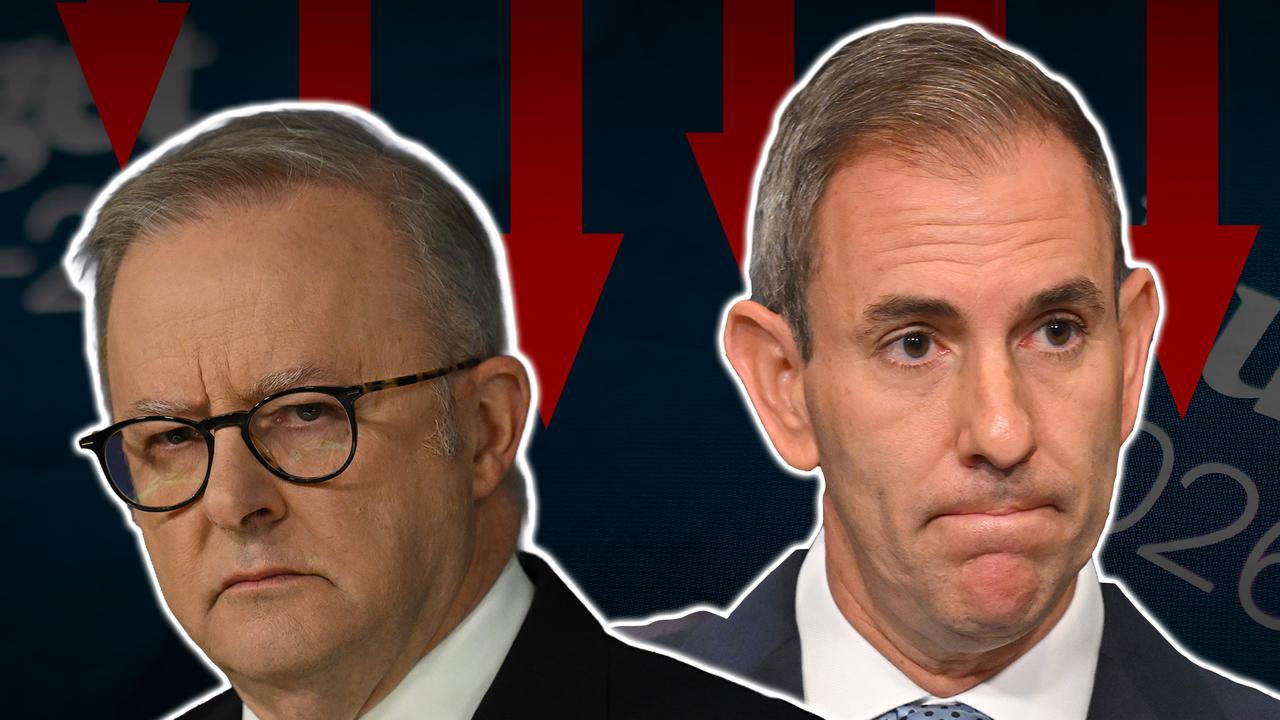
The long-term gains from controversial housing tax changes are worth the short-term political pain, Treasurer Jim Chalmers has declared, after two new opinion polls showed his federal budget has been poorly received by voters.
The latest Newspoll revealed 52 per cent of Australians believed they would be worse off due to Tuesday's budget, with the survey ranking it the worst for the economy since 1993.
The poll also found 47 per cent of voters felt the budget was driving a wedge between younger and older generations, while 26 per cent believed it was rebalancing the playing field and making things fairer.
While Labor's primary vote and the prime minister's approval rating were unchanged, the poll ranked the latest financial blueprint below the Abbott government's contentious austerity budget in 2014 and the worst since the Keating government's 1993 budget when Labor abandoned the infamous "L-A-W" tax cuts.
A separate Resolve poll found Opposition Leader Angus Taylor leading Anthony Albanese as preferred prime minister 33 to 30 per cent - the first time he has nudged ahead in that metric.
But Dr Chalmers insisted even though Labor broke its election promise not to change negative gearing and the capital gains tax discount, the budget reforms were worthwhile.
"We're fixing that broken status quo in housing over the years to come, and that is worth any near-term political cost that we might pay," he told reporters in Brisbane on Monday.
Amid a furious campaign against changes to the tax treatment of some trusts, Mr Albanese denied the reforms amounted to a death tax.
"There's a range of exemptions that were outlined (in the budget) on Tuesday," he told reporters in Adelaide.
"If you have an existing discretionary testamentary trust, for example, they continue going forward, and when it comes to fixed trusts, they continue as well to be exempted."
But Mr Taylor said the 30 per cent tax on new discretionary testamentary trusts - which are used by some wealthy families to divide money in a will - was clearly a "death tax by stealth".
The financial structure allows a person to directly allocate how much money goes to each beneficiary and is preferred by some families as it helps ring-fence the money from disputes, while minimising tax exposure in some cases.
"This is a structure that most small businesses in this country use ... in this government's assault on aspiration, they want to force every one of those small businesses to restructure," Mr Taylor said.
Latest data shows there were just over 10,000 testamentary trusts in the 2022/23 financial year.
Many voters were still undecided about the budget, Social Services Minister Tanya Plibersek said.
"They take a little while to listen to everything that they're hearing on TV, in the newspapers, from our leaders, and they'll make their mind up over time," she told Seven's Sunrise program.
"It's one poll, and we'll keep doing our job of reminding people why we've made this decision. We've made this decision because we want kids today, and the next generation, and the next generation to have what we have - a home of our own."
One Nation MP Barnaby Joyce said the government had taken a hit because it had broken an election promise.
"The reason that the prime minister of Australia and the treasurer are finding it hard to explain what's going on, is because they lied," he told Seven's Sunrise.
"They lied before the election, they said they weren't going to change things, but they lied, and now people have woken up."