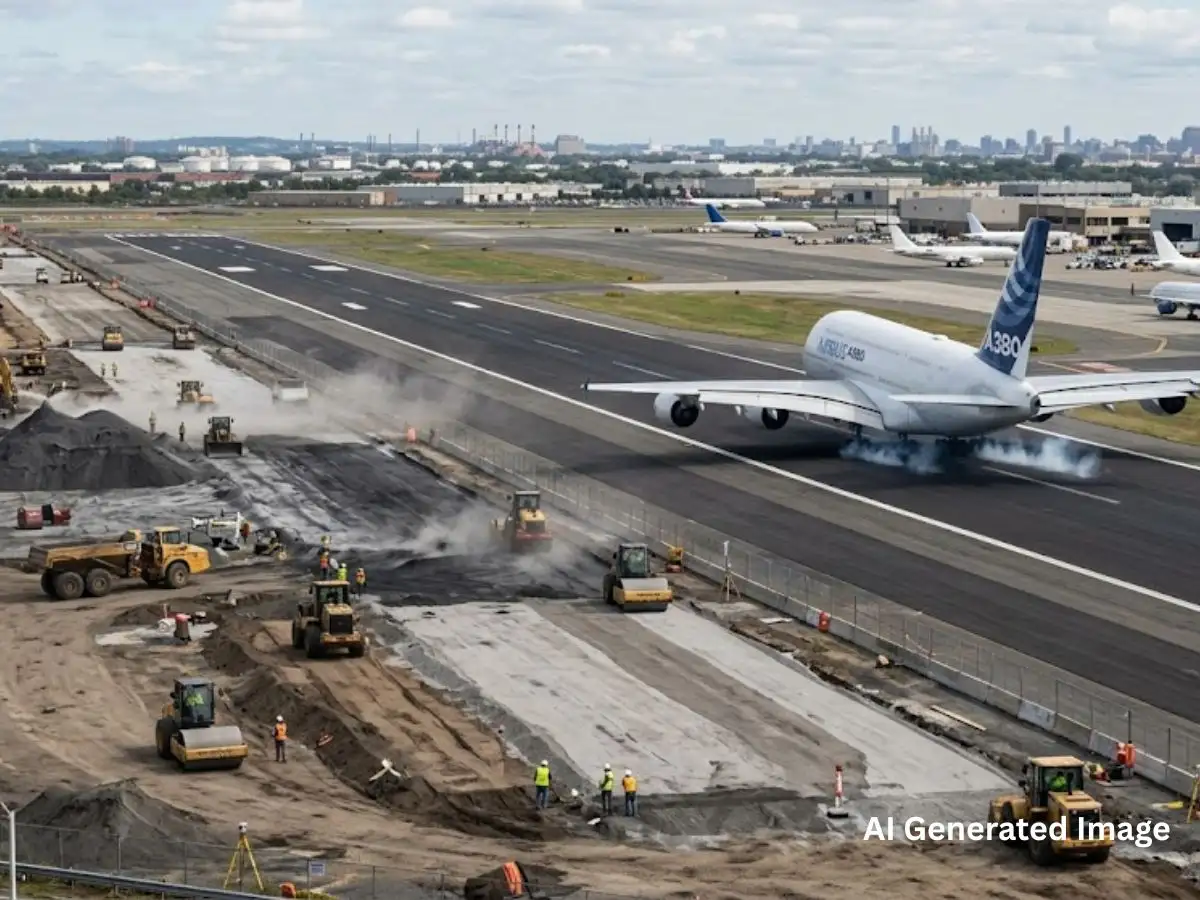
Building runways capable of handling repeated loads from large aircraft requires pavement structures that can withstand heavy stress without excessive failure or deformation. A major example emerged at Newark International Airport in New Jersey during the 1970s, when engineers used coal fly ash as part of a stabilised pavement base beneath runways, taxiways and aircraft aprons.
Rather than being used simply as a disposal material, the fly ash was incorporated into a cementitious mixture containing lime, Portland cement and sand to form a structural base for flexible pavement. More than two decades after construction, a later Federal Highway Administration (FHWA) evaluation found that the stabilised pavement sections were still performing satisfactorily.