Get all your news in one place.
100's of premium titles.
One app.
Start reading
Bangkok Post
Bangkok Post
National

New Zealand PM open to referendum on electoral system

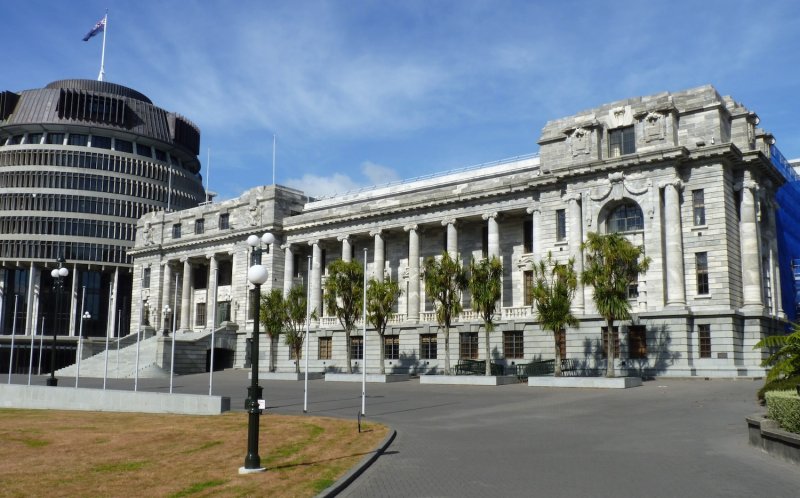
Parliament House and Bowen House, also known as the Beehive, are seen in the New Zealand capital Wellington. (Photo: Michal Klajban via Wikimedia Commons)

WELLINGTON - New Zealand Prime Minister Christopher Luxon said on Thursday he was open to a referendum on whether to change the country’s electoral system, opening another split in his centre-right coalition months ahead of a general election.

New Zealand ​adopted the German-style Mixed Member Proportional (MMP) ⁠system in 1996 after an inquiry found smaller parties were being shut out of parliament under the previous first-past-the-post system.

Luxon said in an interview with the radio station Newstalk ZB that a referendum is “something we should consider”, and could be ‌held as early as 2027 if he returns to power following a general election scheduled for Nov 7.

“I think I would because I actually think that it is quite right to check in constitutionally and say, is this the system, New Zealand, you ⁠still want?” he said. He did not say whether any referendum would be binding.

Luxon’s remarks led to criticism from his coalition partners, who are already split on economic and minority issues. Winston Peters, the leader of New Zealand First, a minor party in Luxon’s National-led coalition, called the idea “inexplicable”.

“Shutting down and taking away true democratic representation from the people of New Zealand should be seen ​for what it is — a power grab and an ignorance for what it means to be a democracy,” he said in a post on X.

Luxon’s other coalition partner, the ACT Party led ​by ‌David Seymour, and the main opposition Labour Party, also said they opposed a referendum.

How MMP works

Originating in Germany, MMP has been adopted, sometimes with modifications, in countries such as Thailand, South Korea, Bolivia and Lesotho.

Under ⁠MMP, constituents cast two votes: one for a local candidate and one for a party.

In New Zealand, winning local candidates in 71 constituencies take their seats automatically, while the remaining seats are ⁠filled from party lists, allocated to match each party’s share of the nationwide vote.

There are expected to be about 49 list seats in this election, though that number may vary due to the quirks of the system.

MMP has been praised for allowing smaller parties a say in government, ⁠but criticised for its complexity and for often requiring coalition governments.

It also has several unusual features, ​including seven seats reserved exclusively for Indigenous Maori voters. Political commentator Ben Thomas said National party leaders have long seen MMP as a drag on decision-making.

“They believe it stops governments from making hard decisions and bold calls,” he said.

New Zealand last voted to retain the system in ‌a 2011 referendum, with 58% of ⁠voters in favour.

In the interview Luxon also reiterated ​support for extending New Zealand’s current three-year fixed-term parliaments to four years.

Sign up to read this article
Read news from 100's of titles, curated specifically for you.
Already a member? Sign in here
Related Stories
Top stories on inkl right now
One subscription that gives you access to news from hundreds of sites
Already a member? Sign in here
Our Picks
Fourteen days free
Download the app
One app. One membership.
100+ trusted global sources.