
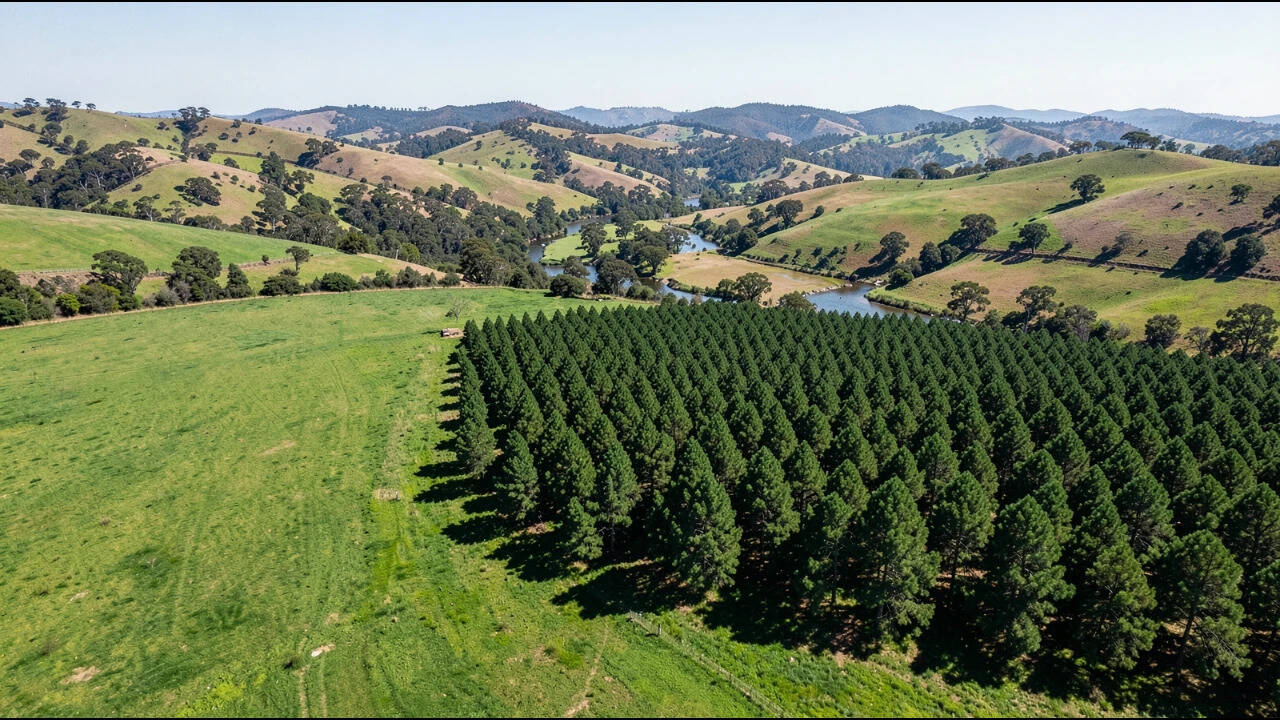
Converting grazed pasture to pine plantation can significantly reduce the amount of water flowing through streams, according to a hydrological modelling study of 2 afforested catchments in New Zealand’s Waikato region. Published in Journal of Hydrology: Regional Studies in 2024, the study, titled Modelling the hydrological impact of afforestation in hill country catchments in New Zealand , used the Soil and Water Assessment Tool (SWAT) to estimate the effects of land-use change. The researchers, Linh Hoang and Andrew Hughes, modelled a 29.7% reduction in mean annual streamflow in Mangaotama, where approximately 57% of the catchment was afforested. In Kiripaka, where about 9% was afforested, the modelled reduction was 4.7%. A third catchment, Whakakai, served as a native-forest control and had no land-use change. Increased evapotranspiration and reduced surface runoff were the main mechanisms behind the modelled decline. However, the size and timing of the changes varied, highlighting the need to consider model uncertainty when assessing the hydrological effects of plantation forestry.
Get breaking news anytime, anywhere. Download the TOI app now!