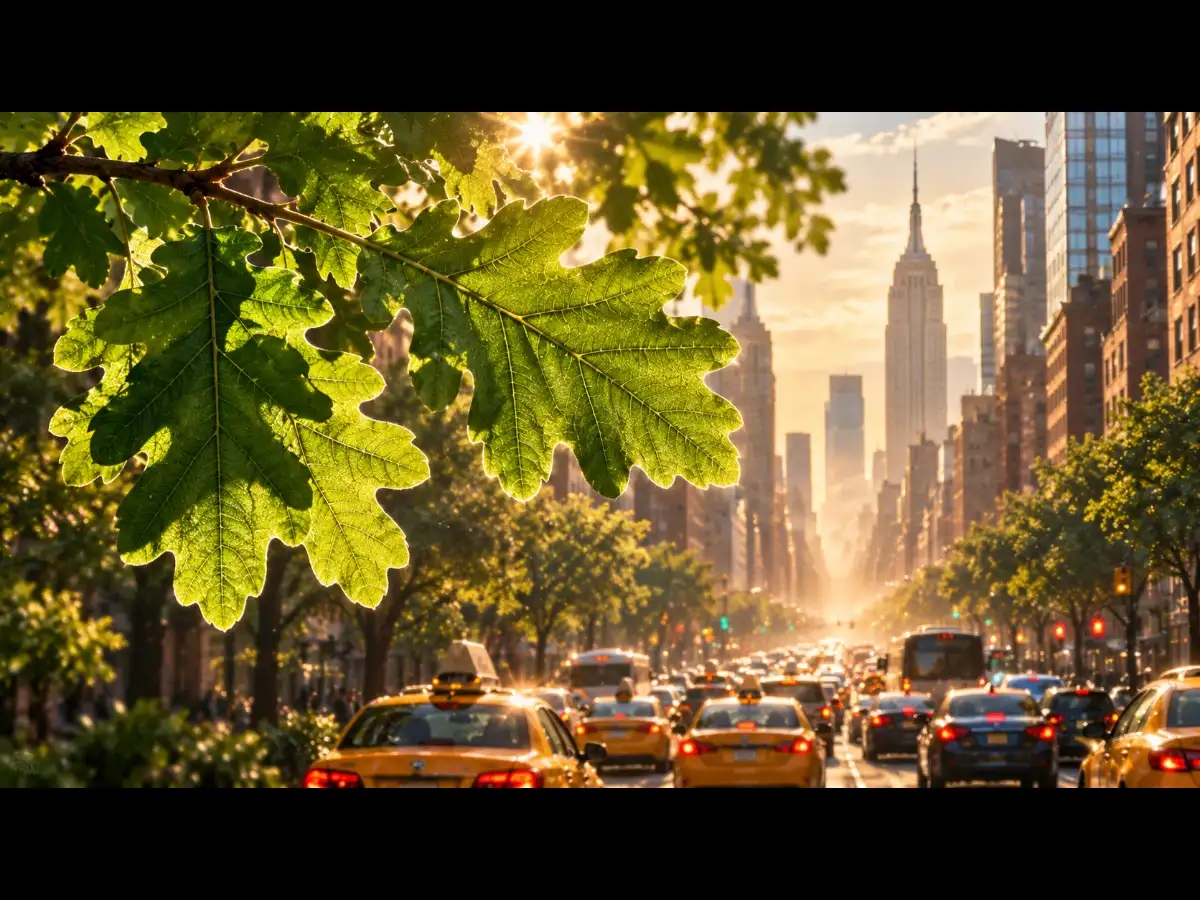
Are trees pollutants? Contrary to popular belief, some trees might unintentionally worsen air quality. New York City wants more trees, and the goal seems to be to expand the city’s tree canopy, bringing more shade, cooler surfaces, cleaner air and wildlife habitat to one of the world’s most densely developed places. But there is a complication hiding among the leaves. A new study found that some of the tree species already common across New York City release large amounts of a chemical called isoprene. On its own, isoprene is harmless. But when it meets nitrogen oxides released by vehicles, buildings and industry, it can help create ground-level ozone, as per a report by Columbia Climate School. That means planting more trees is not necessarily as simple as choosing more of the species the city already has.
Researchers from Columbia Climate School’s Lamont-Doherty Earth Observatory and other institutions examined what could happen if New York continued its existing planting patterns. Their modeling found that isoprene production in Manhattan could rise by about 140% in coming decades, while summer ozone levels could increase by as much as 30%.