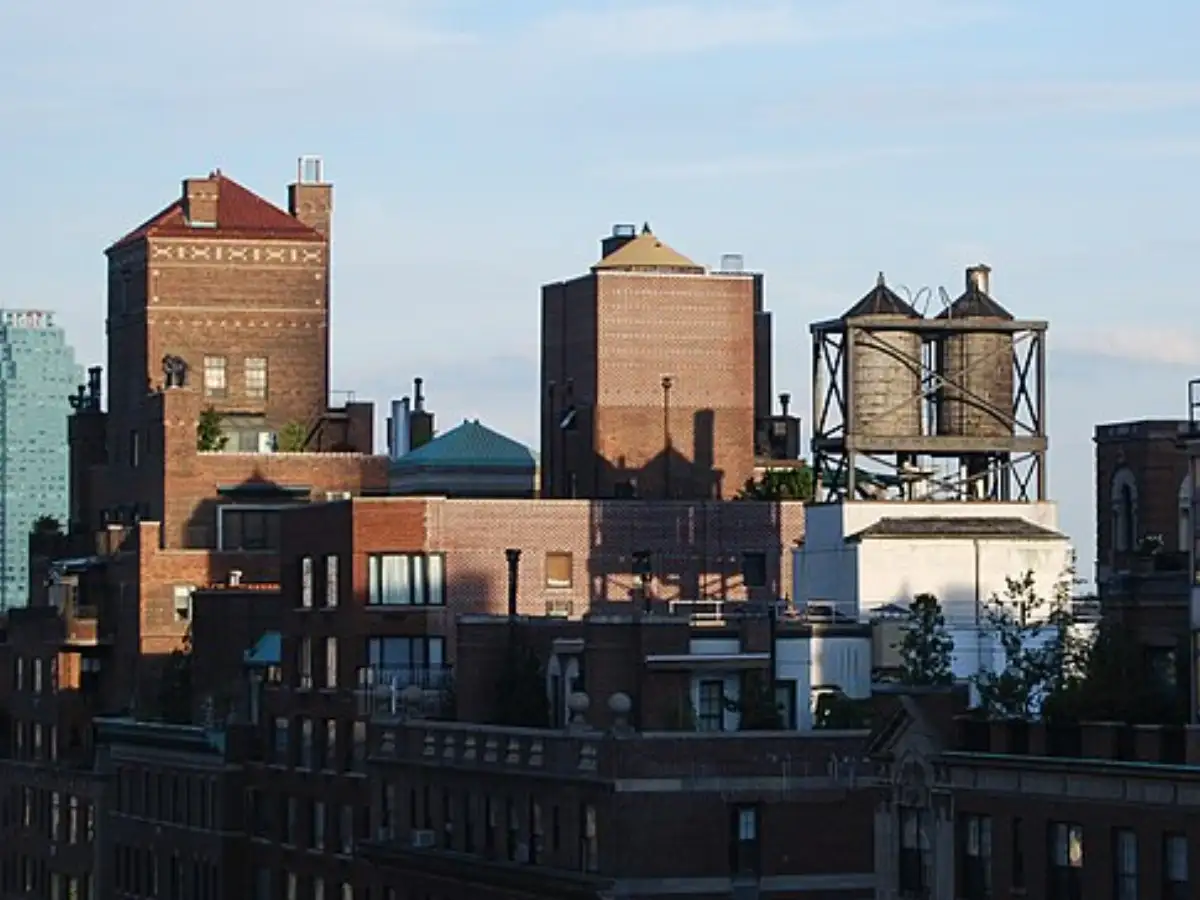
New York City skylines are marked by thousands of giant wooden barrels, often sitting on steel frames with small roofs. According to a Vital City report, New York has over 5,600 registered rooftop water tanks, and they play a crucial role in supplying water to the city’s taller buildings. Many of these tanks are still made using the same techniques that have been around for more than a hundred years.
New York’s need for tanks on rooftops

As New York’s late-19th-century building boom began, water demand rose accordingly. The Croton Water Supply System, which relied mainly on gravity, was the city’s main water source. According to RAND Engineering & Architecture, the municipal water system could supply water only up to about the sixth storey. However, with the coming of elevators and the use of steel-frame construction in the late 19th century, it became possible for buildings to rise even further than the sixth storey. As a result, the system’s water pressure was not enough to push the water any higher.
Therefore, to resolve this problem, water would be pumped to the roof and stored in the tanks there, and it would flow again due to gravity. When a tap on an upper floor was opened, water from the tank flowed downward through the building’s pipes. As the water level in the tanks decreased, the pumps would fill them again, and the process continued.
Science behind using wood
Whereas tanks can be constructed using materials such as steel or concrete, conventional rooftop tanks have walls constructed from vertical wooden strips referred to as staves. These staves are usually made from redwood or cedar and are mounted vertically in a circular arrangement bound together by metal hoops. The thickness of the wood holds the water inside the tank, while the metal hoops ensure that the tank is compact.
As the tank is filled with water, some of the water is absorbed by the wood and causes it to swell. The swelling of the staves closes the gaps between them, which makes the tank watertight. The wooden cylinder uses no nails, sealant, or glue; the wood swells naturally to seal the tank.