Get all your news in one place.
100's of premium titles.
One app.
Start reading
The Times of India
The Times of India
World
TOI World Desk

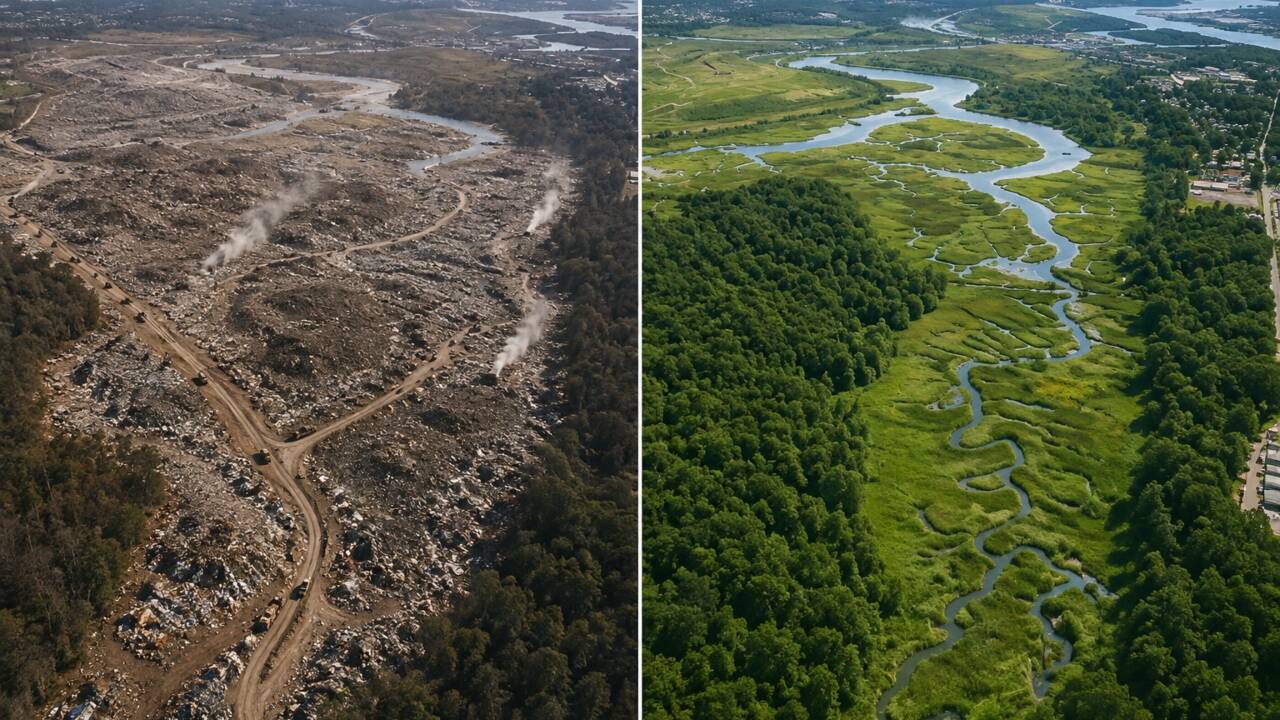
New York capped what was once one of the world’s largest garbage dumps; its 2,200 acres are becoming grasslands and wetlands that support rare nesting birds

For more than half a century, New York City’s garbage ended up at Fresh Kills on Staten Island, a landfill so vast that it was once considered the largest in the world. At its peak, mountains of waste towered over the surrounding marshes, emitting strong odours and attracting swarms of gulls. However, today, the same area depicts a very different story. The former landfill has been transformed into Freshkills Park, a 2,200-acre expanse of grasslands, wetlands and recreational spaces where rare birds now nest atop carefully engineered landfill mounds. According to the New York City Department of Parks & Recreation , the project is being considered as one of the world’s most ambitious examples of ecological restoration, illustrating how heavily degraded urban landscapes can be reclaimed for public and wildlife use.

Get breaking news anytime, anywhere. Download the TOI app now!

From being the world’s biggest landfill to an engineered landscape

Fresh Kills opened in 1948 as New York’s principal municipal landfill and operated for more than five decades, receiving thousands of household, commercial and construction waste from across the city. The Freshkills Park master plan reported that the landfill operations ceased in 2001, following which the engineers began a major closure programme. Instead of excavating millions of tonnes of buried waste, engineers sealed it beneath an advanced multilayer cap comprising impermeable geotextiles, drainage systems and thick layers of clean soil. Furthermore, wells, pipes and treatment systems were installed to collect methane gas and leachate, thus preventing contaminants from escaping into the surrounding environment while allowing the land above to be safely restored.

Freshkills Park plan reported that native grasses were planted across the capped landfill mounds to stabilise the soil and recreate one of the largest grassland habitats in the New York metropolitan area. Additionally, wetlands and tidal creeks surrounding the site were protected and restored, allowing a mosaic of habitat to emerge where mountains of waste once stood. The landscape continues to be monitored, with landfill gas collection and environmental management operating beneath the surface even as vegetation flourishes above it.

As the restoration progressed, the project also became a long-term ecological laboratory where researchers and land managers study how ecosystems develop on reclaimed land. Carefully selected native grasses, including switchgrass, little bluestem and Indiangrass, were planted to establish self-sustaining prairie-like habitats capable of supporting insects, pollinators and birds, alongside preventing erosion. The site’s grasslands are managed through periodic mowing and ecological monitoring to prevent woody vegetation from taking over, thus preserving the large, uninterrupted meadows this is required by many declining grassland species. Scientists say that these adoptive managements practices have become key to the park’s restoration efforts.

Rare bird species return to reclaimed grasslands

One of the most notable outcomes of the restoration has been the return of wildlife, with the expansive land now supporting rare nesting species that have declined across most of the northeastern United States due to habitat loss. Birds including grasshopper sparrows, Savannah sparrows, eastern meadowlarks, killdeer and other native grassland species have established breeding territories across the restored landscape, with bald eagles, ospreys, northern harriers and red-tailed hawks regularly hunting over the site. Moreover, wetlands and ponds have also attracted herons, egrets, glossy ibises and numerous migratory waterfowl, thus transforming the former landfill into one of the region's most significant wildlife refuges.

Ecologists believe that the site’s unusual history has unexpectedly benefited conservation, with the vast open meadows created by the capped landfill providing uninterrupted grassland habitat that has now become increasingly scarce in the densely urbanised New York City. Recent ecological surveys have documented thriving populations of birds, with researchers suggesting Freshkills as one of the important breeding areas for several declining species in the urbanised area. Notably, the restored habitat has also supported foxes, white-tailed deer, turtles, bats and hundreds of insect species, thus highlighting how engineered landscapes can evolve into functioning ecosystems when managed over a long period of time.

According to New York City Parks, Freshkills Park is expected to become one of the largest parks developed in New York City in more than a century, eventually featuring trails, waterways, educational facilities, sports areas and ecological research sites while continuing to protect sensitive wildlife habitat. The first public section, The North Park, opened in 2023, marking a milestone in a project that is expected to continue into the 2030s. Furthermore, urban planners and restoration ecologists increasingly view Freshkills Park as an international model for converting former wasteland into productive landscapes that combine biodiversity conservation, environmental engineering and public recreation.

Sign up to read this article
Read news from 100's of titles, curated specifically for you.
Already a member? Sign in here
Related Stories
Top stories on inkl right now
One subscription that gives you access to news from hundreds of sites
Already a member? Sign in here
Our Picks
Fourteen days free
Download the app
One app. One membership.
100+ trusted global sources.