
Get all your news in one place.
100's of premium titles.
One app.
Start reading
The Conversation
The Conversation
Shaban Sulejman, PhD Candidate, Faculty of Science, The University of Melbourne

New type of ‘sieve’ detects the smallest pieces of plastic in the environment more easily than ever before

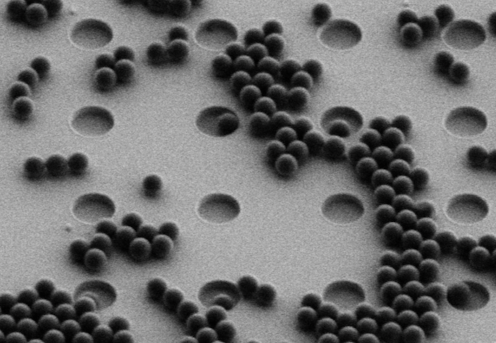
Nanoplastic particles are captured by cavities in the optical sieve. Lukas Wesemann and Mario Hentschel

Plastic pollution is everywhere: in rivers and oceans, in the air and the mountains, even in our blood and vital organs. Most of the public attention has focused on the dangers of microplastics. These are fragments smaller than 5 millimetres.

But an even smaller class of fragments, nanoplastics, may pose a greater risk to our health and our environment. With diameters of less than a micrometre (one millionth of a metre), these tiny particles can cross important biological barriers and accumulate in the body. Because they’re so tiny, detecting nanoplastics is extremely difficult and expensive. As a result, determining the extent of their impact has been largely guesswork.

Sign up to read this article
Read news from 100's of titles, curated specifically for you.
Already a member? Sign in here
Related Stories
Top stories on inkl right now
One subscription that gives you access to news from hundreds of sites
Already a member? Sign in here
Our Picks
Fourteen days free
Download the app
One app. One membership.
100+ trusted global sources.







