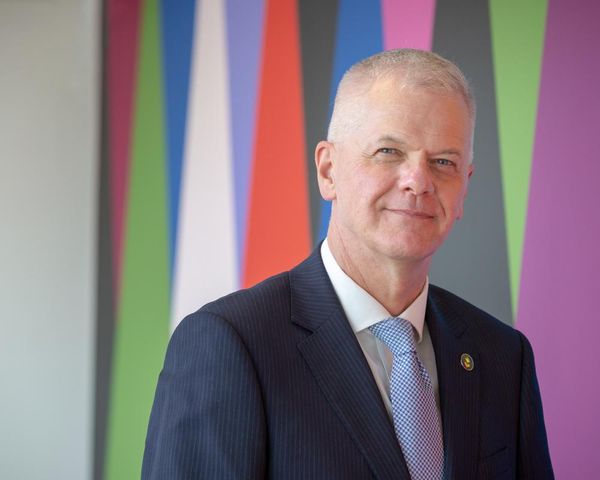
THE new Scottish Labour leader has said he doesn’t like being called a Unionist after accepting Scotland has the right to decide its own future.
Michael Marra, who was elected as the new leader of Scottish Labour on Saturday, said that even though he believes in the union he doesn’t like the word “Unionist” as he comes from a “cultural tradition in Scotland to whom that is not an easy word”.
Speaking with STV News on Monday, Marra said he believes the people of Scotland have the right to decide their own future and that it is up to the SNP to put in “the hard yards” to put forward a winning case for a second independence referendum.
Marra was pressed over his claims of being a socialist by STV's Colin Mackay, who added: “Are you a Unionist?”
The Scottish Labour leader replied: “I'm a socialist. I believe in the union of the United Kingdom.”
Mackay interjected: “Are you a Unionist?”
To which Marra replied: “I don't really like the word, if I'm honest, Colin, to be honest.
“I come from a cultural tradition in Scotland to whom that is not an easy word, it's fair to say.”
In the same interview, Marra also said: “I believe that the people of Scotland have the right to decide their future, and they did so in 2014.
“In 1997, they gave an unequivocal answer on both of those occasions. And the challenge, I know in the Parliament this week that the SNP are going to have to be held to, is how they build that settled will of the Scottish people that we actually produced in the 1980s and 1990s when I was but a boy.
“The Labour Party went about the job about delivering that settled will when answering the questions that people had.
“Now that’s the hard yards that the SNP has to do.”
Following Marra’s comments, Scotland’s First Minister said it was “a hugely significant moment” for the country.
“For the first time since 2014, Scottish Labour accepts Scotland’s right to decide our own future, just as the Prime Minister has,” John Swinney said.
“We now need to turn that principle into an opportunity for people to make their voice heard.”
Last week, the SNP leader said there should be “no obstacle” to the three devolved nations, Scotland, Wales and Northern Ireland, being “able to determine their own future”.
Swinney also claimed that Andy Burnham would be the “last prime minister of the United Kingdom” after the Labour leader set out in his first PMQs in the House of Commons the conditions for a second independence referendum earlier this month.
The Prime Minister said that the rules governing when a repeat of the 2014 vote could be held should be “exactly the same” as those for an Irish reunification referendum.
The Good Friday Agreement states that the UK Northern Ireland Secretary “shall” call a referendum on Irish reunification if it looks likely that the people would vote in support.
Swinney said recent polling has shown a majority in favour of leaving the union while the Holyrood elections in May returned a majority of pro-independence MSPs.
However, the First Minister said Scotland had faced “obstruction” from the UK Government, which has repeatedly rejected SNP calls for another referendum.
“The people of Scotland are entitled to decide their own future,” he said during a press conference.
Swinney has also called for a second referendum on Scottish independence to be held within the next five years.
“The people of Scotland, if given the choice of independence in a referendum, will take that choice, because all of the information that we see in front of us about the trends in opinion polling indicate that’s the preference of the people of Scotland,” he said.
It comes after a new poll found that most Scots think a second independence referendum should take place in the next decade or sooner.
A survey has found that 56% of Scots said that indyref2 should come before 2036, heaping pressure on Westminster to grant another vote.