
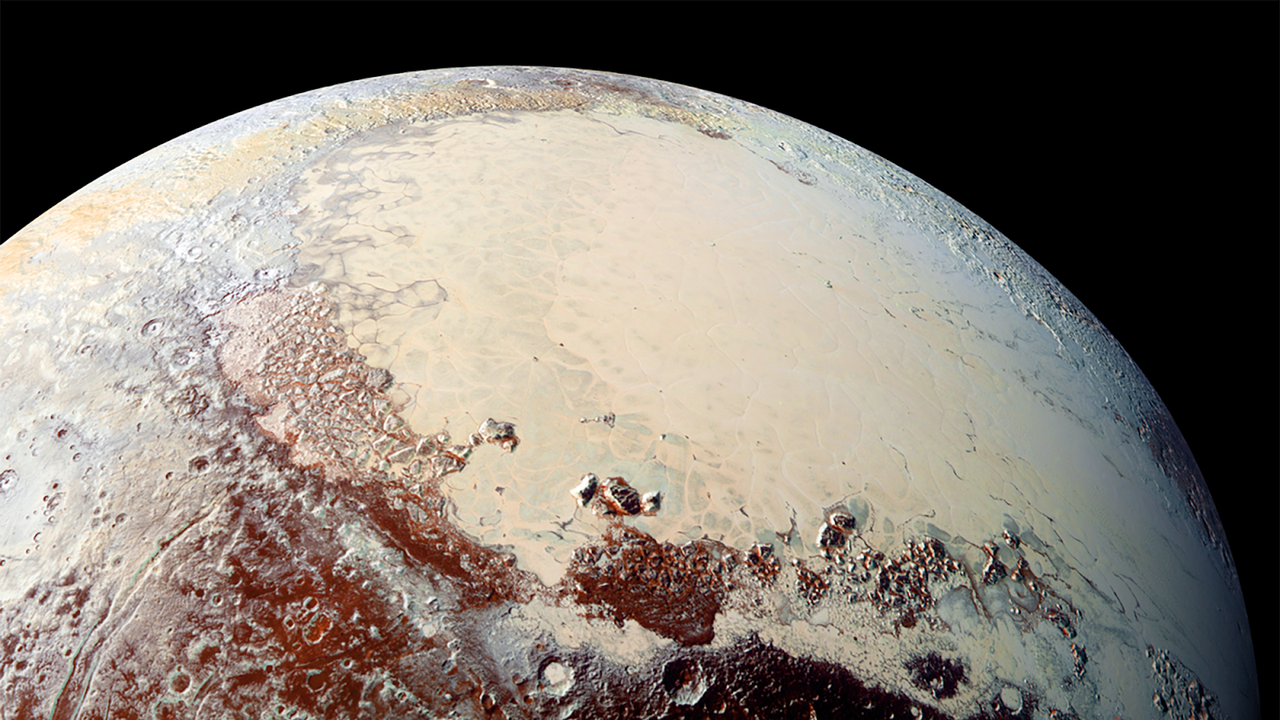
When NASA's New Horizons spacecraft sped by Pluto in 2015, it revealed an incredible world of ice and haze carved by various geological processes — hinting that an ocean may have played a role in the dwarf planet's recent history. The bounty of scientific riches has left researchers working to solve some of the tiny world's mysteries a decade after the spacecraft's flyby.
"There's still a lot of questions that are open," Carly Howett, a planetary scientist at the University of Oxford and a New Horizons team member, said last month at the Progress in Understanding the Pluto Mission: 10 Years after Flyby conference in Laurel, Maryland. With such questions lingering, Howett and her colleagues designed a follow-up mission in hopes of finally solving some of Pluto's mysteries.