
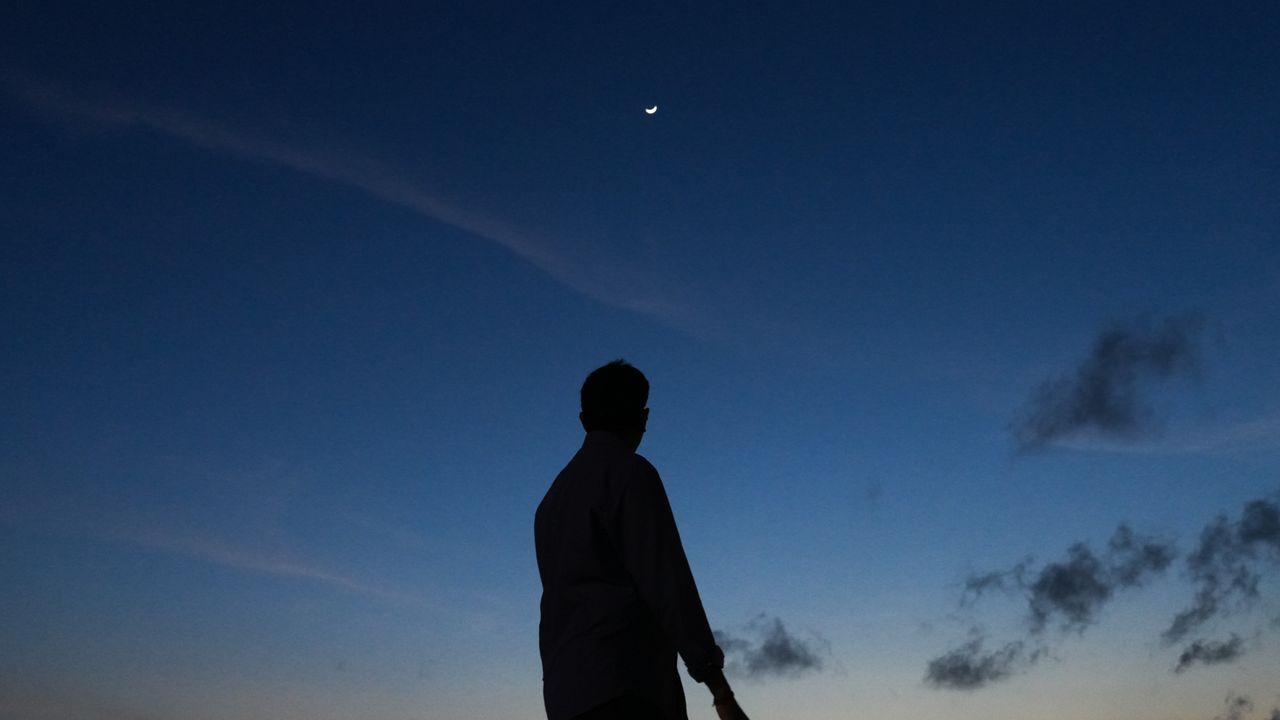
The new moon on Aug. 23 at 2:06 a.m. EDT (0606 UTC) is also a black moon, defined as the third new moon in a season that will see four new moons. Three days later, the moon will make a close pass to Mars in the evening sky.
When the sun and moon share the same celestial longitude, you get a new moon. This is also called a conjunction (and the same term applies to other celestial bodies). As the illuminated side of the moon faces away from Earth, new moons are invisible to observers on the ground unless the moon passes directly in front of the sun — an eclipse. This doesn't happen every new moon because the moon's orbit is not perfectly aligned with the plane of the Earth's orbit; it is tilted about five degrees. (The next partial solar eclipse is on Sept. 21, and will be visible from the South Pacific, New Zealand, and Antarctica.)