
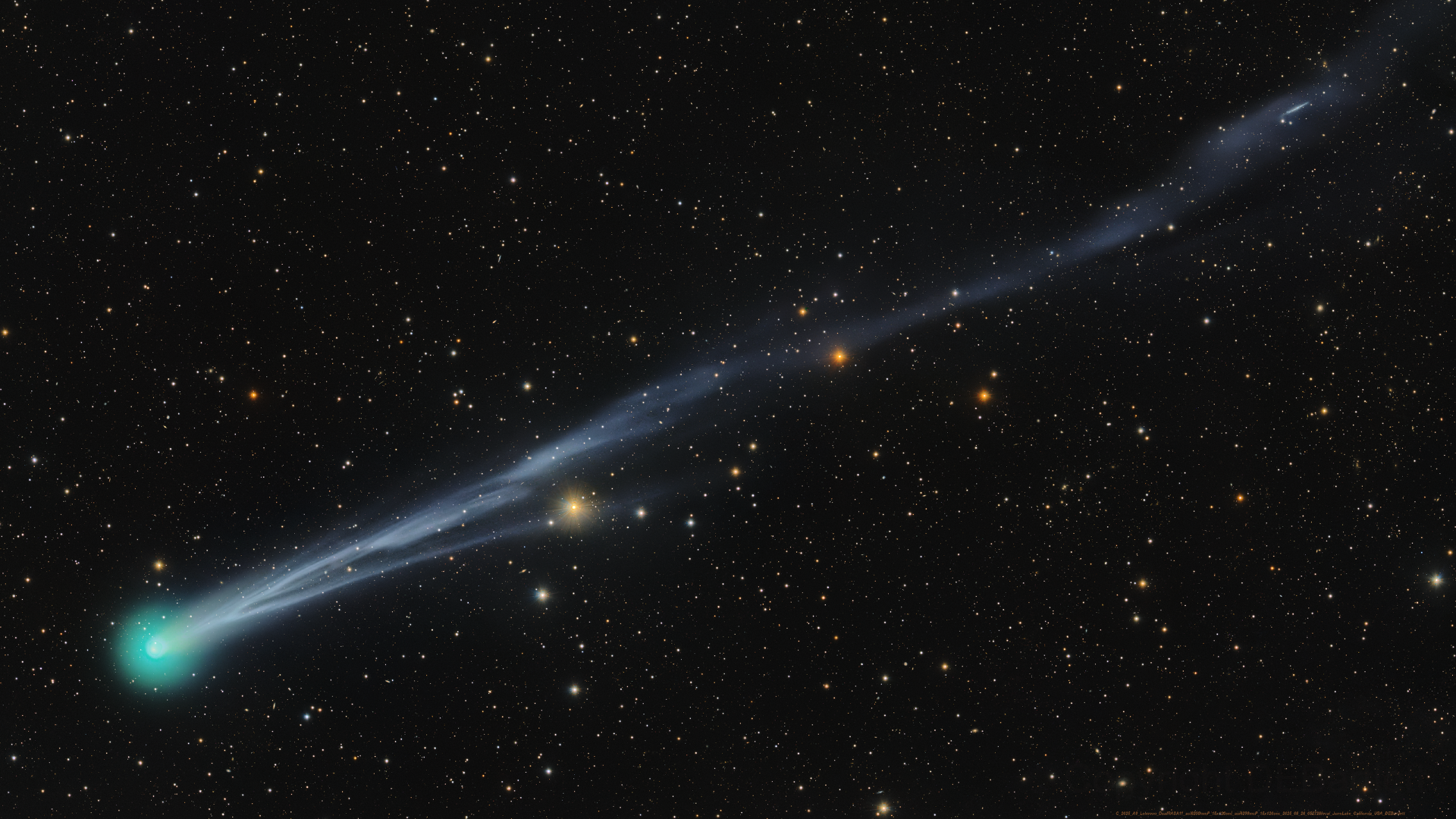
Comet Lemmon (C/2025 A6) is quickly brightening as it draws closer to both the sun and Earth, evolving into a striking object already visible through small telescopes and binoculars and soon, quite possibly, to the naked eye.
The icy visitor, discovered on Jan. 3 by the Mount Lemmon Survey in Arizona, is the brightest comet to appear in our sky since Comet C/2024 G3 (ATLAS) last January. It will swing close to the sun, a point called perihelion, on Nov. 8, passing about 49.25 million miles (79.25 million kilometers) from our star.