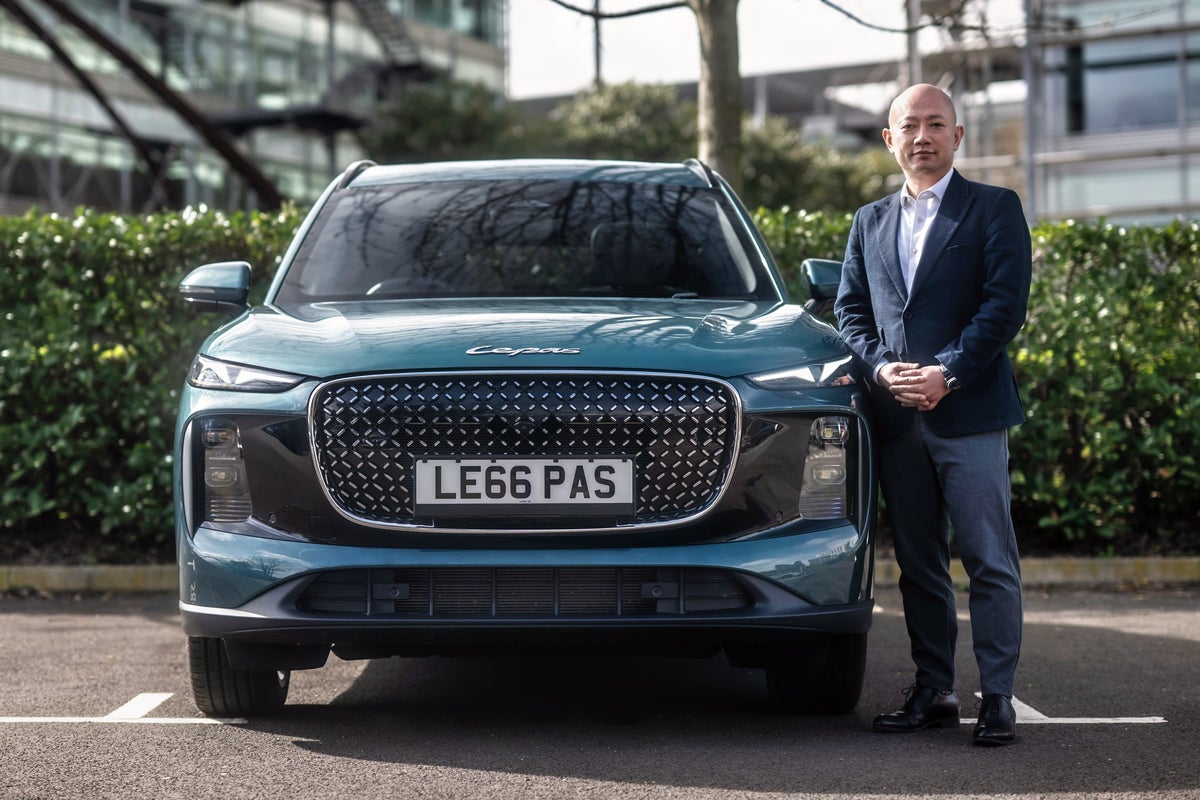
New Chinese car brand Lepas is targeting around 90 UK dealers by the end of 2027 as it plans more plug-in hybrid and electric models, alongside work to make its cars better suited to British roads. Speaking exclusively to The Independent, UK managing director Ray Wang said: “We are not entering the UK simply to test the water.”
The company already has more than 50 showroom locations signed up, according to Wang, with roughly 40 trading in September, its first month of business. The next target is 60 by the end of 2026, before expanding to around 90 the following year. The aim is to put most people within half an hour of a Lepas retailer and service centre.

Wang says choosing the right dealers is important, too. He wants retailers that can deliver the ownership experience the brand is promising and says he’s personally visited the majority of the showrooms signed up so far.
More cars will give those dealers more to sell. The L8, L6 and L4 car models all feature in Lepas’s product plans, with Wang describing a brand dedicated to plug-in hybrid and fully electric cars. A model-by-model UK launch timetable wasn’t set out during our conversation.
There’s also the possibility of a small hatchback-sized Lepas L2 coming to the market as a new entry-level car, also with a European design theme and penned by Ivan Dulanovic, global chief designer at Lepas.
With Chery, Omoda and Jaecoo also in the family, Lepas has to explain what makes it different. Wang says that extends beyond the styling to the interior, the way the cars drive and the experience of buying and owning one. He wants a recognisable Lepas feel behind the wheel, with cars fine-tuned for European and UK customers rather than simply carrying over what works in China. Quietness and comfort are part of that brief. Wang said: “So it doesn’t have to be sporty.” He also says the work to get the driving experience right is continuing.
British engineering will play a part in that through Chery’s new UK research and development centre at Millbrook in Bedfordshire. Wang says its initial work will include tuning driver-assistance systems and work on UK-specification vehicles, reflecting the expectations of buyers here. He said: “This is the most demanding market I’ve ever seen in the world.”
One area needing attention is how those assistance systems behave. When I raised concerns about the L8’s driver-assistance technology, Wang acknowledged that Lepas had received feedback from customers and was working with its head office to improve the experience.
Software updates are part of the longer-term plan, too. Wang says the architecture used by Lepas has been designed for plug-in hybrid and electric cars, with some functions able to be updated remotely. That means changes can be made without waiting for a replacement model, although he didn’t specify how many years software support would continue for. Owners will receive a notification when an update is available and can choose when to install it and, depending on what’s being changed, Wang says the process might take a few minutes or around 20 to 30 minutes.
There’s work going on beyond the cars themselves, too. Lepas has dedicated sales and marketing teams, while functions including finance, logistics and service are shared across the Chery group, which includes Jaecoo and Omoda. It’s an arrangement that allows the brand to develop its own identity while drawing on the wider business.
Used-car values are already getting attention, even at this early stage. Wang says there’s a dedicated remarketing and residual-value team, while work is also under way with body shops and repair partners around the country.
On the UK’s move towards zero-emission cars and the consultation on the current ZEV mandate, Wang says Lepas is planning its business around the regulatory framework as it stands, emphasising the need for a clear, workable long-term framework that lets manufacturers plan their products and investment. He sees a role for both plug-in hybrids and fully electric cars during the transition, with affordability, product availability, charging infrastructure and customer confidence all influencing what buyers choose. That means catering for customers now while continuing to grow the electric side of the range.
For now, though, Wang identifies awareness and reassurance as the biggest challenges in catching up with established brands. Lepas needs people to know what it is and feel confident about the aftersales support that comes with the car. As he said, “In the first phase, success is establishing a strong foundation.”