New paint on an existing motorcycle usually ranks somewhere between “mildly interesting” and “please tell me there’s something else to write about today.” But BSA’s latest Gold Star 650 colors are a little different. Birmingham Blue and Brooklands Black don’t change the bike mechanically, nor do they suddenly turn its big single into some fire-breathing monster.
What they do have, however, are backstories that go way beyond somebody pointing at a Pantone chart.

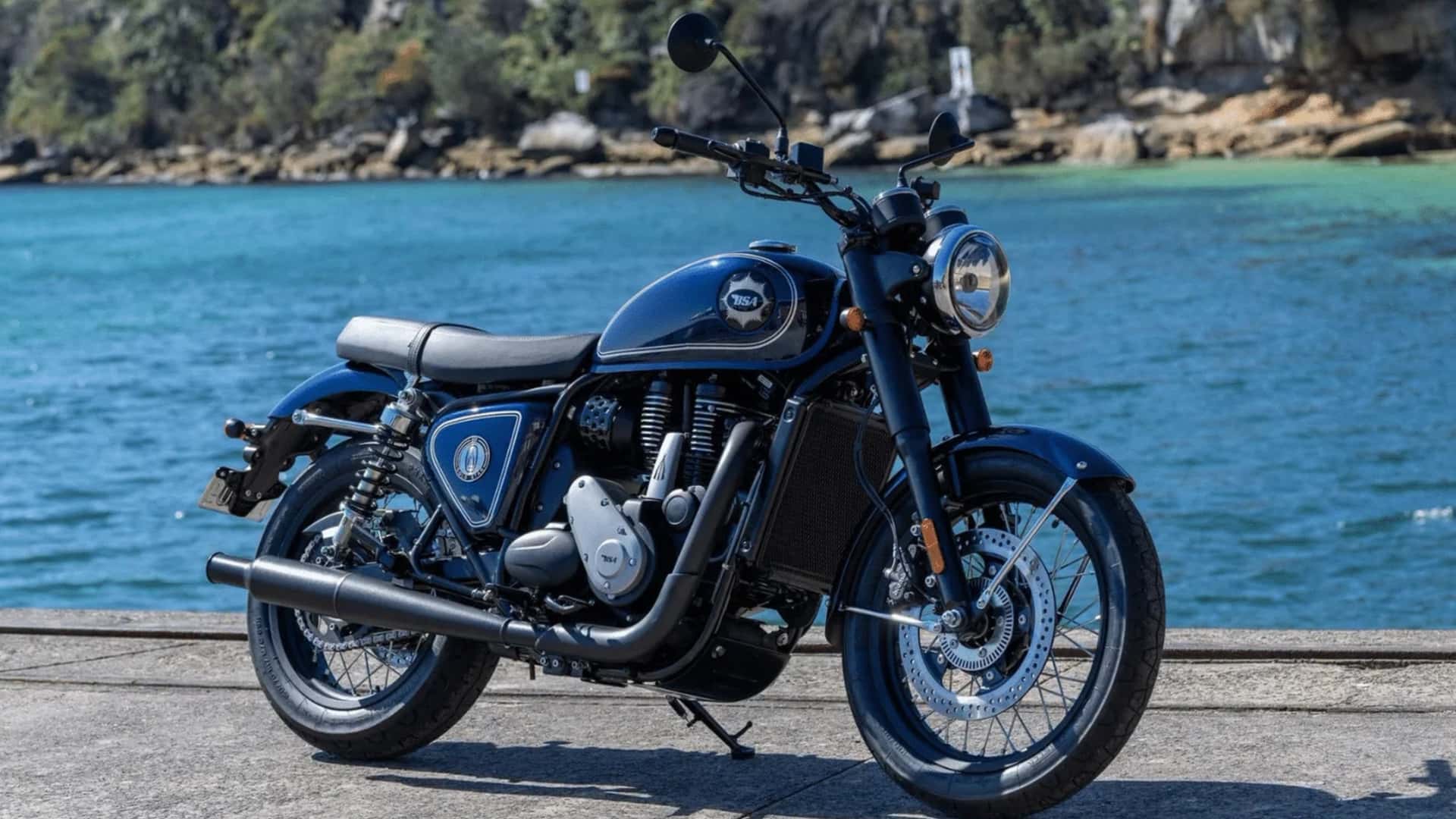
Birmingham Blue is the brighter of the pair, coating the tank, side panels, and fenders in deep blue, then breaking things up with contrasting white striping. And the name isn’t exactly subtle. BSA traces its origins to the Birmingham Small Arms Company, founded in Birmingham in 1861, with motorcycle production following decades later. So if you’re going to build a retro motorcycle whose entire personality revolves around reminding everyone where it came from, painting one blue and literally naming it after Birmingham makes plenty of sense.
Brooklands Black takes the same nostalgia trip but heads straight for the racetrack. It mixes black bodywork with chrome and gold pinstriping, and its name points back to Brooklands, the famously banked British circuit where the Gold Star story really began. In June 1937, retired racer Wal Handley rode a specially prepared BSA Empire Star to victory there, averaging 102.27 miles per hour and setting a fastest lap of 107.57 miles per hour.
That lap earned Handley a coveted Brooklands Gold Star badge, given for exceeding 100 miles per hour during a race. BSA apparently took one look at that accomplishment and thought, “Well, there’s our next motorcycle name.” The first production Gold Star followed, turning a racing achievement into one of the company’s most recognizable badges. Suddenly, Brooklands Black sounds considerably cooler than something dreamed up during a marketing meeting.
Underneath all that historical cosplay, today’s Gold Star remains unchanged. There’s still a 652cc liquid-cooled single making 45 horsepower at 6,500 rpm and 40.6 pound-feet at 4,000 rpm, paired with a five-speed transmission. And that’s fine. Nobody asked for another horsepower war here. I think this is one of those few times a motorcycle can get away with new paint, especially when the paint comes with nearly a century’s worth of stories attached.