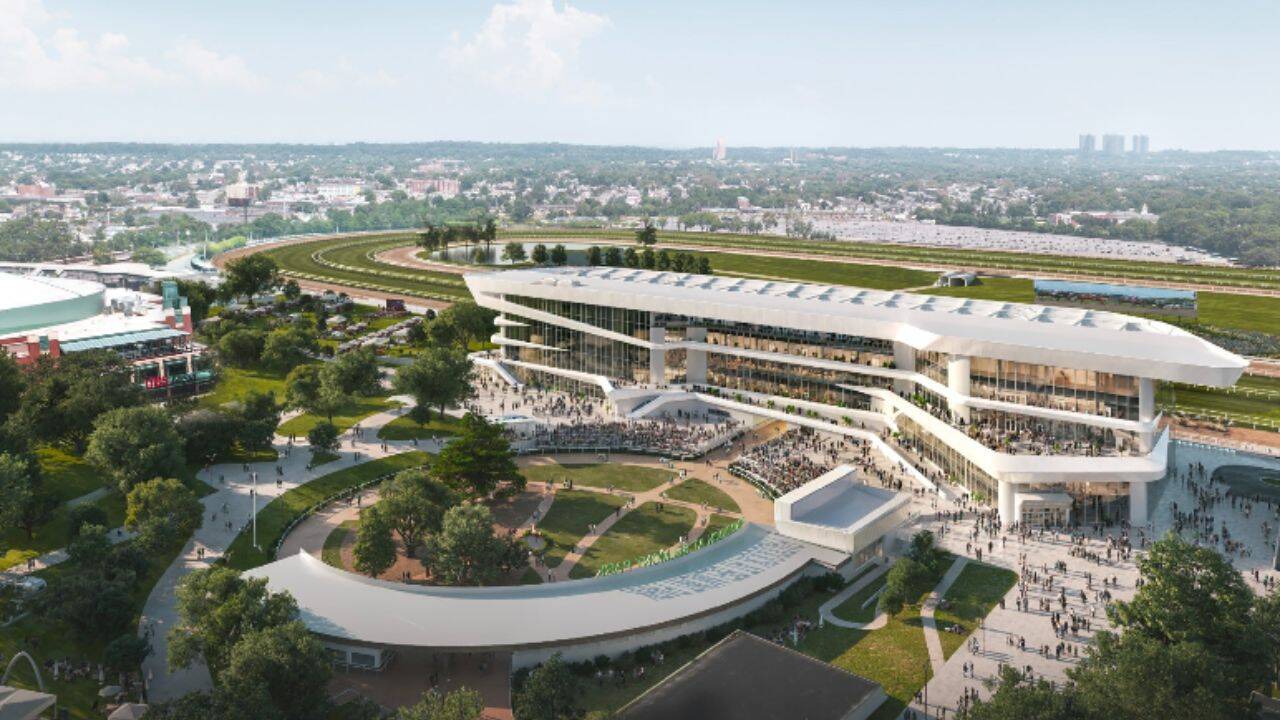
New York has reopened Belmont Park after a $555 million, three-year reconstruction that turned the historic Long Island racetrack into a modern sports and entertainment destination. The new five-story grandstand is about one-fifth the size of the old structure, freeing up space for green areas and public access to the infield, while four brand new racing surfaces will allow year-round racing at Belmont for the first time. Governor Kathy Hochul cut the ribbon on September 18, 2026, welcoming fans back to a venue that will host the return of the Belmont Stakes and the 2027 Breeders' Cup, according to the governor's office and local media coverage.
Get breaking news anytime, anywhere. Download the TOI app now!
A smaller grandstand with a bigger experience
The most visible change at Belmont Park is the grandstand. The original building, which opened in the mid-20th century, had grown dated and inefficient, with vast interior spaces that were expensive to maintain and often underused. The new structure, designed by sports architecture firm Populous, covers roughly 300,000 square feet across five stories, down from about 1.25 million to 1.5 million square feet in the past. That reduction was intentional, aimed at creating a more intimate, fan-focused environment while unlocking land for parks, walking paths and gathering spaces.
Inside, the design emphasises sightlines and connection to the action. Floor-to-ceiling windows give views of both the track and the paddock, and horses move to post through a glass-lined opening so spectators can see them up close. The first floor holds general-admission bars and concessions, while upper levels feature sit-down restaurants, clubs and a NYRA Bets room. Celebrity chef Marc Forgione is behind several dining concepts, including the Turf Club, with menus that range from chili lobster on Texas toast to steaks with bone marrow gremolata.
Only the first two floors are open for the 2026 fall meet, with a capacity of around 6,000 for opening weekend. Floors three through five, including luxury suites and an event space with views toward the Manhattan skyline, are scheduled to be completed in early 2027, ahead of the Belmont Stakes return in June. When fully finished, the venue is expected to accommodate at least 50,000 spectators for major race days, matching the capacity of Saratoga Race Course.
Four new tracks and the promise of year-round racing
Beyond the grandstand, the racing surfaces themselves have been completely rebuilt. NYRA constructed four new tracks, including the traditional 1½-mile dirt oval that defines Belmont's identity, two turf courses and a one-mile synthetic Tapeta oval. The synthetic track is a key innovation, allowing racing to continue during winter months when dirt and turf conditions can be unreliable in the Northeast. For the first time in Belmont Park's history, this means the facility can host live racing year-round.
These upgrades are not just about convenience. They are also about safety and consistency. Modern surfaces can be engineered to provide more uniform footing, reducing the risk of injuries to horses and jockeys. Multiple track options give race planners flexibility to match conditions to different types of races and to keep horses training and competing even when weather would previously have forced cancellations, as per reports.