
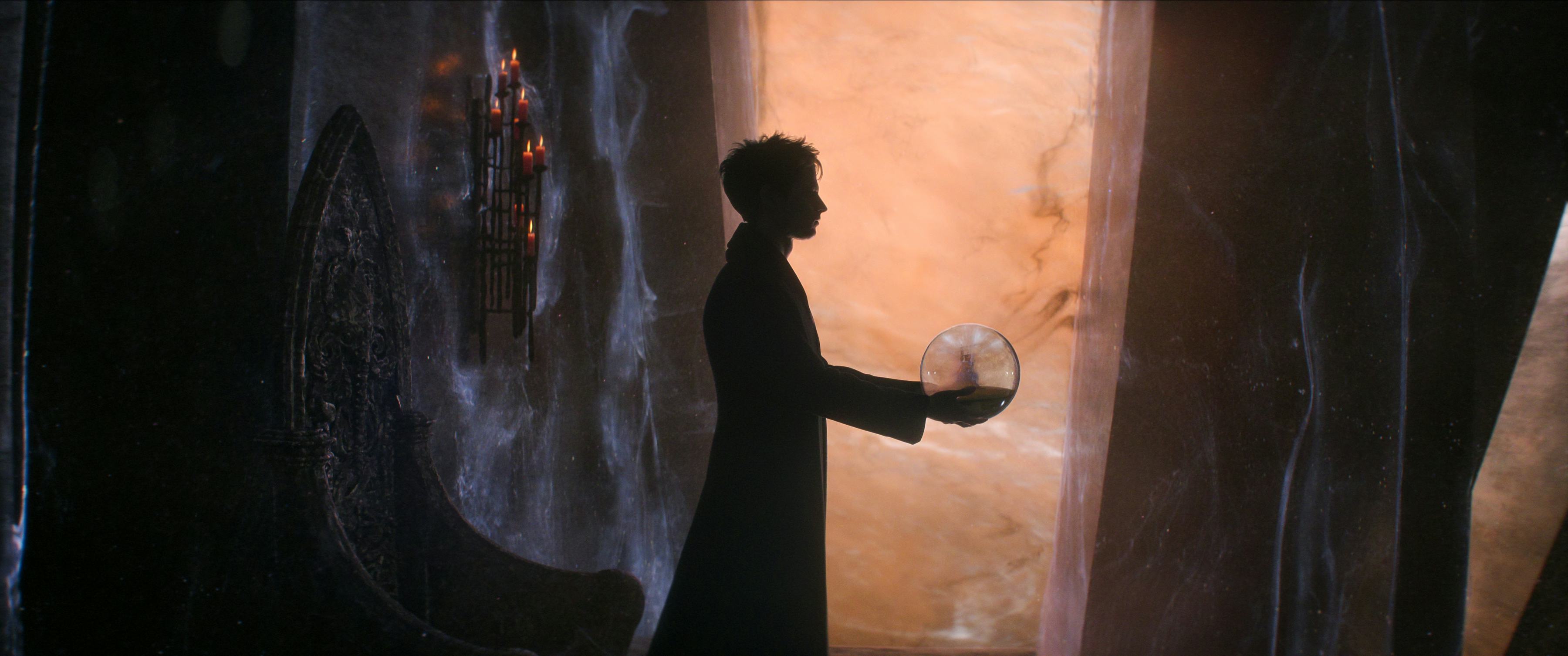
In 1996, Neil Gaiman couldn’t have foreseen his own downfall. But as Netflix’s The Sandman winds down its adaptation of the controversial author’s masterpiece, you can’t help but draw the connections between Gaiman’s own legacy and the show’s maudlin farewell tour for its title character. Dream, aka Morpheus, was famously modeled off Gaiman’s own appearance, after all. And even as the saga explored new dizzying realms of the imagination, that connection never lets you forget that its hero is the author’s self-insert.
I count myself among those who used to describe themselves as Gaiman devotees. I first read The Sandman as many of us do: too young to really process its nightmarish, impossibly imaginative horror stories. There was many a night when I went to bed with nightmares after having read a particularly disturbing issue (it was “24 Hour Diner,” unsurprisingly), and as such, it felt like Gaiman had unlocked a part of my brain that I didn’t even know existed. The images, created beautifully by artists Sam Kieth, Mike Dringenberg, Jill Thompson, Shawn McManus, Marc Hempel, Bryan Talbot, and Michael Zull — none of whom get enough credit for their work — burned in my mind and stayed there. And Gaiman’s storytelling, from then on, would become formative to my own burgeoning tastes.