Get all your news in one place.
100's of premium titles.
One app.
Start reading
The Times of India
The Times of India
World
Trisha Mahajan

Nepal’s flood bill could hit $5 billion. Where will the money come from?

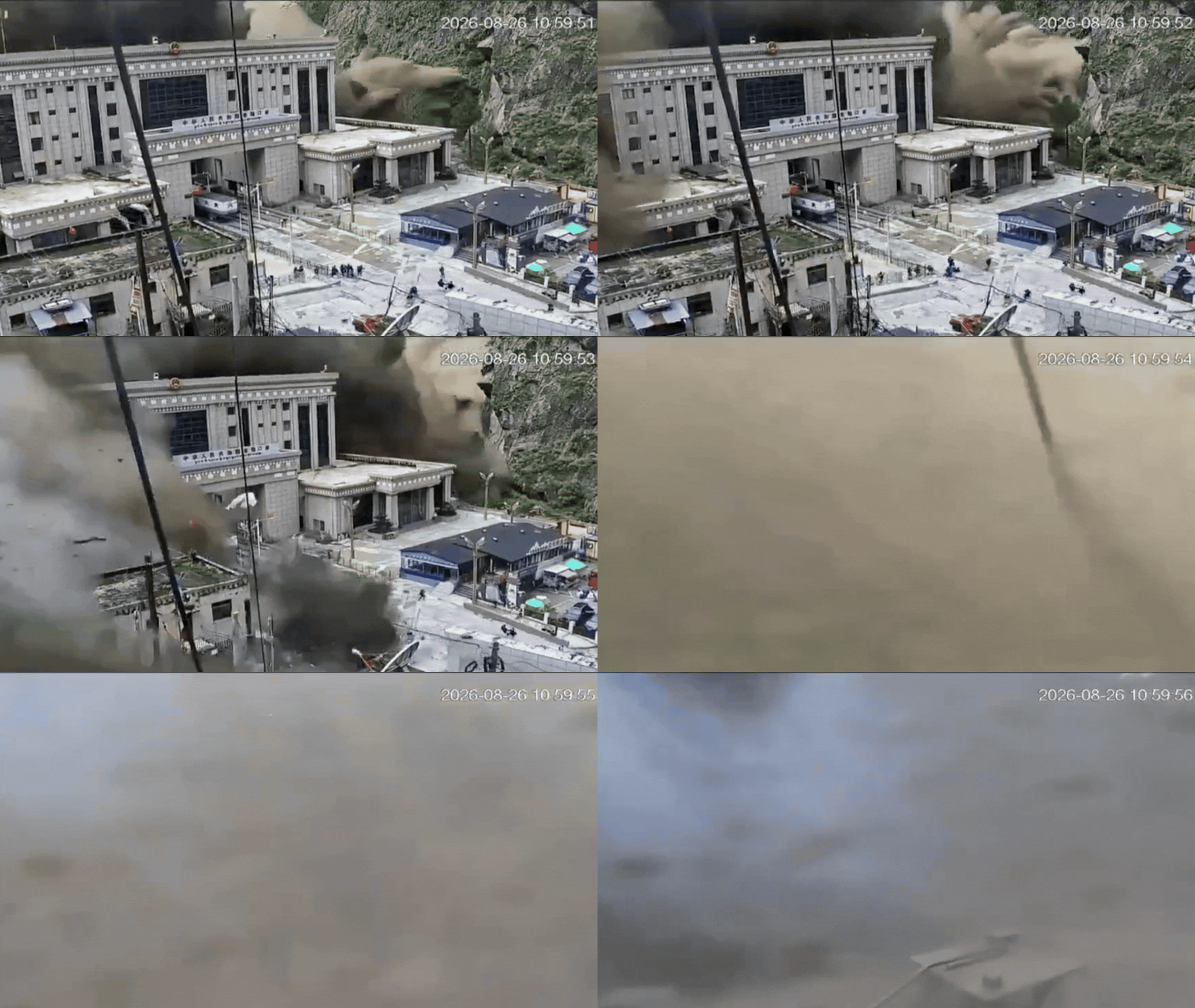
It's been more than 10 days since a glacial collapse sent freezing water, rocks and debris roaring down Nepal's Bhotekoshi and Trishuli valleys.

Get breaking news anytime, anywhere. Download the TOI app now!

The death toll has risen to 1,357, while 5,326 people remain missing, according to Nepal's National Disaster Risk Reduction and Management Authority. Rescue teams have so far saved 13,583 people.

The disaster has also inflicted an enormous economic cost. Nepal's National Disaster Risk Reduction and Management Authority estimates that the floods caused NPR 387.54 billion ($2.56 billion) in damage to property, housing and infrastructure. The government says its immediate four-month recovery effort will require another NPR 7.95 billion, or about $53 million, for roads, temporary shelters, drinking water and electricity.

But that is only the beginning.

Nepal's finance minister Swarnim Wagle told Reuters that the eventual reconstruction bill could reach $4 billion to $5 billion, roughly a tenth of Nepal's annual economic output. The figure remains preliminary and could change as authorities complete detailed assessments.

For a country with an economy of about $46 billion, the scale of the challenge is daunting.

Nepal is not entering the crisis with unlimited fiscal room. It is still dealing with the legacy of the 2015 earthquake, while public debt has risen sharply over the past decade.

The question now is simple but difficult: Where will the money to rebuild come from?

A tight fiscal position

Nepal's government will have to shoulder part of the cost itself.

It can reprioritise spending, use existing disaster-response resources and increase borrowing. But each option comes with a price.

The IMF estimates Nepal's public debt at 49.6% of GDP in FY2025-26, up from 48.1% a year earlier. It also expects the country to continue running a fiscal deficit as the government seeks to increase revenue and improve public-investment execution.

A large reconstruction programme would therefore compete with spending on schools, hospitals, jobs and other infrastructure.

Borrowing could help bridge part of the gap, but greater reliance on debt would increase future debt-servicing costs and leave less room for development spending.

Nepal therefore needs not just money, but financing that can be mobilised quickly and channelled into reconstruction projects.

An economy already under strain

The disaster has hit sectors that Nepal has been relying on to strengthen its economy.

Remittances remain the country's biggest external financial cushion. The IMF expects workers' remittances to reach $15.2 billion in FY2025-26, equivalent to 33.1 per cent of GDP.

But remittances are household income, not government revenue. They support consumption and provide foreign exchange, but Kathmandu cannot simply redirect that money towards rebuilding public infrastructure.

That makes sectors such as hydropower and tourism especially important to the recovery.

Hydropower has been one of Nepal's biggest growth opportunities, with the country seeking to harness its Himalayan rivers to generate electricity and expand exports to India. But at least 11 hydropower projects in the affected corridor have been damaged, knocking generating capacity offline.

Tourism faces a different risk. Nepal's trekking, mountaineering and pilgrimage industries depend heavily on access to mountain regions. Damaged roads and bridges could therefore disrupt visitor flows and hurt another important source of foreign exchange.

Nepal now has to rebuild while some of the very sectors expected to drive future growth have themselves taken a hit.

Domestic financing: The first layer

The first layer of the reconstruction effort will come from Nepal's own resources.

The government can reprioritise its budget, divert spending towards damaged infrastructure and draw on disaster-response funds. It can also increase domestic or external borrowing.

Sign up to read this article
Read news from 100's of titles, curated specifically for you.
Already a member? Sign in here
Related Stories
Top stories on inkl right now
One subscription that gives you access to news from hundreds of sites
Already a member? Sign in here
Our Picks
Fourteen days free
Download the app
One app. One membership.
100+ trusted global sources.