
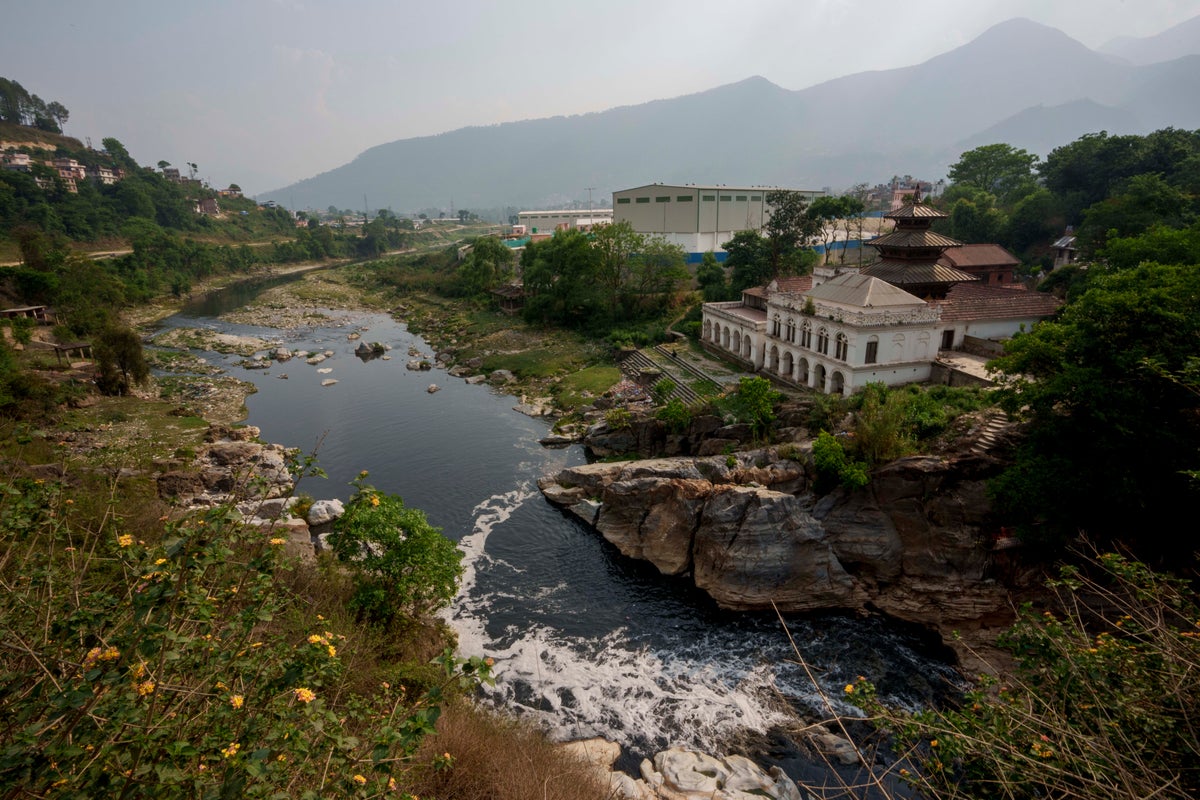
High on a mountain in the Himalayas, pristine drops fall from the mouth of a tiger statue installed at a stream thought to form the headwaters of the Bagmati River, long revered as having the power to purify souls. From there it wends its way downhill past verdant forests and merges with other waterways, irrigating fields of rice, vegetables and other crops that are a livelihood for many Nepalese.
But as the Bagmati reaches the valley of Kathmandu, the capital, its color changes from clear to brown and then to black, choked with debris, its contents undrinkable and unsuitable even for cleaning. During the dry season, an overwhelming stench pervades the area by its banks.














