Get all your news in one place.
100's of premium titles.
One app.
Start reading
The Economic Times
The Economic Times

Nepal floods: DNA testing offers last hope to families searching for missing loved ones

Kathmandu: When Amrit Diyali saw a human hand washed downstream by floodwaters, he was struck by how closely it resembled his younger brother Raj Kumar's, who has been missing along with his wife and four-year-old son since the devastating floods hit Nepal.

"I found a hand that looks exactly like uncle's," Amrit's nephew Avinash told him after sending him a photograph of the severed hand, according to The Kathmandu Post.
Also Read: Death toll due to flash floods in Nepal rises to 1,344

For Amrit, the discovery brought both hope and dread. A DNA test is now the family's only chance of knowing whether the remains belong to his brother.

The case reflects a much larger challenge facing Nepal, where authorities are relying on DNA testing to identify hundreds of bodies recovered after the August 26 floods and help families find relatives who remain missing.

Police have so far collected 2,272 DNA samples -- 1,260 from bodies and 1,012 from relatives -- as they try to establish the identities of those killed in the disaster, The Kathmandu Post reported.

Also Read: Nepal floods could cost insurers over $130 mln even before death, injury claims

Authorities said 1,030 bodies had been buried after DNA samples were collected and other identification procedures completed. The figure includes 222 women, 355 men and 453 bodies whose sex could not be established, the newspaper reported.

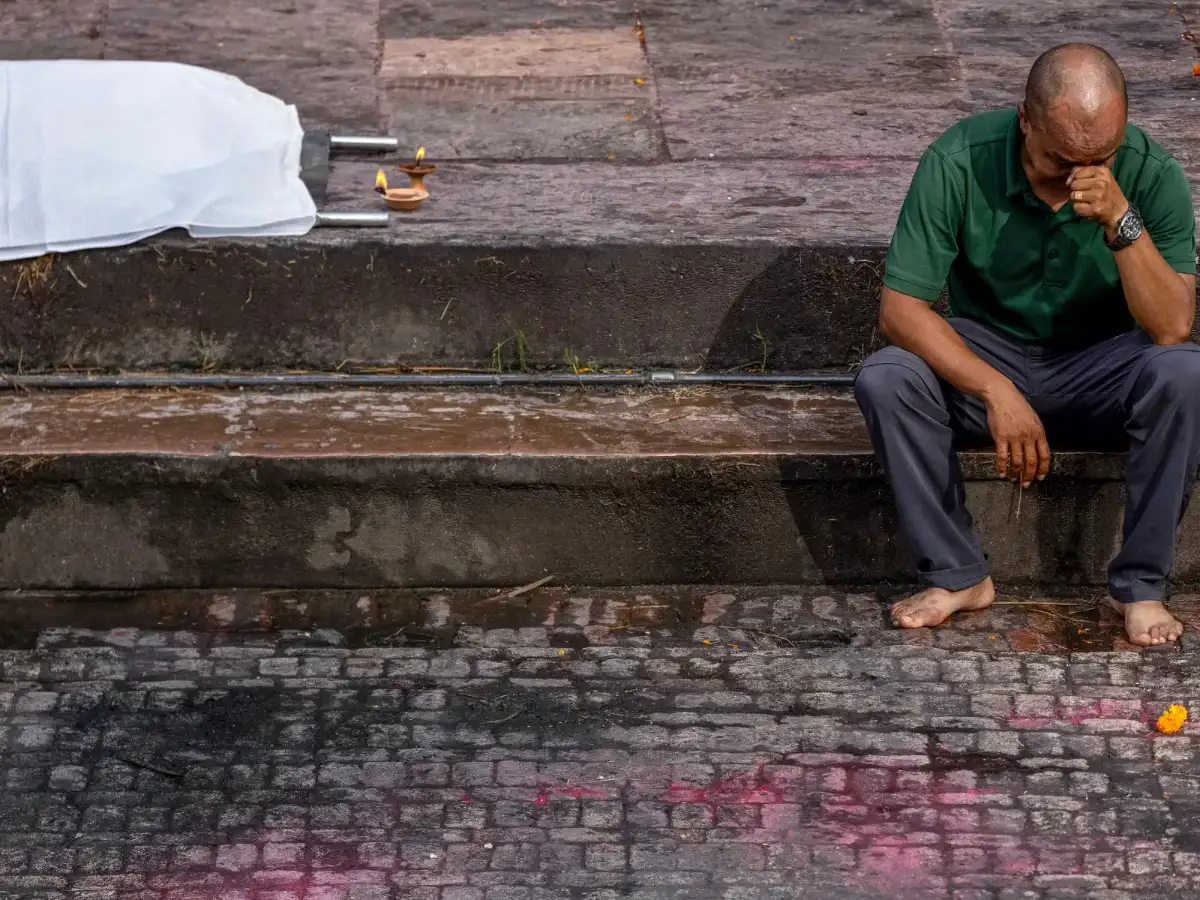
For families such as the Diyalis, however, identification is not merely a forensic exercise. It is a way of ending days of uncertainty and allowing them to perform the final rites of their loved ones.

Raj Kumar Diyali, 33, his 30-year-old wife Shriti and their four-year-old son Siraj were living in Syaphrubesi in Rasuwa district when the Bhotekoshi flood struck.

His relatives searched along the river as far as Chitwan and Nawalpur, turning over mud and stones in the hope of finding the family. When they could not find them alive, they began looking for their bodies.

Five days after the flood, Raj Kumar's nephew Avinash found the hand in Nawalpur. Amrit sent a sample from it to the National Forensic Science Laboratory in Kathmandu on Tuesday for DNA testing.

The sample is 182nd in line for testing, according to Amrit.

"We have stopped hoping for anything else," he told The Kathmandu Post. "Even if that hand turns out to be my brother's, at least we would know for sure."

The flood hit the Bhotekoshi River in Rasuwa, near Nepal's northern border with China, before causing widespread destruction downstream, leaving hundreds dead and thousands missing.

The scale of the disaster has made identification difficult, with many bodies recovered from the river and flood debris in poor condition.

To make the process easier for families, Nepal Police has opened a DNA sample collection centre in Bidur, Nuwakot, allowing relatives of missing people to provide samples without travelling to Kathmandu, the Ratopati news portal reported.

Deputy Inspector General of Nepal Police Hospital Dr Damodar Poudel said samples from close blood relatives such as parents, children and siblings are particularly useful for comparison with DNA obtained from unidentified bodies.

According to Poudel, DNA testing will help in identification, as there are difficulties in identifying the bodies.

Authorities have also uploaded details of 1,270 unidentified bodies on the Nepal Police website so families can check whether their missing relatives are among those recovered, The Kathmandu Post reported.

Sign up to read this article
Read news from 100's of titles, curated specifically for you.
Already a member? Sign in here
Related Stories
Top stories on inkl right now
One subscription that gives you access to news from hundreds of sites
Already a member? Sign in here
Our Picks
Fourteen days free
Download the app
One app. One membership.
100+ trusted global sources.