Get all your news in one place.
100's of premium titles.
One app.
Start reading
The Economic Times
The Economic Times

Nepal flash flood LIVE updates: 768 dead, over 2,500 still missing as rescue operation enters fifth day

The death toll from flash floods in central Nepal rose to over 700 on Sunday, with more bodies being recovered even as nearly 2,500 people are still missing following the disaster.

Bodies have been recovered from all eight affected districts as rescuers race against time to search for those missing and rescue those stranded on the fifth day since the disaster.

Also read: Nepal Disaster Authority issues fresh Bhote Koshi alert as river flow surges, flood threat grows

An ice-rock avalanche following a glacial collapse near the Nepal-Tibet border sent a torrent of water, mud and debris downstream, wiping out towns and villages, damaging crucial infrastructure and washing away hydropower stations through central Nepal on Wednesday.

District-wise toll

Nawalparasi East has reported the highest number of casualties, with 158 bodies recovered, followed by Nawalparasi West (75), Gorkha (54), Dhading (49), Nuwakot (41), Tanahun (31) and Rasuwa (13), police said.

The death toll from flash floods in Tibet near the Nepal border climbed to 16 on Sunday, with 546 people, including 49 Indians, still missing, Chinese officials said.

The death toll of the devastating disaster rose to 16 on Sunday, said Chinese officials who are carrying out relief and rescue operations in Gyirong county in Tibet.

Rescue operations

A total of 2,301 people have been rescued or treated for injuries across the affected areas, according to police. Nuwakot accounts for the largest share of rescues at 1,622, followed by Rasuwa (676) and Dhading (3). Hospitals across the Kathmandu Valley have treated or discharged 140 injured flood survivors transferred for advanced care.

Twenty-seven police personnel remain out of contact. Nepal Police have deployed 4,854 security personnel across the disaster zone to manage operations, locate the missing and secure affected communities.

Nepal Prime Minister Balendra Shah said the government stands with flood-affected citizens and that saving every life remains its first priority, adding that search, rescue and relief operations have been intensified.

Nepal Foreign Minister Shisir Khanal dismissed circulating reports that the country had declined international assistance, saying Nepal requires extensive support ranging from specialised technical teams to long-term reconstruction aid. The Prime Minister Disaster Relief Fund remains active for contributions via its official online portal. Khanal said that outside the damaged river valley, the rest of the country remains operational and open for foreigners, travellers and tourists.

Hydropower tunnel rescue underway

Nepali army troops and engineers were working on Sunday to rescue workers believed trapped in a tunnel at the Trishuli 3A hydroelectric site, after successfully inserting a pipe into the passage. "Started sending air through the small opening," Home Minister Sudhan Gurung said in a statement. Efforts were hampered on Sunday by fresh rain and rising river waters, with disaster authorities urging rescue teams to "exercise caution."

Fresh flood warning

Nepal's disaster authority warned on Sunday morning of rising flood waters in the Bhotekoshi River in Rasuwa and urged rescue teams and residents to stay alert. "We have received information that the flood flow in the Bhotekoshi River in Rasuwa has increased further," the National Disaster Risk Reduction and Management Authority (NDRRMA) said in a 7:20 am warning, asking all personnel in Rasuwa, Nuwakot, Dhading and Chitwan to exercise caution. Flood warning notices were sent to residents' phones through Sunday morning as crews worked to clear a key highway connecting Kathmandu to one of the worst-hit areas.

India's rescue and relief response

The Ministry of External Affairs (MEA) said 108 Indian nationals have been rescued in Nepal, and contact has been re-established with around 50 others who were earlier uncontactable.

It said 598 Indian nationals have safely crossed into Nepal from China over the past two days, citing local Chinese government sources, while around 900 Indian nationals remain on the Chinese side but are safe and contactable. More than 275 Indian nationals and 128 persons of Indian origin (PIOs) remain missing or non-contactable, the ministry said.

The MEA said the Indian embassies in Kathmandu and Beijing have stayed engaged with all relevant stakeholders to coordinate search, rescue and relief efforts for Indian nationals affected by the floods.

Also read: A tea break, a raging river and a narrow escape: Chhattisgarh friends recount Nepal flood ordeal

It added that its missions have worked to ensure the safety and wellbeing of rescued Indian nationals, facilitated their return to India where needed, and are monitoring the transit of Indians returning from the Kailash Mansarovar Yatra through Nepal.

Calling India and Nepal's ties civilisational and rooted in people-to-people linkages, the MEA said India shares in the grief caused by the flash floods, noting that several Indian nationals have also lost their lives, and reiterated that it stands in solidarity with Nepal and remains committed to providing all possible assistance.

Separately, the Indian Embassy in Nepal said the Nepal government has been releasing photographs and descriptions of the deceased, accessible through the Nepal Police website. The embassy said it is working closely with Nepali authorities, including Nepal Police, to ensure that the mortal remains of Indian nationals are handed over to next of kin after identification, and that further updates would follow in coordination with Nepali authorities.

Pilgrims caught in the disaster

Scores of Hindu devotees from across the world were among those caught in the disaster, many travelling towards Tibet's Mount Kailash.

Mount Kailash, which Hindus believe to be the home of Lord Shiva and which lies near Lake Mansarovar, is also sacred to several other faiths.

Sivaranjani Muthunathan was travelling by bus with 56 others towards the Chinese border when they became stuck in what they initially thought was a traffic jam.

"Then there was fog, smoke, something that seemed to suddenly engulf us," Muthunathan, 46, told AFP on Friday, showing a phone video she recorded of a torrent surging towards her.

Around them, vehicles were swept away or buried under mud.

"One by one, we also climbed out through the driver's side," she said, before describing how they scrambled up a hill.

Nepal's Home Minister Sudhan Gurung said the immediate priority remained finding survivors. Rescue teams had located 100 missing Indian visitors, mostly pilgrims, and 25 Chinese workers in the worst-hit area around Trishuli, he said.

Nearly 550 foreigners were still unaccounted for, while Nepali authorities were yet to establish the number of local people missing.

The missing foreigners in Nepal came from more than two dozen countries, including 288 Indians, 63 Americans, 51 Malaysians, 34 Australians, 33 Britons and 25 Canadians.

Nepalese tourism officials had earlier said 133 Indians travelling on pilgrimage to Mount Kailash were missing. The list had also included 47 Americans, 34 Australians, 33 Britons and 24 Canadians.

A recurring Himalayan danger

The Lhende Khola river system has flooded twice in 14 months. Last year, a glacial lake in Tibet overflowed after high temperatures, killing nine people and damaging critical infrastructure, including a bridge connecting Nepal and China.

“The Lhende Khola has flooded twice in 14 months, this time triggered by an ice rock avalanche from a glacier on the Nepal side that blocked the river and released a sudden surge downstream,” said Saswata Sanyal, a disaster risk reduction specialist.

He stressed the importance of early-warning systems in “a warming Himalaya”.

Also read: 15 seconds to decide who lives, who dies: The survivor tales of horrific Nepal flash floods

Researchers have found that glaciers across the Hindu Kush Himalaya are melting faster, with ice loss rates doubling since 2000. Experts warn that rising temperatures, intense monsoons and unstable ice formations could make similar disasters more frequent across South Asia.

The Himalayan range contains some of the world's largest remaining glaciers and supplies water to millions of people. Its steep valleys are also vital transport and economic corridors but remain highly vulnerable to flash floods, landslides and glacial lake outbursts.

The latest disaster has renewed concerns over the safety of communities and infrastructure across a rapidly warming Himalayan region.

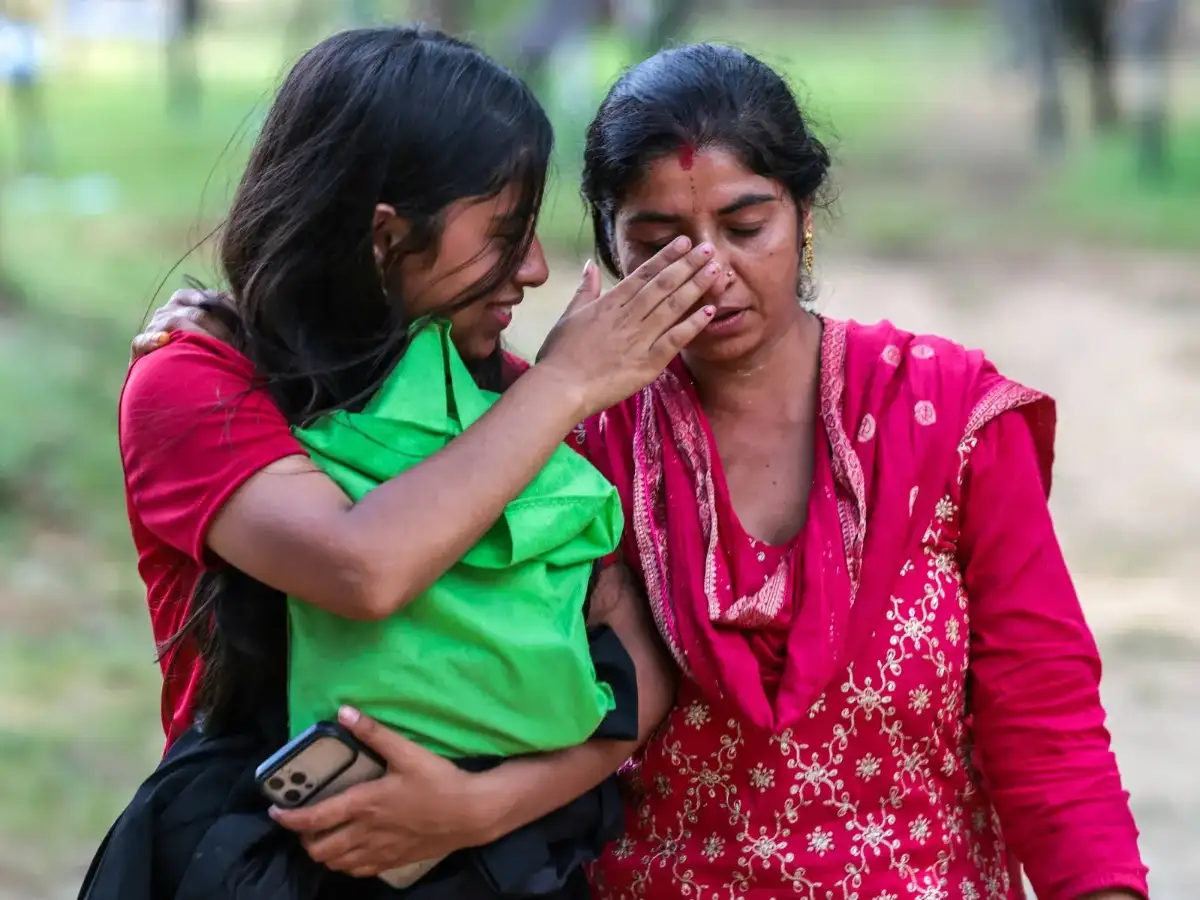
Across the affected areas, survivors who escaped the wall of water and debris now face the agonising wait for news of missing relatives, while authorities confront the enormous task of recovering bodies, reaching isolated communities and beginning the process of rebuilding settlements and infrastructure that were swept away in minutes.

(With inputs from agencies)

Sign up to read this article
Read news from 100's of titles, curated specifically for you.
Already a member? Sign in here
Related Stories
Top stories on inkl right now
One subscription that gives you access to news from hundreds of sites
Already a member? Sign in here
Our Picks
Fourteen days free
Download the app
One app. One membership.
100+ trusted global sources.