
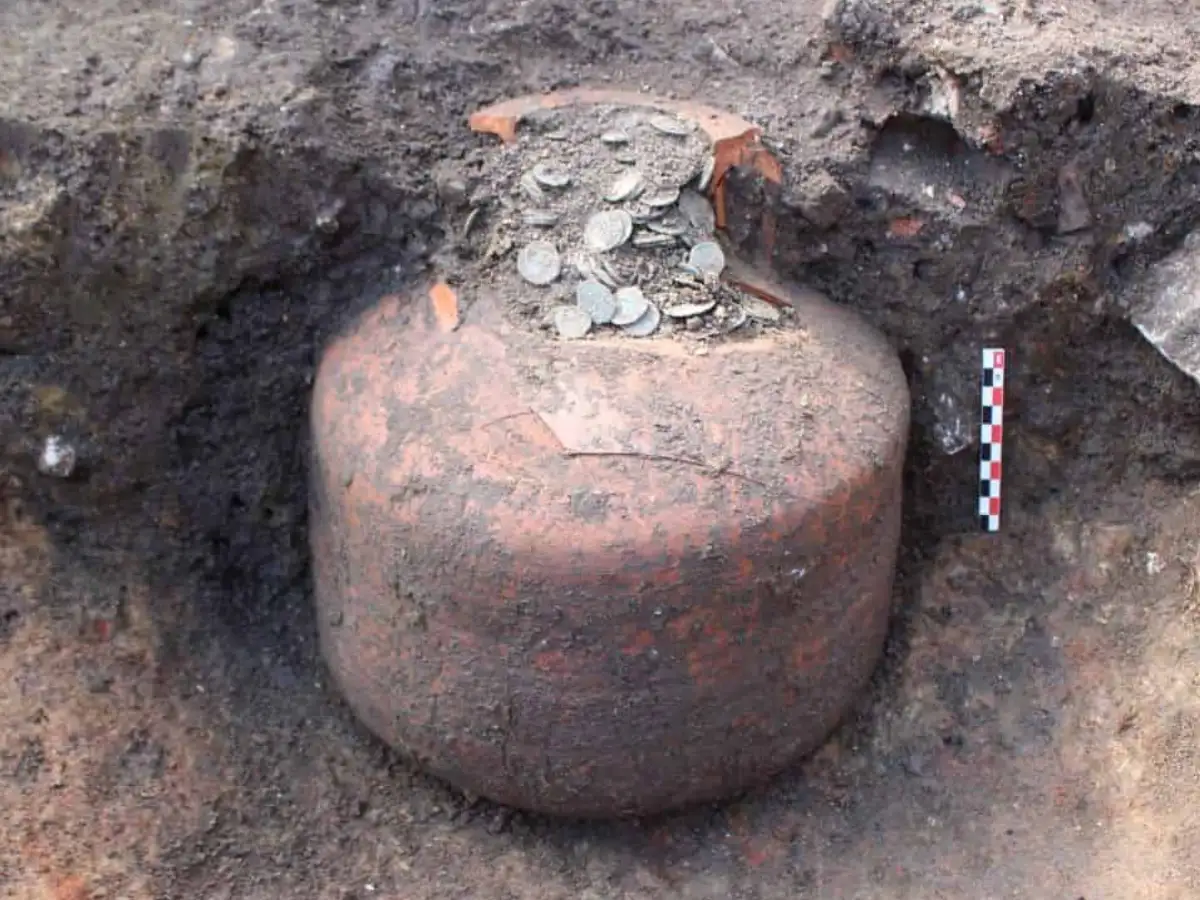
If you thought hiding cash in a mattress was a modern move, just wait until you hear about the folks in Roman-era France. Archaeologists excavating beneath the small village of Senon, in northeastern France, just unearthed three ceramic jars, or amphorae, that could contain more than 40,000 Roman coins, all dating back some 1,800 years, according to a Live Science report. How the jars were buried suggests something more interesting than a family hiding savings in a panic before fleeing danger. It looks like a real working household bank account.
The dig is being led by INRAP, or the National Institute for Preventive Archaeological Research, a government agency that intervenes whenever construction threatens to disturb a historical site. The official statement from INRAP says the dig is about 1,500 square meters and was triggered by routine construction work.












