Get all your news in one place.
100's of premium titles.
One app.
Start reading
Evening Standard
Evening Standard
Politics
Sophie Wingate

Nato chief: UK needs credible path of yearly hikes to hit defence spending goal

Nato secretary general Mark Rutte met Andy Burnham during his UK visit (Stefan Rousseau/PA) - (PA Wire)

The UK needs a “credible path” towards hitting its Nato defence spending target – with increases every year, the alliance’s chief Mark Rutte has said.

The Nato secretary general told the Press Association that members of the defensive alliance “have to stick to that path” towards allocating 3.5% of gross domestic product – a measure of the size of the economy – for core defence spending by 2035, and set out “yearly increments”.
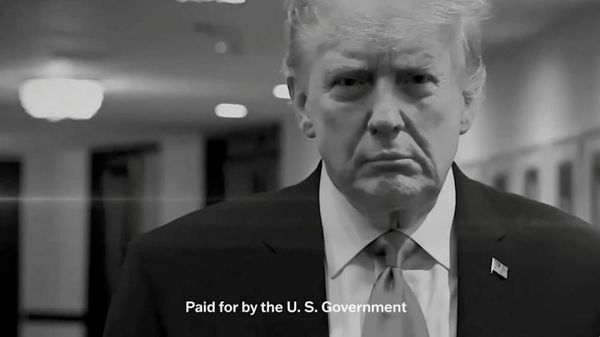
It comes as Prime Minister Andy Burnham is under political pressure to show how the UK will meet that goal.

Prime Minister Andy Burnham and Nato chief Mark Rutte look at a robotic dog during a visit to see RAL Space in Didcot (Stefan Rousseau/PA) (PA Wire)

The Government has so far only budgeted to hike defence spending to 2.7% of GDP by 2027/28, but there are no firm details on how further increases will be achieved beyond that date.

Mr Rutte said reaching the 3.5% target could not happen immediately because Nato countries needed time to expand their armed forces and defence industries.

In an exclusive interview with PA on Thursday, the Nato chief said: “You cannot spend it today, but you can also not wait ’til 2035.

“And that is why you need a credible path towards that 3.5%, and yearly increments.”

Warning about the threat from Russian President Vladimir Putin after a spate of hybrid attacks on European soil, Mr Rutte said: “Let’s not be naive about what he might do against Nato.”

With Mr Putin willing to “sacrifice 1.2 million of his own people in Ukraine” and spend 50% of his state budget on defence, “we have to make sure that we stay ahead of them”, he said.

“I think we are on the right path now to make sure that also going forward we stay ahead of the Russians.

“But again, that means that all of us, the UK and all the others, have to to stick to that path to the 3.5% with yearly increments.”

Chancellor John Healey quit as defence secretary in Sir Keir Starmer’s administration in a row over funding, arguing that it was necessary to reach 3% by 2030.

He has since appeared unwilling to recommit to the interim target and said he will set out the timetable for spending 3.5% of GDP on defence by 2035 at next year’s spending review.

Mr Rutte praised Mr Burnham’s Government for its commitment to the Nato goal.

After meeting Mr Burnham on Wednesday, and Ed Miliband and Wes Streeting on Thursday, Mr Rutte told PA: “I’m really happy with the Prime Minister and also all the other key political players, including the Foreign Secretary and Defence Secretary, really committing to the 3.5%, but also committing to the need for a credible path to get there.

“And of course, I understand that next year’s spending review … will probably lead to more decisions on what that path exactly will be.”

He added that allies could not “in 2034 do in one step” the increase to 3.5% from the current level of defence spending, and that there “has to be a glide path”.

The head of Nato also appeared to side with the UK in its pushback against the European Union’s efforts to encourage the bloc’s domestic arms industry by limiting the role of outsiders.

Mr Rutte said: “I agree with the British Government that we need to have a defence industrial base which is encompassing the whole of the alliance, from the US up to Turkey.

“And I know some are saying, ‘Hey, buy European or buy this or buy that’, but this type of protection will not help us.”

Following his talks with the UK Cabinet ministers, Mr Rutte said he had pushed to “do more in sharing the big innovation coming out of the UK with the rest of Nato.”

“I was speaking to the converted, but if I have been pressing one thing, it is this: that we need to speed up innovation in Nato, and the UK is a leader here, and with the extra defence spending, it means also being able to spread faster these innovations amongst the Nato alliance.”

Asked by the BBC whether countries can boost defence spending alongside a spiralling benefits bill, Mr Rutte said: “I think these are two separate issues.

“One issue is you have to make sure that the money is there to spend on defence. The other issue is the general issue for every government to make sure that you have economic growth.

“So some governments will put in place reforms to get more economic growth etc and to make sure that you manage the public finances. That is what this Government will do, no doubt.”

When pressed on whether defence and welfare spending are connected, he said: “Theoretically, if you have enough economic growth because your economy is growing, you could do both.”

Mr Rutte also told the BBC he is an “optimist” about AI, but added: “Of course, again, let’s not be naive.”

He added that, when it comes to how AI is used in the collective defence of Nato, it will “always be humans who make ultimate decisions”.

Sign up to read this article
Read news from 100's of titles, curated specifically for you.
Already a member? Sign in here
Related Stories
Top stories on inkl right now
One subscription that gives you access to news from hundreds of sites
Already a member? Sign in here
Our Picks
Fourteen days free
Download the app
One app. One membership.
100+ trusted global sources.