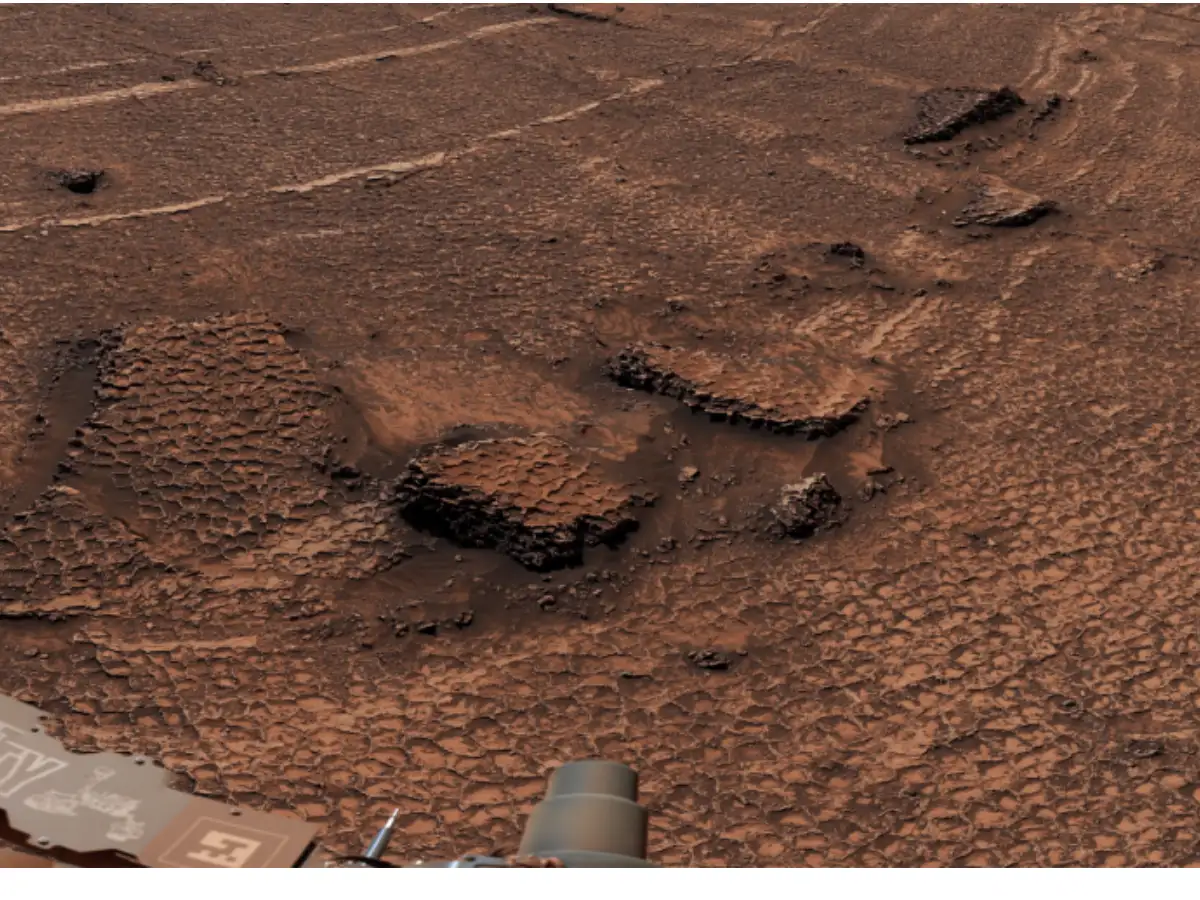
NASA's Curiosity rover has discovered an enormous field of honeycomb-like rock textures on Mars, offering scientists a fresh clue about the Red Planet's ancient geological history. The newly identified polygonal fractures, stretching across a wide Martian plain, are the largest such formation Curiosity has observed since it landed on Mars in 2012.
The discovery was made as the rover climbed a Martian valley nicknamed "Valle Grande." Images captured on June 19 and 20, 2026, reveal thousands of small geometric cracks, each measuring about 1.5 to 3 inches (4 to 8 centimeters) across. The distinctive patterns extend in every direction visible to the rover and even wrap around a nearby sand-capped butte known as "Miraflores."