Get all your news in one place.
100's of premium titles.
One app.
Start reading
The Economic Times
The Economic Times

NASA's Apollo 12 survived two lightning strikes, then astronaut Alan Bean accidentally pointed its TV camera at the Sun, ending live broadcasts from the Moon

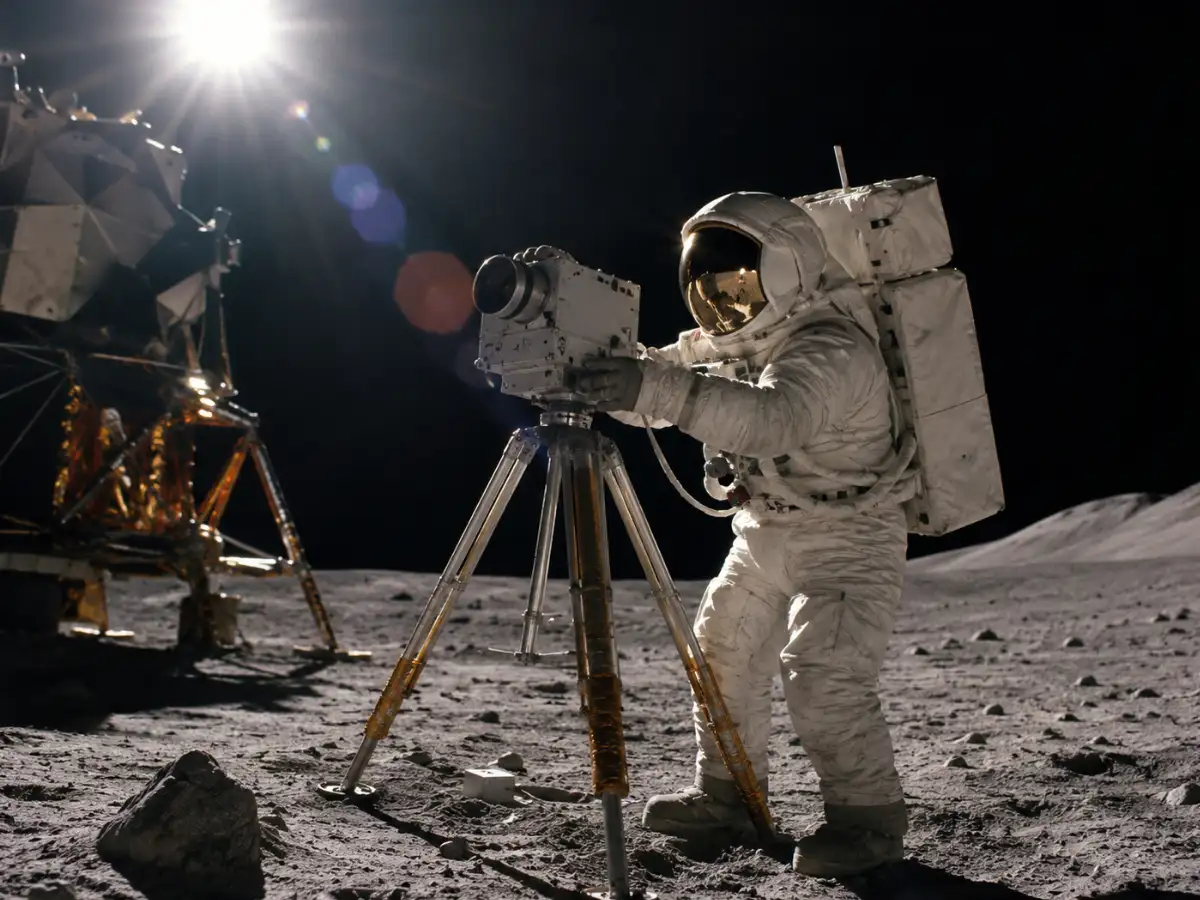
One of NASA’s most memorable Apollo mishaps happened just minutes after astronauts stepped onto the Moon. During Apollo 12, astronaut Alan Bean was setting up a color television camera on the lunar surface when he accidentally pointed it directly toward the Sun. The intense sunlight permanently damaged the camera’s imaging tube, abruptly ending live television coverage from the Moon for the rest of the mission.

Apollo 12 launched from Cape Kennedy on November 14, 1969, becoming the second crewed mission to successfully land astronauts on the Moon. Charles “Pete” Conrad Jr. and Alan Bean touched down in the Ocean of Storms on November 19, while command module pilot Richard Gordon remained in lunar orbit aboard Yankee Clipper.

The mission had already survived a dramatic start. Shortly after launch, lightning struck the Saturn V launch vehicle twice, temporarily knocking out telemetry. Despite the scare, the spacecraft continued into Earth orbit and then began its journey toward the Moon.

Apollo 12 was designed to demonstrate that astronauts could make a highly precise lunar landing and conduct extensive scientific work on the surface. Conrad and Bean landed close to their intended target, roughly 950 miles west of Apollo 11's landing site.

After landing, Conrad opened the lunar module's hatch and began the first lunar excursion. Bean's assignment included deploying the television camera so people on Earth could watch the astronauts explore the Moon.

But the camera didn't last long.

While Bean was mounting and positioning the equipment, he inadvertently aimed the camera toward the Sun. The intense light damaged its imaging tube beyond repair. Unlike today’s digital cameras, the Apollo-era television system used a sensitive imaging tube that could be permanently damaged by direct exposure to the Sun.

The result was frustratingly simple: no more live television from the lunar surface for Apollo 12.

The astronauts continued their work despite the loss. They deployed the Apollo Lunar Surface Experiments Package, collected lunar rocks and soil, photographed the landing site and conducted scientific investigations. During their second excursion, Conrad and Bean also traveled to Surveyor Crater, where they retrieved components from the Surveyor III spacecraft that had landed on the Moon in 1967.

Among the items they brought back was the 17-pound television camera itself. Scientists on Earth wanted to examine the equipment and study how prolonged exposure to the lunar environment affected it.

Apollo 12's lunar stay lasted about 31.6 hours. After completing their work, Conrad and Bean lifted off in the Intrepid ascent stage and rendezvoused with Gordon in lunar orbit. The crew eventually began the journey home and splashed down in the Pacific Ocean on November 24, 1969.

Apollo 12 is remembered for its precision landing, scientific achievements and successful recovery from a lightning-struck launch.

But its television camera has earned a place in spaceflight history for a much more human reason: one accidental turn toward the Sun was enough to silence the Moon's live broadcast for the rest of the mission.

Sign up to read this article
Read news from 100's of titles, curated specifically for you.
Already a member? Sign in here
Related Stories
Top stories on inkl right now
One subscription that gives you access to news from hundreds of sites
Already a member? Sign in here
Our Picks
Fourteen days free
Download the app
One app. One membership.
100+ trusted global sources.