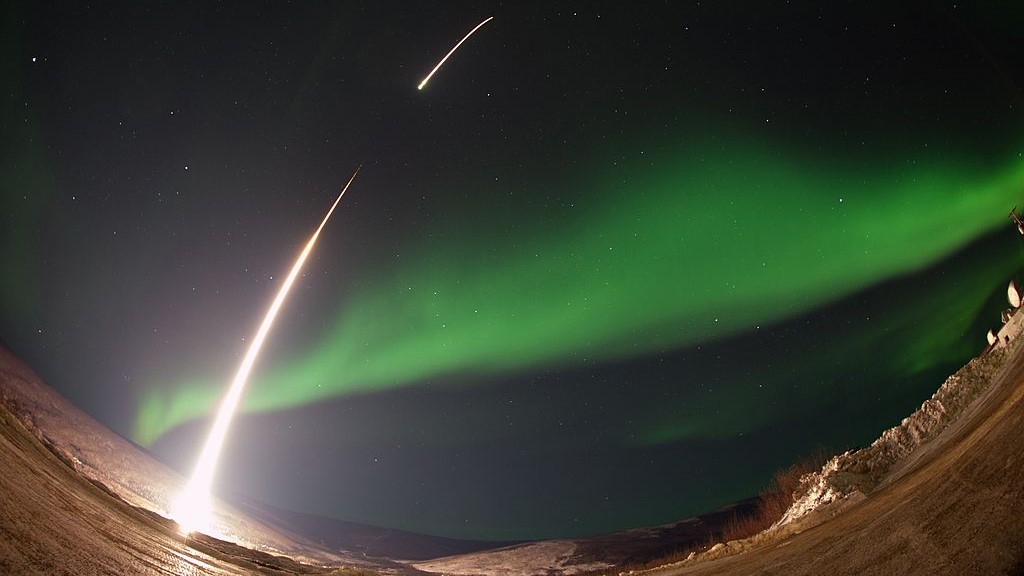
On March 3, 2014, at 6:09 a.m. EST, a NASA-funded sounding rocket launched straight into an aurora over Venetie, Alaska. The Ground-to-Rocket Electrodynamics ? Electron Correlative Experiment (GREECE) sounding rocket mission, which launched from Poker Flat Research Range in Poker Flat, Alaska, will study classic curls in the aurora in the night sky. The GREECE mission seeks to understand what combination of events sets up these auroral curls as they're called, in the charged, heated gas ? or plasma ? where aurorae form. This is a piece of information, which in turn, helps paint a picture of the sun-Earth connection and how energy and particles from the sun interact with Earth's own magnetic system, the magnetosphere. .
NASA plans to fly two rockets through active auroras to help study the unique ribbons of light that dance across the Alaskan night sky.
The rockets are expected to lift off from the Poker Flat Research Range in Fairbanks, Alaska, as part of two missions led by space physicists Marilia Samara and Robert Michell from NASA's Goddard Space Flight Center. The team aims to better understand why some auroras flicker, others pulsate and others appear to have holes.
Sign up to read this article
Read news from 100's of titles, curated specifically for you.