
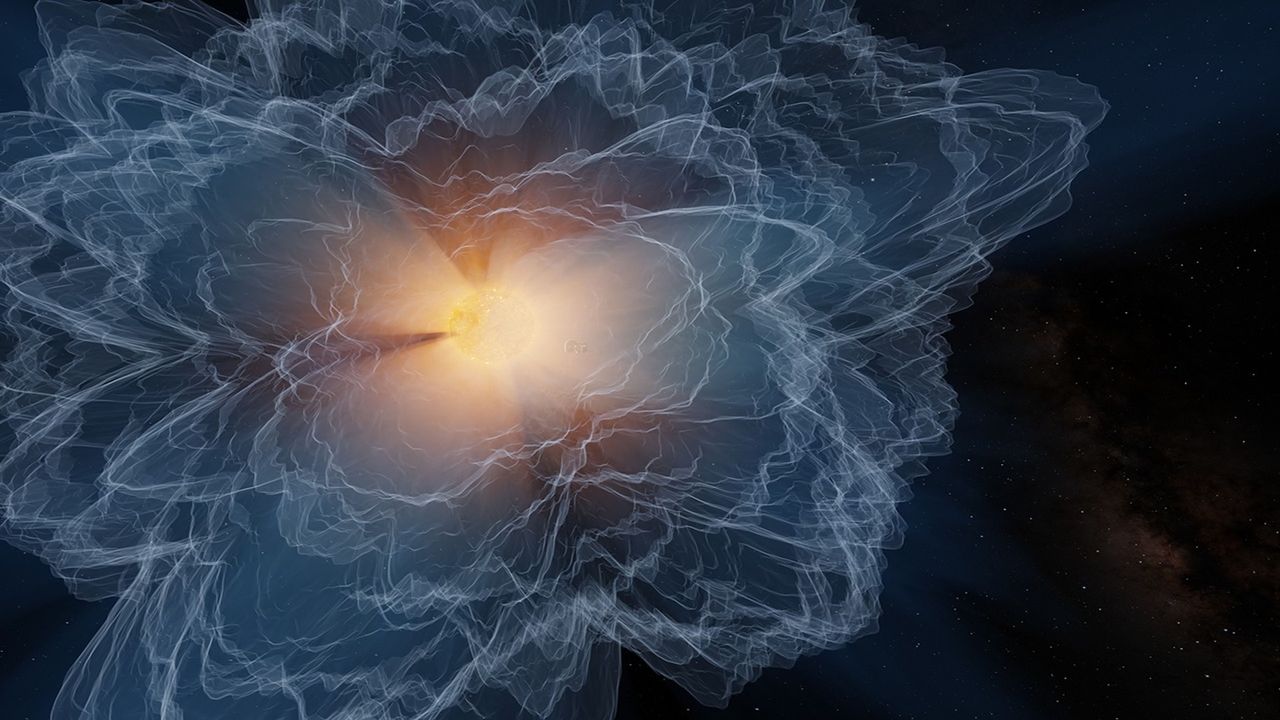
For the first time, scientists have created detailed, 2D maps of the sun's outermost atmosphere. This feat was accomplished using data from NASA's Parker Solar Probe, which has been dipping in and out of the sun's atmosphere, called the corona, since 2021.
Parker is the first craft in history to fly so close to a star. This ability is largely thanks to its extraordinary heat shield, which can withstand temperatures in excess of 2,500 degrees Fahrenheit (1,370 degrees Celsius). The sun's corona is much hotter — around 1 million to 3 million F (555,000 C) — but it is extremely diffuse, meaning that objects moving swiftly through it don't encounter very many superheated particles. This allows Parker to skim through the outer boundary of the corona for brief periods.













