Get all your news in one place.
100's of premium titles.
One app.
Start reading
The Conversation
The Conversation
Science
Morteza Mahmoudi, Assistant Professor of Radiology, Michigan State University

Nanomedicines for various diseases are in development – but research facilities produce vastly inconsistent results on how the body will react to them

Nanoparticles (white disks) can be used to deliver treatment to cells (blue). Brenda Melendez and Rita Serda/National Cancer Institute, National Institutes of Health, CC BY-NC

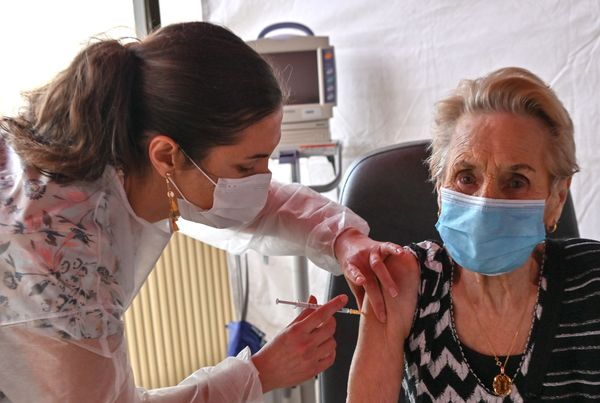
Nanomedicines took the spotlight during the COVID-19 pandemic. Researchers are using these very small and intricate materials to develop diagnostic tests and treatments. Nanomedicine is already used for various diseases, such as the COVID-19 vaccines and therapies for cardiovascular disease. The “nano” refers to the use of particles that are only a few hundred nanometers in size, which is significantly smaller than the width of a human hair.

Although researchers have developed several methods to improve the reliability of nanotechnologies, the field still faces one major roadblock: a lack of a standardized way to analyze biological identity, or how the body will react to nanomedicines. This is essential information in evaluating how effective and safe new treatments are.

Sign up to read this article
Read news from 100's of titles, curated specifically for you.
Already a member? Sign in here
Related Stories
Top stories on inkl right now
One subscription that gives you access to news from hundreds of sites
Already a member? Sign in here
Our Picks
Fourteen days free
Download the app
One app. One membership.
100+ trusted global sources.