Welcome back to another edition of My Take 5, your round-up of top international news of the past week. In this edition we are covering the results of the recent election in Bangladesh, PM Sanae Takaichi’s huge victory in Japan, Ukraine’s new sports hero Vladyslav Heraskevych, India’s seizure of Iran-linked shadow fleet ships, and the passing away of Reverend Jesse Jackson. So, let’s get to it:
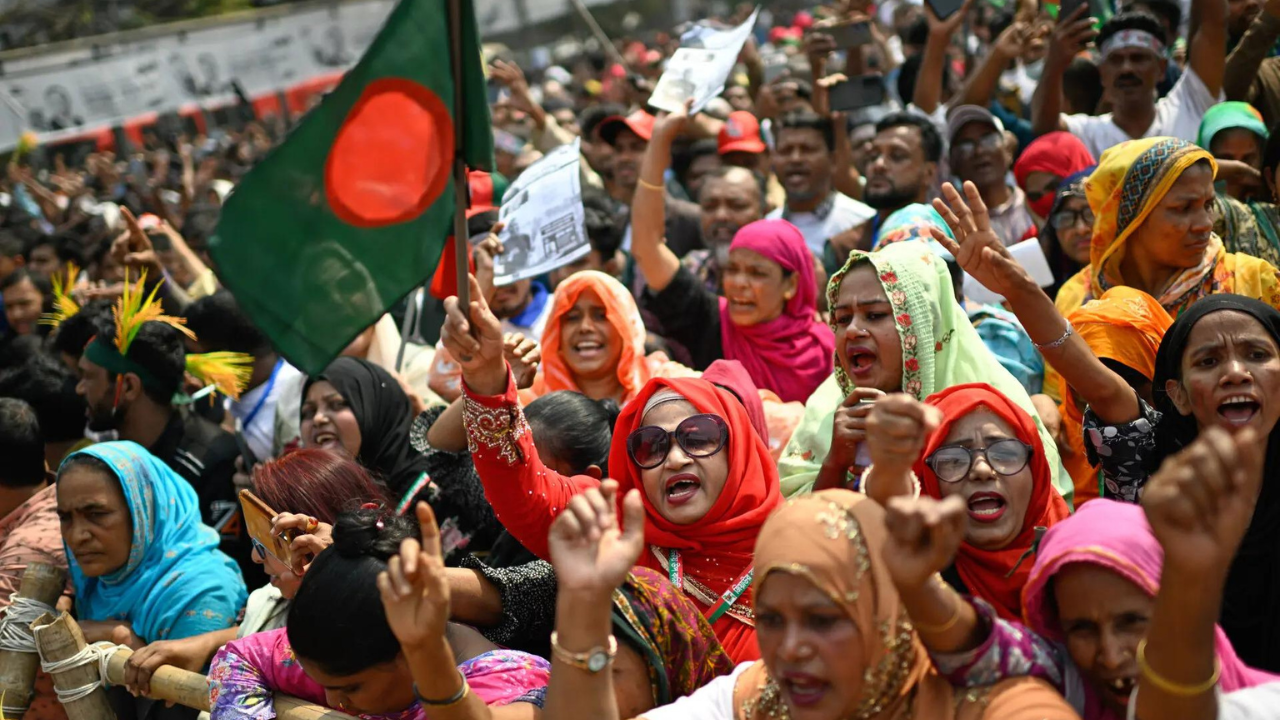
BNP back in Bangladesh: In the first election held in Bangladesh after Sheikh Hasina’s ouster in 2025, the BNP rode back to power with a whopping two-thirds majority. However, the overall fairness of this election will remain under a cloud. After all, Hasina’s Awami League could not contest these polls because it had been suspended by the interim government of Muhammad Yunus. Naturally, this made things easier for BNP and Jamaat-e-Islami, both of whom gained.
True, BNP and Jamaat contested separately this time. But there is no denying that Bangladeshi politics now shifts decisively to the right. Which in turn creates anxieties for minority communities in Bangladesh. The latter include secular intellectuals in Bangladesh such as noted filmmaker, author and journalist, Shahriar Kabir, who has been imprisoned since Sep 2024 on tenuous grounds. In fact, there has been a global appeal, even at the level of the UN, to release Kabir from arbitrary detention. It remains to be seen if the incoming BNP regime heeds these appeals and releases Kabir who is above 70 and suffers from several medical complications.
The second aspect, of course, is what the election results mean for India-Bangladesh relations. The latter had nosedived since Hasina’s ouster. Several leaders associated with the interim government in Dhaka had also made provocative statements against India. In fact, even Muhammad Yunus had made problematic statements about India’s Northeast. So, if BNP continues in this vein, it will be a return to the problematic relationship New Delhi and Dhaka shared between 2001 and 2006.
But that would be unhelpful for both countries. By the dint of geography, India and Bangladesh need to have cordial relations for mutual benefits – trade, transit and security. BNP leader and presumptive PM Tarique Rahman has made some balanced statements about India. But it remains to be seen if he will follow through. Plus, there is the Hasina factor – a section of Bangladeshi polity and society, including the Jamaat, will continue to demand that India hand over Hasina. That, however, won’t happen. How Rahman handles these pressures will have a direct bearing on bilateral ties.
Takaichi’s landslide win: In a huge victory for Japanese PM Sanae Takaichi, her Liberal Democratic Party secured a massive victory in recent snap polls. LDP ended up with 316 seats in the lower house of the Japanese Diet, giving it a super-majority. In fact, this is the biggest majority for a single party in Post-World War II Japan. The tally was increased further to 352 seats with the addition of LDP’s coalition partner Japan Innovation Party’s own victories.
This seriously strengthens Takaichi’s political hand in Japan. With the super-majority, she can push through constitutional reforms, pass legislation rejected by the Diet’s upper house, and increase Japan’s defence funding. She has already shown she is ready to stand up to China. Recall that late last year, Takaichi had said that a Chinese attack on Taiwan may necessitate a defensive military response from Japan for its own security. She is also big on the Quad grouping and has hit it off with Trump. So, with this mandate, we are looking at a very strong Japanese leader who can not only get things done but can also lead Japan in enhancing regional security. That would be welcome by both the US and other regional countries wary of Chinese belligerence. Japan’s Takaichi era has truly begun.
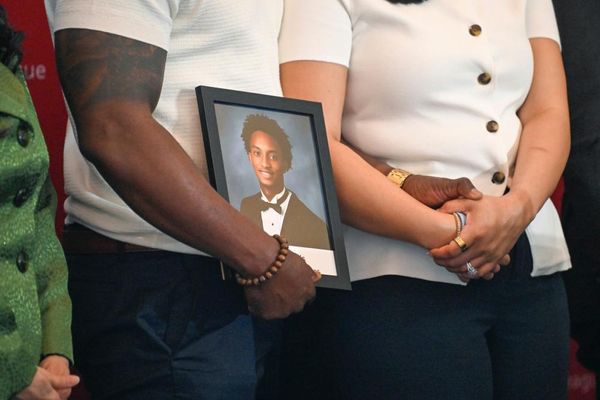
A Ukrainian hero: At the ongoing Winter Olympic Games at Milano-Cortina, Italy, a new Ukrainian hero stood up. During practice session, Ukrainian skeleton racer Vladyslav Heraskevych wore a ‘remembrance helmet’ with the photographs of several Ukrainian athletes who had died in the ongoing Russian invasion of Ukraine. But the International Olympic Committee forbade Heraskevych from wearing the helmet, citing Article 50 of the IOC charter that prohibits any political messaging. However, Heraskevych insisted on wearing the helmet, saying he could not betray his fellow athletes. This eventually led to the IOC disqualifying him from the Games.
In this instance, one must say that the IOC clearly went overboard. Heraskevych’s helmet was meant as a tribute. And one must understand where he is coming from. Ukraine today is facing the biggest war in Europe since World War II. This is not just one of many conflicts happening around the world. Every day Ukrainian cities are bombed with Russian ballistic missiles and armed drones. Civilian infrastructure is targeted, hospitals, schools, nurseries are hit. The winter is weaponised by taking out electricity and heating infrastructure. Civilians are hunted like human safari by the invading army in places like Kherson. The Russian aggression against Ukraine takes Ukrainian lives every day.
In such a scenario, how can Ukrainian athletes representing their country not feel the pain and suffering of their fellow countrymen? How can they remain mute? These are extraordinary circumstances.
Plus, can sport and politics be totally separated? I don’t think so. Sport doesn’t exist on a different planet. Remember the Black Power salute in the 1968 Olympic Games? Plus, Indian cricketers again did not shake hands with their Pakistani counterparts at the ongoing T20 World Cup. So, sport and politics will always live side by side.
That apart, Heraskevych, by standing up for his principles, showing solidarity with his people, and paying tribute to the victims of the Russian invasion has truly emerged as a hero. As he says, there are things more important than winning an Olympic medal.
India seizes shadow-fleet ships: In an unprecedented action against US-sanctioned shadow-fleet ships linked to Iranian oil trade, India seized three tankers in its Exclusive Economic Zone earlier this month. Shadow fleet ships are ageing, uninsured, illicit ships that are used to ferry sanctioned goods by countries such as Russia, Iran and Venezuela. These ships frequently change their flags and names mid-voyage, and have obscure ownership to evade detection. Such ships have helped Russia, Iran and Venezuela trade their oil. In Moscow’s case, this system has allowed it to earn revenue to fund its invasion of Ukraine. With the US and Europe now increasingly targeting such Russia-linked shadow-fleet ships, Moscow is feeling the heat.
Meanwhile, the US is also turning the heat on Iran and trying to force it to make huge concessions on its nuclear and missile programmes. As I write this, US and Iran are engaging in indirect talks in Geneva to potentially strike a deal. If Washington can entice Tehran away from Moscow and Beijing, that will be another big strategic win.
In this context, India’s actions against Iran-linked ships are important. Note also that India’s actions came just when New Delhi and Washington announced a framework trade deal. This would have certainly earned brownie points with Trump. Plus, India has made a calculated move. Iran really can’t claim ownership of these ships, even though one of them was reportedly flying an Iranian flag at the time of seizure. Taken together, it’s a win for US, a point for India, and growing pressure on Iran and its strategic partner Russia.
Reverend Jesse Jackson passes away: Iconic American civil rights activist Reverend Jesse Jackson passed away at the age of 84. Jackson was an unabashed champion of human rights, working with greats such as Martin Luther King Jr. I had the privilege of interviewing him in 2014 where he called for a war on poverty and warned of the American right-wing trying to turn the clock back on civil rights. You can read the interview here.
For India, he called for investment in infrastructure and bottom-up development. Much of those recommendations hold today, as the world again faces a severe human rights test.